
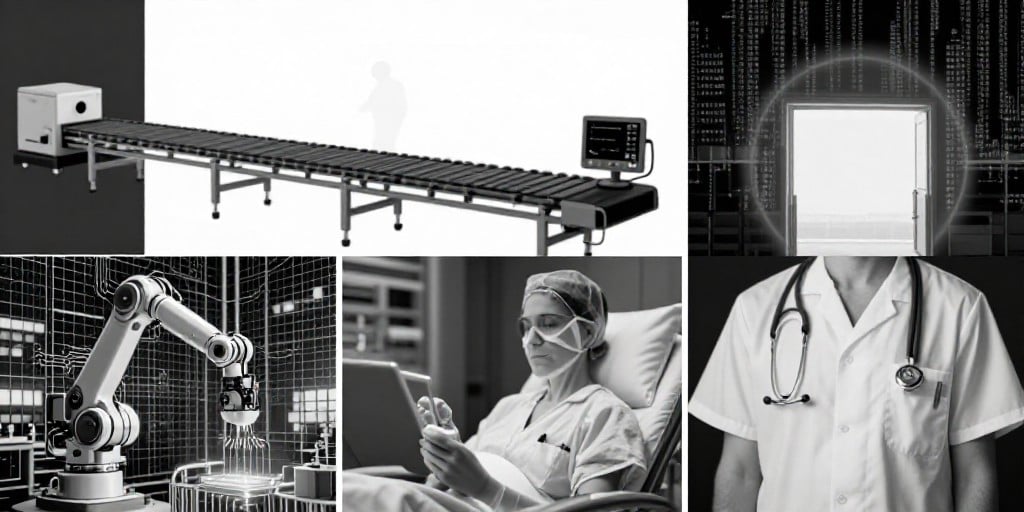
Fujitsu’s Ambitious Push into Physical AI
Fujitsu Limited has announced a comprehensive initiative to embed physical artificial intelligence (AI) across multiple industrial sectors, partnering with three of Japan’s most prominent robotics firms—FANUC Corporation, Yaskawa Electric Corporation, and Kawasaki Heavy Industries. At the heart of the collaboration is a collaborative control platform that fuses NVIDIA’s suite of physical AI technologies with proprietary Fujitsu infrastructure, aiming to reconcile digital data streams with real‑world robotic operations.
The Strategic Imperative
Japan’s workforce landscape is marked by persistent labor shortages and an increasingly aging population of skilled workers. The robotics industry has long been positioned as a potential antidote, yet traditional automation has often been siloed, lacking the agility to respond to dynamic production environments. Fujitsu’s venture seeks to address these constraints by enabling robots that can perceive, interpret, and act autonomously within physical contexts—effectively extending human decision‑making into the machine domain.
Cross‑Industry Use Cases
Manufacturing
In automotive assembly lines, for example, the platform is expected to automate tasks such as precision welding and component inspection. By ingesting sensor data in real time, the AI can adjust torque settings and path trajectories on the fly, reducing error rates and cycle times. A pilot project with FANUC on a mid‑sized vehicle factory demonstrated a 12 % increase in throughput and a 9 % reduction in defect incidence over a six‑month period.
Logistics
Warehouse operators rely on manual pallet handling and inventory reconciliation, tasks that are both labor‑intensive and error‑prone. The new framework proposes autonomous forklifts that synchronize with RFID‑tagged goods and real‑time sales data. During a trial at a Tokyo distribution center, the system cut material‑handling times by 18 % and lowered the incidence of misplaced items by 23 %.
Healthcare
Hospitals grapple with staff shortages in nursing and pharmacy departments. Fujitsu’s plan includes robotic trolleys that navigate hospital corridors, transporting medications and supplies between pharmacies and patient rooms. In a controlled environment at a Kyoto clinic, these trolleys achieved a 95 % accuracy rate in route planning while reducing the time nurses spent on logistics by approximately 30 minutes per shift.
Technological Architecture
Sovereign Control Infrastructure
The initiative emphasizes an “open, sovereign” control architecture that permits interoperability among heterogeneous robotic systems. Fujitsu will develop both hardware interfaces—such as unified communication buses—and software stacks that enforce secure, authenticated data exchange. By standardizing control protocols, the partnership aims to mitigate cyber‑security vulnerabilities that have plagued isolated robotics ecosystems.
Leveraging NVIDIA’s Toolchain
Fujitsu will integrate NVIDIA’s Cosmos foundational model to simulate complex socio‑physical interactions, ensuring that AI decisions align with real‑world constraints. Omniverse will serve as the collaborative design environment, allowing engineers across the supply chain to co‑create and validate robot behaviours before deployment. Isaac, NVIDIA’s robotic learning framework, will underpin the reinforcement learning loops that refine robot policies directly on the shop floor.
Risk Assessment and Mitigation
While the promise of autonomous robotics is compelling, the project does not shy away from potential pitfalls:
Cyber Threats – Interconnected robotic networks can become targets for malicious actors. By embedding secure communication protocols and continuous intrusion detection, Fujitsu seeks to reduce this risk, though the efficacy of such measures remains contingent on industry‑wide compliance.
System Downtime – A single point of failure could halt entire production lines. The consortium’s design incorporates redundant pathways and real‑time health monitoring, but the complexity of the system increases the surface area for maintenance errors.
Ethical Considerations – The displacement of human workers raises questions about job retraining and equity. Fujitsu’s narrative frames automation as a tool to augment rather than replace human labor, yet the societal impact of reduced employment opportunities remains a critical debate.
Data Privacy – Especially in healthcare, patient data integration must adhere to stringent regulations. The platform plans to enforce data anonymization and local processing to avoid exposing sensitive information.
Broader Societal Implications
By positioning Japan at the forefront of physical AI, Fujitsu’s initiative could reshape global supply chains, potentially reducing carbon footprints through optimized logistics and lean manufacturing. However, the acceleration of automation may also exacerbate socio‑economic divides, particularly if small‑to‑mid‑size enterprises cannot afford the transition. Policymakers will need to balance incentivizing technological adoption with safeguarding workforce welfare.
Conclusion
Fujitsu Limited’s strategic partnership with FANUC, Yaskawa, and Kawasaki, underpinned by NVIDIA’s cutting‑edge AI tools, represents a bold stride toward an interconnected, autonomous industrial future. By marrying robust security protocols with real‑time adaptive capabilities, the consortium aims to deliver a scalable platform that could redefine productivity standards across manufacturing, logistics, and healthcare. The success of this endeavor will hinge not only on technical excellence but also on responsible stewardship of societal, privacy, and security considerations.