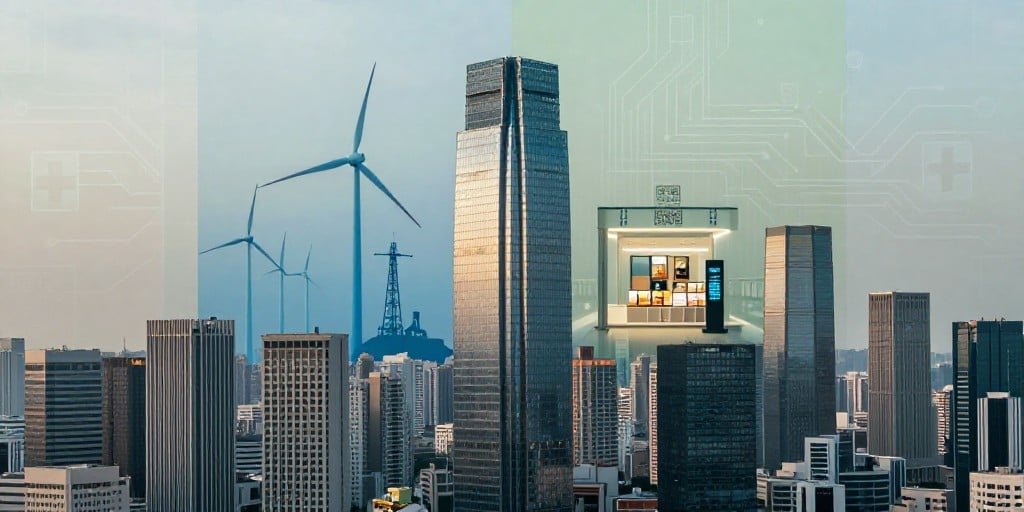
Market Snapshot: FTSE 100 Navigates a Mixed Landscape
The FTSE 100 opened marginally higher in early trading, hovering near the 10,850‑point mark. Market sentiment was shaped by a blend of corporate earnings releases and broader macro‑economic forces. Energy stocks emerged as the strongest performers, buoyed by continued support for oil prices that remain elevated. Insurance and retail names also posted gains, reflecting a broader confidence in sectors that have shown resilience amid technological turbulence.
Energy Resilience Amid a Volatile Technology Sector
Energy shares benefited from a sustained demand for oil and gas, with BP and Shell maintaining steady trajectories. This stability underscores the sector’s capacity to act as a counterbalance to volatility elsewhere in the market. While the technology space experienced uncertainty—highlighted by the resignation of Nvidia’s CEO and a global outage affecting Microsoft services—energy stocks offered a refuge for risk‑averse investors.
Insurance and Retail: Moderated Growth in a Shifting Landscape
Aviva’s announcement of a favorable earnings outlook, driven by robust growth in general insurance premiums, lifted its shares and reinforced confidence in the insurance sector. Land Securities saw modest gains, reflecting optimism around rental income performance and full‑year guidance. Retail names, traditionally sensitive to consumer spending trends, benefitted from the broader market uptick, yet their performance remained modest compared to energy and insurance.
Investor Focus on Technology‑Related Developments
Despite the positive overall market movement, technology-related headlines continued to dominate investor attention. The uncertainty surrounding Nvidia’s leadership transition prompted a brief pullback in several high‑profile tech names. Meanwhile, a temporary outage of Microsoft services raised concerns about the stability of widely used software platforms. Early reports of recovery mitigated some fears, but the episode highlighted the fragility of tech infrastructure and the potential ripple effects on corporate earnings.
Strategic Editorial Perspective on Consumer Goods Trends
Omnichannel Retail Innovation
The retail sector’s modest gains point to a growing emphasis on omnichannel strategies. Brands that integrate online and offline experiences—leveraging data analytics to personalize offers, streamline logistics, and enhance in‑store technology—are positioning themselves to capture shifting consumer behavior. The rise of “click‑and‑collect” services and real‑time inventory management is reshaping the competitive landscape, compelling traditional retailers to innovate rapidly.
Consumer Behavior Shifts
Post‑pandemic consumer habits have evolved toward greater digital engagement, yet there remains a persistent appreciation for experiential retail. The balance between convenience and personalization is driving brands to invest in immersive store formats, augmented reality tools, and mobile‑first shopping journeys. Moreover, sustainability has become a decisive factor in purchase decisions, influencing brand positioning across the consumer goods spectrum.
Supply Chain Innovations
The energy and insurance sectors’ resilience highlights the importance of robust supply chains. Consumer goods companies are increasingly adopting supply‑chain digitization—blockchain for traceability, AI for demand forecasting, and flexible logistics networks—to mitigate disruptions. These innovations not only improve operational efficiency but also enhance transparency, meeting growing consumer demand for ethical sourcing.
Cross‑Sector Patterns: From Short‑Term Movements to Long‑Term Transformation
Energy’s Stability as a Benchmark The sustained performance of energy stocks offers a short‑term hedge against tech volatility, but also signals long‑term structural shifts toward renewable integration and energy transition strategies that will shape corporate earnings profiles.
Technology Uncertainty Fuels Innovation The recent tech disruptions have accelerated investment in cloud resilience, cybersecurity, and AI‑driven operational tools across all sectors, including consumer goods and retail.
Consumer Preferences Drive Brand Positioning The convergence of omnichannel retail, personalized experiences, and sustainability is redefining brand equity. Companies that successfully align product offerings with these consumer expectations are likely to outperform in the long run.
Supply Chain Digitalization as a Competitive Imperative Short‑term supply disruptions have highlighted the need for agile, data‑enabled logistics. Firms that embed these capabilities early will gain a strategic advantage, reducing lead times and improving responsiveness to market shifts.
Conclusion
The FTSE 100’s modest gains amid mixed corporate news underscore a cautious yet optimistic investor stance. Energy resilience, coupled with strategic shifts in retail innovation, consumer behavior, and supply chain technology, points to a transformative trajectory for the corporate landscape. Companies that navigate these dynamics—balancing immediate market pressures with long‑term structural opportunities—will be best positioned to capitalize on the evolving economic environment.