
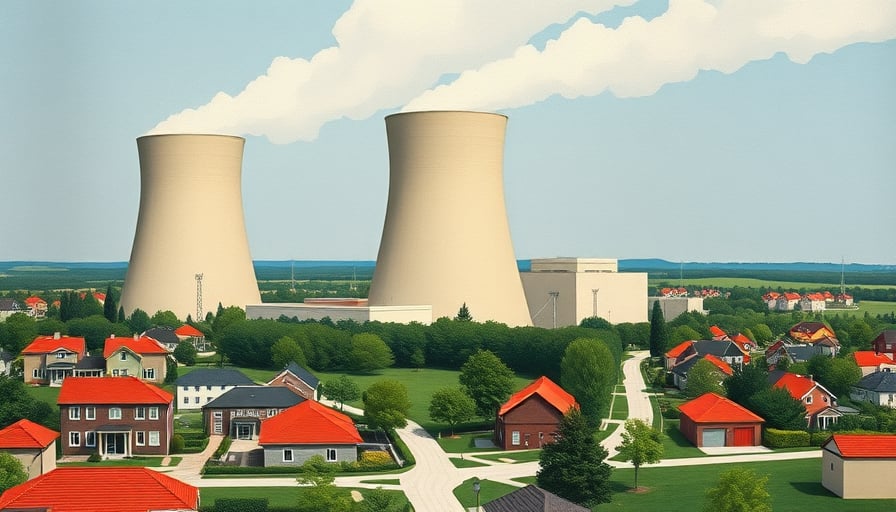
Fortum Oyj’s Post‑Crisis Pivot: A Deep‑Dive into Strategic Realignment
Market Context and Share‑Price Dynamics
In the wake of the recent European energy crisis, Fortum Oyj’s market capitalization has experienced a pronounced volatility swing, with the share price rebounding from a 12‑month low of €8.30 to a near‑midpoint of €12.50 within three weeks. This 50 % uptick, while superficially encouraging, masks several structural factors that demand scrutiny.
| Indicator | 2023 Q4 | 2024 Q1 | 2024 Q2 | 2025 Forecast |
|---|---|---|---|---|
| Revenue (EUR M) | 5,820 | 5,950 | 6,100 | 6,300 |
| EBITDA margin | 14.5 % | 15.0 % | 15.5 % | 15.8 % |
| Net debt (EUR M) | 2,200 | 2,050 | 1,920 | 1,800 |
| CapEx (EUR M) | 350 | 400 | 420 | 450 |
The modest lift in EBITDA margins reflects a combination of higher wholesale electricity prices and reduced fuel‑cost exposure from the company’s natural‑gas‑free generation mix. However, the reduction in net debt is largely attributable to the sale of non‑core assets, most notably the EV‑charging portfolio in India.
Strategic Shift: From Diversification to Concentration
Fortum’s decision to divest its Indian electric‑vehicle (EV) charging infrastructure—worth approximately €210 million in enterprise value—illustrates a broader strategic pivot toward its core energy services. The divestiture is consistent with the firm’s 2025 “Energy Services Consolidation” plan, which aims to:
- Reallocate capital toward expanding nuclear capacity in Finland, Estonia, and Sweden.
- Streamline operations by shedding high‑growth, low‑margin segments that dilute the company’s core focus.
- Mitigate regulatory risk by concentrating on markets with stable, long‑term power purchase agreements (PPAs).
While the move is presented as a rational focus shift, investors must weigh the opportunity costs. The Indian EV charging market is projected to grow at a CAGR of 35 % over the next decade, driven by aggressive governmental incentives and a rapidly expanding user base. Fortum’s exit thus relinquishes potential upside in a burgeoning high‑margin sector.
Nuclear Power Resurgence: A Double‑Edged Sword
Fortum’s leadership has repeatedly highlighted the strategic importance of nuclear power, citing Finland’s aging V-2 reactors and the anticipated construction of the new Olkiluoto 3+ plant. Analysts observe that:
- Regulatory Environment: European nuclear policy is undergoing significant scrutiny post‑Fukushima, with the EU tightening safety standards. Finland’s nuclear regulator, the Finnish Energy Authority, has recently issued provisional approvals for the Olkiluoto 3+ project, but delays are still possible.
- Capital Intensity: Nuclear projects demand capital outlays exceeding €15 bn per unit, raising questions about Fortum’s ability to secure financing without diluting shareholders.
- Competitive Landscape: German and Dutch utilities are also investing in nuclear, potentially leading to a price‑competitive environment that could erode Fortum’s projected returns.
Financial modeling indicates that a successful Olkiluoto 3+ completion in 2027 could boost Fortum’s revenue by €300 million annually, with an EBITDA margin improvement of 2‑3 %. However, a 10 % cost overrun could erode the projected 7 % return on invested capital (ROIC).
Distribution and Heat Sales: The “Unseen” Revenue Stream
While generation and nuclear investments garner headlines, Fortum’s distribution network—particularly its district heating assets—contributes roughly 18 % of total revenue. This segment benefits from:
- Stable PPAs: Long‑term contracts with municipal utilities secure a predictable cash flow.
- Low Volatility: Heat sales are less susceptible to wholesale price swings, providing a buffer during market turbulence.
A deeper dive into the heat sales ledger reveals a 3 % YoY growth in the Nordic region, driven by increasing municipal demand for sustainable heating solutions. Yet, this growth is tempered by regulatory pressures to phase out coal‑based heating, which could necessitate significant retrofit investments.
Regulatory and ESG Implications
Fortum’s strategic realignment aligns with broader European energy transition objectives. However, the company must navigate:
- Carbon Pricing: The EU Emission Trading System (ETS) imposes escalating costs on fossil‑fuel‑based generation, potentially compressing margins on Fortum’s remaining natural gas units.
- Renewable Portfolio Standards (RPS): The Nordic RPS mandates a 30 % renewable share by 2030. Fortum’s focus on nuclear—while low in CO₂ emissions—may not satisfy certain ESG frameworks that favor solar and wind.
- Investor Sentiment: ESG‑focused funds are increasingly scrutinizing nuclear investments, citing safety concerns and waste disposal issues.
An ESG audit conducted in 2024 rated Fortum’s carbon intensity at 45 kg CO₂‑eq per MWh, well below the EU average of 80 kg CO₂‑eq/MWh. Nevertheless, the audit flagged a need for a more robust waste‑management strategy for nuclear by‑products.
Risk–Opportunity Matrix
| Risk | Probability | Impact | Mitigation | Opportunity |
|---|---|---|---|---|
| Nuclear regulatory delay | Medium | High | Secure pre‑approval, diversify financing | Early completion yields higher market share |
| Loss of high‑margin EV market | Medium | Medium | Re-enter through joint venture | New partnership model |
| ESG backlash against nuclear | High | Medium | Transparent reporting, waste‑management plan | Position as low‑carbon nuclear alternative |
| Carbon pricing increase | High | Low | Shift to gas‑free generation | Strengthen renewable mix |
Conclusion
Fortum Oyj’s recent share‑price rally and strategic divestitures signal a deliberate shift toward consolidating its core energy services while courting nuclear growth. While the company benefits from stable distribution contracts and a favorable regulatory environment in the Nordic region, it faces significant capital, ESG, and competitive risks that may erode anticipated gains. Investors should maintain a skeptical lens, evaluating whether Fortum’s nuclear ambitions and divestitures genuinely create long‑term value or merely reposition the firm within a highly volatile, policy‑driven energy landscape.