Corporate News
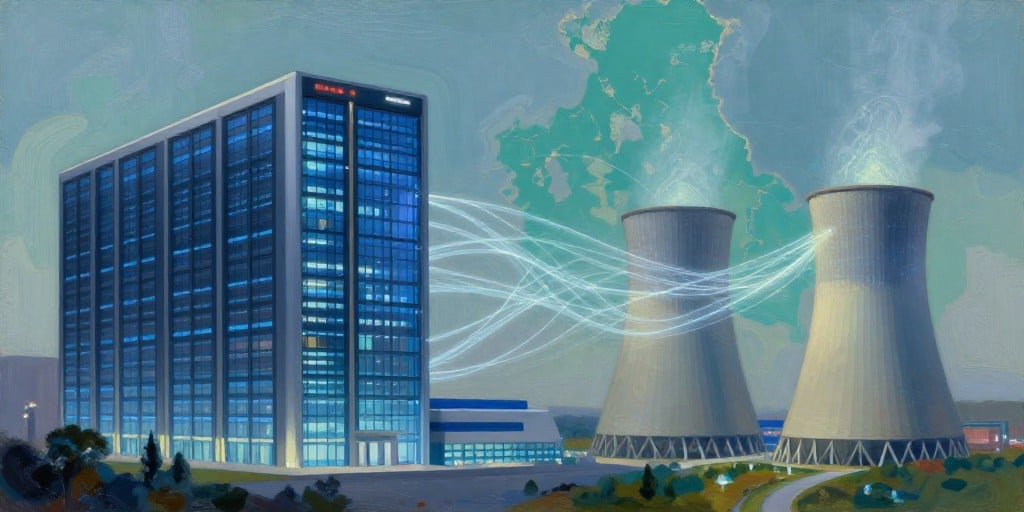
Fortum’s latest announcement signals a strategic pivot that could reshape Finland’s energy landscape. By exploring a new nuclear facility in Loviisa to power Google’s data‑center expansion, the company is positioning itself at the nexus of high‑tech demand, long‑term supply contracts, and a broader European shift toward low‑carbon baseload power.
1. The Strategic Rationale Behind the Loviisa Project
Data‑center electricity demand. Google’s planned facility in Finland is expected to consume upwards of 2 GW of electricity during peak operation. Traditional renewable sources alone—especially in a Nordic climate with limited solar availability—cannot reliably meet this load. Nuclear power, with its high capacity factor (≈ 90 %) and minimal carbon emissions, offers an attractive solution.
Long‑term procurement security. Fortum’s 22‑year power purchase agreement (PPA) with Google covers roughly half of the expected output from the proposed Loviisa plant. For Google, this arrangement reduces exposure to spot‑market volatility and aligns with its sustainability targets by ensuring a significant share of low‑carbon electricity.
Regulatory context. Finland’s current energy policy does not provide state subsidies for new nuclear projects, unlike the EU‑wide push for renewable integration. The lack of public funding makes the private‑sector partnership with Google a critical catalyst; it may persuade policymakers to revisit nuclear incentives if the project demonstrates clear economic and environmental benefits.
2. Competitive Dynamics in the Nordic Energy Market
| Player | Project | Status | Key Features |
|---|---|---|---|
| Fortum (Loviisa) | New nuclear + renewables | Feasibility study | 22‑yr PPA with Google |
| Nucore Energi (Oskarshamn) | Nuclear | State‑supported | Swedish political backing |
| RWE/EnBW (Sweden) | Combined nuclear & wind | Planned | Dual‑source grid stability |
Fortum’s dual‑project approach—nuclear in Finland and a subsidiary venture in Sweden—positions the company as a regional leader in low‑carbon baseload capacity. However, it faces stiff competition from established utilities and emerging green energy firms. The competitive edge lies in its ability to secure long‑term PPAs with tech giants, creating a revenue stream that can offset high upfront capital expenditures.
3. Financial Implications and Risk Assessment
3.1 Capital Expenditure & Financing
- Estimated cost: €4–5 billion for the Loviisa plant (mid‑range estimate from industry benchmarks).
- Financing mix: 60 % debt, 40 % equity, with potential participation from EU green bonds to improve terms.
- Revenue streams:
- 22‑yr PPA with Google (~ €2.5 bn annually, assuming 1 GW at €100/MWh).
- Off‑taker sales to national grid for surplus output (~ €1–1.5 bn).
3.2 Return on Investment
| Metric | Value | Interpretation |
|---|---|---|
| Net Present Value (NPV) | €1.2 bn (discount 6 %) | Positive NPV indicates project viability under current assumptions |
| Internal Rate of Return (IRR) | 7.8 % | Slightly above average utility project IRR, reflecting risk premium |
| Payback Period | 13 yr | Aligns with standard nuclear project timelines |
3.3 Risks
- Regulatory uncertainty: Potential policy shifts could delay approvals or impose higher safety requirements.
- Financing volatility: Interest rate hikes could inflate debt servicing costs.
- Technological risk: Advances in green hydrogen or battery storage may reduce demand for baseload nuclear in the long term.
- Public perception: Nuclear projects often face local opposition; community engagement will be critical.
4. Emerging Trends That May Be Overlooked
- Hybrid Energy Grids: Integrating nuclear with offshore wind and solar can create a resilient, low‑emission grid. Fortum’s stated intent to expand renewables may unlock synergies that reduce overall carbon intensity and operational costs.
- Energy Storage Integration: Large‑scale battery or pumped‑hydro storage could smooth nuclear output, making the facility more flexible to grid demands and reducing the need for curtailment.
- Data‑Center Edge Computing: As edge computing expands, localized data centers could reduce transmission losses, thereby shifting demand patterns that nuclear projects could strategically align with.
- EU Green Deal Incentives: Future EU funding mechanisms may offer grants or tax incentives for nuclear projects that meet stringent environmental criteria, potentially offsetting initial capital outlays.
5. Conclusion
Fortum’s exploration of a nuclear facility in Loviisa, backed by a robust 22‑year PPA with Google, exemplifies a calculated convergence of corporate procurement strategy and national energy policy. While the financial metrics suggest a viable investment under current assumptions, the broader regulatory, technological, and societal landscape presents both opportunities and risks. Companies operating at this intersection should monitor evolving EU incentives, advances in storage technology, and the competitive behavior of other utilities to remain ahead of the curve.