
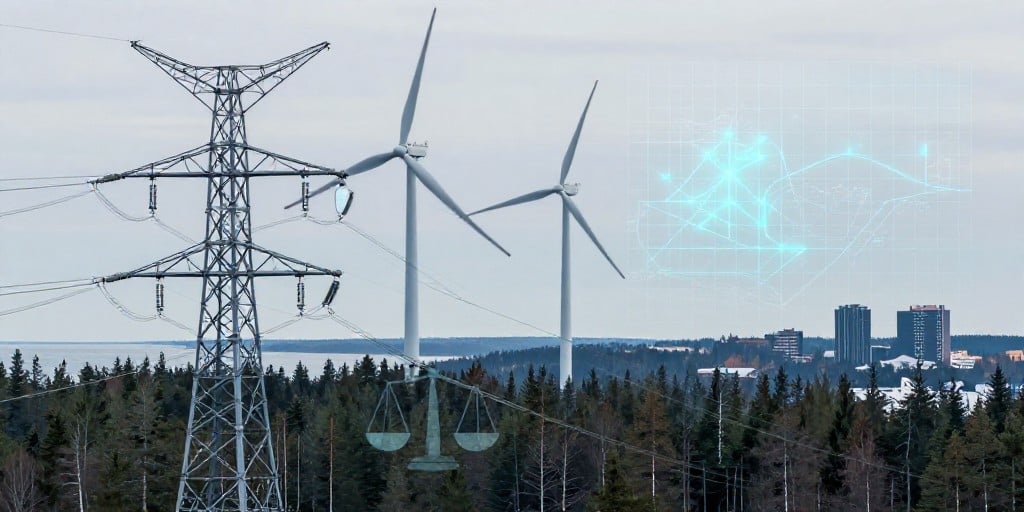
Fortum Oyj’s Transmission Asset Sale and Subsequent Market Dynamics: A Technical Review
Fortum Oyj’s divestiture of its power‑transmission portfolio in 2014 to an international consortium of Canadian pension funds and an American private‑equity firm marked a watershed moment for the company’s strategic orientation and for the Nordic electricity market as a whole. The transaction, valued at more than two billion euro, removed a substantial share of the company’s regulated revenue base and shifted the ownership of a critical segment of the Finnish grid infrastructure to foreign investors. The long‑term implications of this move—particularly in the context of grid reliability, renewable energy integration, and consumer pricing—are worth detailed scrutiny from both an engineering and a regulatory perspective.
1. Rationale for the 2014 Divestiture
Fortum’s core strategy at the time was to concentrate on generation assets that could deliver higher margins and stronger control over operational risk. Transmission, by contrast, is characterised by high capital intensity, long asset life cycles, and a regulated revenue regime that is tightly linked to wholesale market conditions. The Nordic regulatory environment, increasingly focused on competition and cross‑border integration, exerted pressure on utilities to streamline operations and to unlock shareholder value. By selling its transmission business, Fortum was able to:
- Re‑allocate capital to expansion of renewable generation (hydropower, wind, solar) and to the deployment of advanced digital grid solutions.
- Reduce regulatory burden associated with maintaining a separate transmission license and compliance framework.
- Realise a substantial immediate cash inflow that could be used for debt reduction or for reinvestment in core generation assets.
From an engineering standpoint, the divestiture also created the possibility of a more specialised ownership structure for the transmission network, potentially allowing for more focused investment in high‑capacity, high‑reliability grid upgrades.
2. Post‑Sale Price Adjustments and Grid Reliability
In early 2016, the new owners announced a series of price adjustments that lifted transmission charges by approximately 20–27 % across multiple service areas. The stated justification was the need to finance critical infrastructure upgrades aimed at meeting regulatory standards that were tightened following significant weather‑related outages in 2011. The upgrades included:
- Reinforcement of high‑voltage corridors to mitigate fault propagation during extreme wind or ice events.
- Installation of dynamic line rating (DLR) systems to allow operators to optimise the utilisation of existing assets while maintaining safety margins.
- Deployment of smart‑metering and advanced SCADA capabilities to improve situational awareness and enable faster fault isolation.
These measures are technically sound. The 2011 outages highlighted the vulnerability of the Nordic grid to combined weather extremes, and reinforcing the network is a recognised strategy to increase the system’s redundancy and resilience. The adoption of DLR, for instance, can increase the effective transmission capacity by up to 15 % without any physical infrastructure changes, thereby enhancing system flexibility for integrating variable renewable sources.
However, the economic framing of the price hikes drew criticism. Critics argued that the cost increases were disproportionate to the capital outlay required and that Fortum’s profitability during the period far exceeded the amount needed to fund the planned upgrades. A detailed cost–benefit analysis would need to consider:
- Capital Expenditure (CAPEX) estimates for each upgrade component and the time‑value of money over the asset life cycle.
- Operational Expenditure (OPEX) savings resulting from reduced outage frequency, lower maintenance costs, and improved grid efficiency.
- Demand‑side benefits such as lower voltage‑drop penalties for consumers and increased market access for renewable producers.
Without a transparent, itemised disclosure of these figures, consumers and regulators found it difficult to assess whether the price adjustments reflected a fair return on investment.
3. Tax Reform and Corporate Responsibility
Fortum’s tax position added another layer of complexity to the narrative. Prior to the 2023 legislative change, the company’s effective corporate tax rate in Finland had been exceptionally low, a result of sophisticated tax‑planning structures that exploited loopholes in the national code. The reform effectively doubled the tax paid by Fortum, raising broader questions about the alignment of corporate strategy with public expectations for responsible fiscal conduct.
From a systems perspective, the tax reform indirectly impacted investment decisions: higher tax burdens can reduce the after‑tax return on new projects, potentially leading to slower deployment of grid upgrades or renewable generation. In a tightly regulated market, however, the impact is mitigated by the rate‑payer model, where costs are distributed among all users. Still, the perception of tax avoidance erodes public trust and can intensify scrutiny over price increases, creating a political economy challenge for utilities seeking to modernise the grid.
4. Implications for Renewable Energy Integration
The Nordic region is aggressively pursuing renewable penetration, targeting 80 % renewable energy by 2030. Integrating variable renewable sources (wind, solar, hydro‑electric) imposes several technical demands on the transmission system:
- Capacity constraints: Renewable generation often peaks at times when demand is low, requiring additional transmission capacity to export surplus power.
- Voltage stability: Variable generation can cause rapid voltage swings that necessitate reactive power support and flexible AC transmission system (FACTS) devices.
- Cyber‑physical security: Smart grid technologies increase exposure to cyber threats, requiring robust protection mechanisms.
Fortum’s investment in modernisation—though costly—was a necessary step toward meeting these demands. The ability to export excess wind power from Finland to neighboring countries also aligns with the Nordic Grid Interconnection strategy, promoting cross‑border energy trade and system resilience.
5. Regulatory Frameworks and Rate Structures
The regulatory environment in Finland is governed by the Finnish Energy Authority and the National Energy Authority, which oversee grid operation, licensing, and tariff setting. Key regulatory instruments relevant to Fortum’s situation include:
- Tariff Regulation: Transmission tariffs are regulated through the Tariff Review Committee, which evaluates cost‑reflective pricing, rate of return, and consumer protection considerations.
- Reliability Standards: Post‑2011 regulatory directives require utilities to maintain a planned outage time (POT) below a certain threshold and to implement planned outage risk mitigation strategies.
- Renewable Energy Support: The Renewable Energy Directive (EU) and national policies influence the incentives for renewable integration, impacting load profiles and grid demand.
Rate structures for transmission services typically include a fixed charge (to cover infrastructure investment) and a variable charge (linked to energy throughput). The 2016 price increase can be seen as a recalibration of the fixed charge to reflect new investment requirements. However, the lack of granular disclosure on cost allocation led to allegations of tariff manipulation.
6. Economic Impacts on Consumers
The immediate effect of the transmission tariff hike was a rise in consumer electricity bills, particularly for industrial customers who bear a larger share of transmission costs. Long‑term effects include:
- Higher wholesale prices: Improved grid reliability can reduce system losses and congestion, potentially lowering wholesale prices.
- Investment in energy efficiency: Consumers might be incentivised to adopt demand‑response technologies to avoid peak transmission charges.
- Renewable uptake: Lower perceived transmission costs for renewable generators can accelerate deployment, ultimately benefiting consumers through a cleaner energy mix.
Policymakers must balance these outcomes against the need to protect consumers from excessive price volatility, especially in a market undergoing rapid transition.
7. Conclusion
Fortum Oyj’s 2014 divestiture of its transmission business and the subsequent price adjustments illustrate the intricate interplay between engineering imperatives, regulatory oversight, and market economics. While the technical upgrades were justified on the grounds of enhancing grid reliability and facilitating renewable integration, the economic framing of the tariff increases revealed gaps in transparency and consumer trust. The tax reform further complicated the picture, underscoring the need for alignment between corporate fiscal strategy and societal expectations.
For state‑owned utilities navigating ownership transitions and regulatory reforms, the Fortum case demonstrates the importance of:
- Clear, itemised cost disclosure to justify tariff changes.
- Stakeholder engagement to align consumer expectations with system‑wide benefits.
- Integrated planning that couples infrastructure upgrades with renewable integration pathways.
- Robust regulatory frameworks that balance investor returns with consumer protection.
Only by addressing these dimensions holistically can utilities ensure that infrastructure investment translates into tangible benefits for the grid, the economy, and the end‑user.