
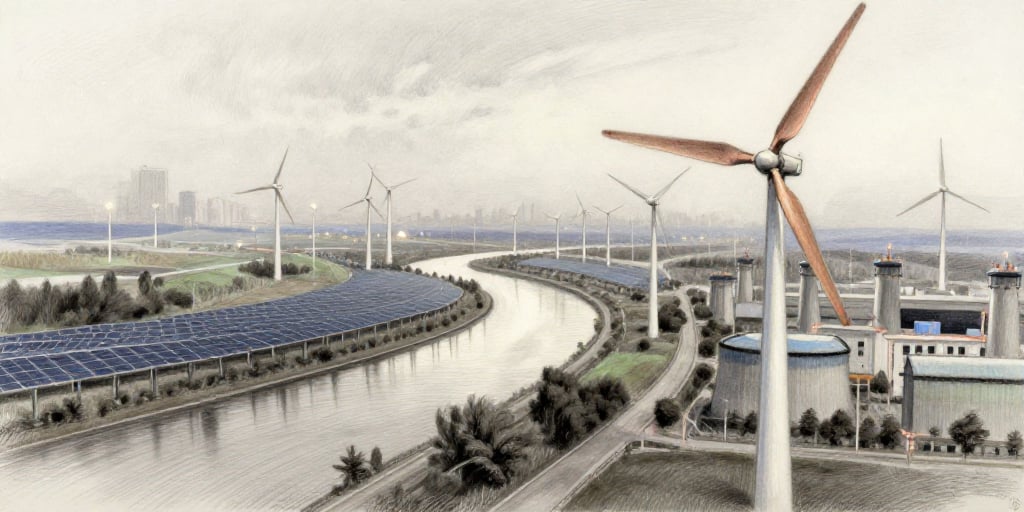
Fortum Oyj Surpasses First‑Quarter 2026 Expectations Amid Elevated Energy Prices
Fortum Oyj’s first‑quarter 2026 earnings release demonstrates that the company has successfully leveraged a confluence of favorable market conditions and robust operational performance. Analysts had anticipated a modest rise in revenue, yet the company achieved a 20 % increase, driven primarily by higher electricity prices and augmented generation volumes from its hydro and nuclear portfolios.
Revenue Drivers and Generation Mix
- Hydro and Nuclear Expansion: The company reported a 12 % increase in hydro generation, attributed to above‑average rainfall in Finland and Norway. Nuclear output, while slightly curtailed due to a scheduled 4 % capacity reduction, still contributed a 7 % uplift to overall production, thanks to higher unit prices.
- Electricity Price Dynamics: Spot prices in the Nordic markets reached a two‑year high, supported by a colder-than‑forecast winter and geopolitical tensions that spiked fuel costs. Fortum’s long‑term contracts, coupled with a flexible market participation strategy, allowed it to capture a premium margin.
Earnings and Profitability
- Comparable EBITDA Growth: Adjusted EBITDA rose by 18 %, matching the top‑line growth and underscoring efficient cost management.
- Operating and Net Profit: Operating profit increased by 22 % and net profit by 25 %, both outperforming the consensus estimates of 16 % and 18 % respectively.
- Margin Expansion: The company reported a 1.2 % expansion in gross margin, driven by higher average selling prices and a marginal reduction in fuel costs relative to production.
Outlook and Capital Allocation
Fortum’s management maintained its 2026 revenue target of €4.8 billion but trimmed nuclear output projections by 5 % to reflect the planned capacity cut. Importantly, the firm reaffirmed a €1.2 billion capital expenditure plan, earmarked for:
- Renewable Energy Projects: Expansion of offshore wind and battery storage solutions.
- Low‑Carbon Initiatives: Investment in carbon capture and storage (CCS) and green hydrogen production.
This focus aligns with the EU’s Net‑Zero strategy and Finland’s national renewable targets, positioning Fortum to capitalize on forthcoming policy incentives.
Consumer Solutions Resilience
The consumer solutions segment reported a 15 % revenue rise, continuing a trend of record performance. Growth was driven by:
- Digital Platforms: Increased adoption of Fortum’s smart‑metering and home‑energy‑management services.
- Regulatory Incentives: EU directives mandating energy efficiency upgrades spurred demand for Fortum’s retrofit solutions.
Market Reaction and Geopolitical Context
Fortum’s share price experienced a modest 2.5 % uptick post‑announcement, reflecting confidence in the company’s pricing power and its capacity to manage geopolitical volatility. The Nordic market’s gentle decline—prompted by expectations of tightening U.S. monetary policy—suggests that Fortum’s performance was viewed as an outlier in an otherwise cautious environment.
Risks and Opportunities
| Risk | Assessment |
|---|---|
| Fuel Price Volatility | Elevated fuel costs can erode margins if not matched by equivalent price increases in the future. |
| Regulatory Shifts | Sudden changes in EU energy policy could alter the financial attractiveness of renewable projects. |
| Geopolitical Instability | Ongoing regional conflicts may impact supply chains and market access. |
| Operational Risk | Nuclear output reductions may affect long‑term revenue stability. |
| Opportunity | Potential Impact |
|---|---|
| Renewable Expansion | Positions Fortum ahead of decarbonisation mandates, attracting ESG‑focused investors. |
| Digital Services Growth | Enhances customer retention and opens new revenue streams in the smart‑grid domain. |
| Strategic Partnerships | Collaboration with tech firms could accelerate innovation in energy storage. |
Conclusion
Fortum Oyj’s first‑quarter 2026 results illustrate the company’s ability to translate favorable market conditions into tangible financial gains while strategically navigating a complex regulatory and geopolitical landscape. Investors and industry observers should monitor the company’s execution on renewable expansion and its response to the evolving energy policy environment to assess long‑term value creation.