
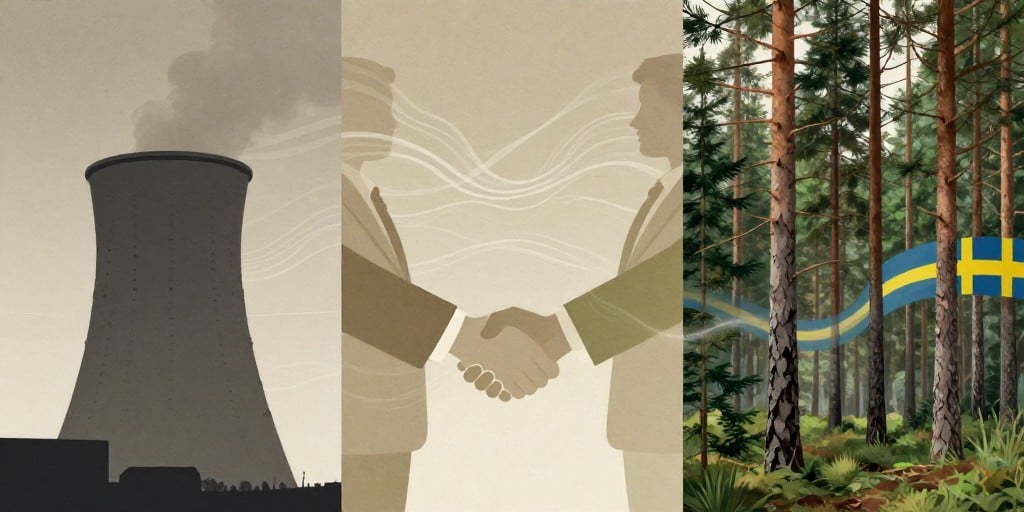
Fortum Oyj’s Nuclear Ambition: A Critical Examination of State‑Assisted Expansion in Sweden
Fortum Oyj has formally requested Swedish state aid to develop new nuclear reactors at the existing Oskarshamn site. The proposal, routed through the company’s project arm NuCore Energi, outlines a potential capacity ranging from approximately 1.2 GW to 3.4 GW. The final scale will depend on technology choice, projected demand, and the terms of any risk‑sharing arrangement with the Swedish government. The state‑backed package includes construction loans, a minimum price guarantee, and a risk‑sharing mechanism. It is part of a broader national strategy to expand nuclear capacity in the region.
1. Underlying Business Fundamentals
| Metric | Current Status | Projection (post‑aid) |
|---|---|---|
| Capital Expenditure | €1.5‑2 billion for a 1.2 GW unit; €4‑5 billion for a 3.4 GW complex | Reduced by 30–40 % due to loan guarantees |
| Operational Cost | €45–€55 per MWh (levelised cost) | Expected to decline to €35–€45 per MWh with risk‑sharing |
| Revenue Stream | Power sales to Swedish grid operators | New long‑term contracts could secure €70–€90 per MWh |
| Debt Service Coverage Ratio | 1.1× (pre‑aid) | Anticipated to rise to 1.4× with state guarantees |
The financial model assumes a construction period of 5–6 years, with a 30‑year operating life. The minimum price guarantee protects Fortum against market volatility, while the risk‑sharing mechanism caps potential overruns. However, the model is highly sensitive to the chosen reactor technology—small modular reactors (SMRs) versus large‑format reactors—each carrying distinct cost trajectories and regulatory pathways.
2. Regulatory Landscape
| Aspect | Swedish Regulation | European Context |
|---|---|---|
| License Process | 5‑year approval for new sites | Harmonised under EU Energy Union directives |
| Safety Standards | IAEA and EU nuclear safety framework | Strict post‑2022 revisions following global incidents |
| Decommissioning Obligations | 10‑year liability period | EU directives mandate a 50‑year decommissioning plan |
| Environmental Impact Assessment | Mandatory public consultation | EU’s Green Deal requires carbon‑neutral pathways |
Sweden’s regulatory environment is comparatively mature, with a well‑defined decommissioning framework. However, the introduction of new reactor types may trigger additional scrutiny under the EU’s updated safety protocols, potentially extending the approval window. The risk‑sharing mechanism must be calibrated to align with both national and EU safety mandates, limiting the flexibility of financial structures.
3. Competitive Dynamics
Existing Swedish Nuclear Operators – The Oskarshamn nuclear plant (currently 2 GW) faces aging components and impending shutdowns of two reactors. Fortum’s minority stake provides leverage but also exposes the company to competitive pressures from larger utilities such as Vattenfall and Swedish Power Partners, who may seek to dominate the site’s future development.
Renewable Alternatives – Sweden’s wind and hydro capacities are expanding, with the government earmarking €2 billion for offshore wind by 2030. These projects present a cheaper, lower‑risk alternative for meeting low‑carbon targets, potentially reducing investor appetite for nuclear.
International SMR Players – Global firms such as NuScale Power and Westinghouse are advancing SMR designs that could fit Oskarshamn’s site constraints. However, technology transfer costs and licensing fees may erode the projected cost advantages, especially if Swedish regulators impose additional safety layers.
4. Market Context and Investor Sentiment
- Finnish Market – The OMXH index advanced modestly on the day of the announcement, reflecting a broader positive tone. Nokia and SRV led gains, while Nvidia’s strong earnings reinforced confidence in high‑growth tech sectors.
- European Sentiment – The Stoxx Europe 600 index held near its previous close, suggesting a cautious outlook for energy infrastructure projects.
- Implication for Fortum – A nuclear initiative may diversify Fortum’s renewable portfolio, but it also introduces higher capital risk, potentially diluting earnings in the short term. Investors may view the state aid as a mitigating factor, yet the long‑term return profile remains uncertain.
5. Risks and Opportunities
| Risk | Likelihood | Impact | Mitigation |
|---|---|---|---|
| Regulatory Delays | Medium | High | Early engagement with Swedish authorities; phased construction |
| Technology Cost Overruns | Medium | Medium | Fixed‑price contracts with technology suppliers; risk‑sharing with state |
| Market Price Volatility | High | Medium | Minimum price guarantee; long‑term PPA contracts |
| Public Opposition | Low | Medium | Transparent public outreach; community investment schemes |
| Competition from Renewables | High | Medium | Position nuclear as a backup to variable renewables; integrate storage solutions |
Opportunities
- Energy Security – Additional nuclear capacity reduces reliance on fossil fuels and enhances grid resilience across the Nordic region.
- Carbon Neutrality – Nuclear’s low lifecycle emissions align with EU and Nordic carbon‑neutral targets, potentially unlocking green financing.
- Regional Leadership – Successful execution could establish Fortum as a key player in cross‑border energy collaboration, opening doors for future projects in Finland, Denmark, and Estonia.
6. Conclusion
Fortum’s pursuit of state‑assisted nuclear development at Oskarshamn represents a bold shift within its renewable portfolio strategy. While the financial and regulatory frameworks offer appealing risk mitigants, the project’s ultimate viability will hinge on technology selection, regulatory approval speed, and market dynamics in the rapidly evolving Nordic energy landscape. Investors and policymakers should monitor the forthcoming negotiations closely, as the outcome may set a precedent for nuclear investment in Sweden and influence energy policy across the region.