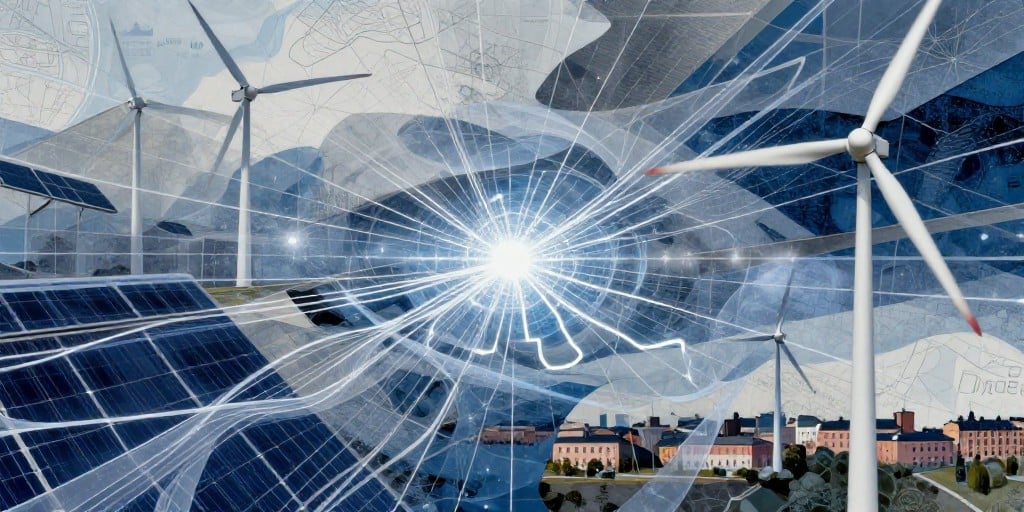
Fortum Oyj Highlights Power‑Sector Modernization at Pörssisijoittajan Viikko
During the closing session of Helsinki’s annual investor forum, Pörssisijoittajan viikko, Fortum Oyj presented its latest operational milestones and strategic trajectory. The company’s address, held within the industrial and machinery segment of the event, underscored its commitment to advancing power generation, transmission, and distribution capabilities in the context of a rapidly evolving energy landscape.
Grid Stability and Renewable Integration
Fortum’s management emphasized the increasing penetration of variable renewable resources—solar photovoltaic and wind turbines—across its service territory. The firm detailed the implementation of advanced real‑time monitoring systems and adaptive protection schemes to preserve grid stability under fluctuating supply conditions. By deploying phasor measurement units (PMUs) and wide‑area monitoring, the utility can detect and isolate faults within milliseconds, thereby preventing cascading outages and maintaining voltage profiles within stringent operational limits.
To accommodate high renewable penetration, Fortum has invested in grid‑stiffening measures such as static synchronous compensators (STATCOMs) and flexible AC transmission systems (FACTS). These devices provide rapid reactive power support, mitigating voltage sags and swells that frequently arise when wind farms experience sudden output changes. The company’s grid‑transmission upgrades also include high‑voltage DC (HVDC) links, which enhance long‑distance power transfer efficiency and reduce harmonic distortion compared to conventional AC systems.
Infrastructure Investment Requirements
The transition to a low‑carbon grid demands substantial capital outlays. Fortum has outlined a multi‑year investment plan targeting the refurbishment of aging sub‑stations, the deployment of smart metering infrastructure, and the expansion of inter‑regional transmission corridors. The projected investment exceeds €3 billion over the next decade, reflecting both the need to replace obsolete copper conductors and to upgrade protective relays with digital, communication‑enabled protection schemes.
A key component of this investment portfolio is the deployment of distributed energy resources (DERs) such as rooftop solar, battery storage, and electric vehicle (EV) charging stations. Fortum’s grid‑scale battery projects not only provide ancillary services—frequency regulation, spinning reserve—but also offer load‑shifting capabilities that smooth demand peaks, thereby reducing the need for peaking plants.
Regulatory Frameworks and Rate Structures
Fortum operates within a regulatory environment that balances the imperative of grid reliability with consumer affordability. The Finnish Energy Authority’s recent tariff revisions permit utilities to recover capital costs through performance‑based rate structures. Under this model, Fortum can link a portion of its revenue to the quality of service metrics—voltage quality, reliability indices, and renewable integration rates—encouraging investment in modernizing assets.
Moreover, the European Union’s Clean Energy Package mandates member states to increase the share of renewables in the electricity mix. Finland’s national grid operator, Fingrid, has adopted the “Smart Grid 2030” roadmap, stipulating that all new transmission infrastructure must support 90 % renewable penetration by 2030. Fortum’s compliance strategy involves aligning its generation portfolio with this target, thereby ensuring eligibility for incentive mechanisms such as the EU’s Cohesion Fund and the European Investment Bank’s green financing programs.
Economic Implications for Utility Modernization
Investing in advanced grid technologies has a dual economic impact. First, it reduces operating expenditures by enhancing system efficiency; second, it preserves the long‑term competitive position of the utility in a market that increasingly values renewable integration and grid resilience. Fortum’s projected cost‑benefit analysis indicates a payback period of 7–9 years for major grid upgrades, with subsequent savings reflected in lower outage costs and improved customer satisfaction.
From the consumer perspective, the shift to performance‑based tariffs may initially raise electricity prices by up to 5 % to cover modernization costs. However, over a 15‑year horizon, the integration of distributed generation and storage is expected to offset these costs through reduced peak demand charges and enhanced energy security. Fortum’s strategy includes a consumer‑centric communication plan to elucidate how these investments translate into long‑term price stability and reliability.
Conclusion
Fortum Oyj’s presentation at Pörssisijoittajan viikko articulated a clear technical roadmap for modernizing power generation, transmission, and distribution systems. By embracing advanced monitoring, adaptive protection, and extensive infrastructure investment, the company is positioning itself to meet the twin challenges of grid stability and renewable energy integration. Regulatory incentives and performance‑based rate structures further support this transition, promising economic benefits for both the utility and its consumers in the evolving energy transition landscape.