
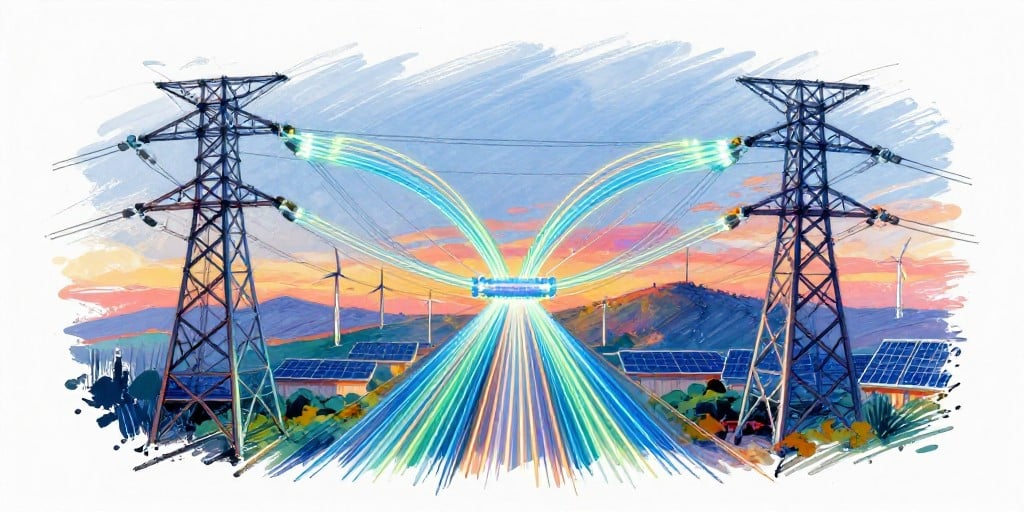
Fortis Inc. Expands in the Power Transmission Segment While Leveraging Advanced Optical Solutions
Fortis Inc. has recently reported a surge in earnings that can be largely attributed to its aggressive expansion into high‑performance optical fiber manufacturing, a capability that is becoming increasingly critical for modern power transmission and distribution networks. The company’s first‑quarter results, showing a year‑over‑year improvement, and a promising second‑quarter outlook underscore its dual‑focus strategy: delivering sophisticated optical components while simultaneously modernizing grid infrastructure.
Grid Stability and the Role of Fiber Optics
High‑speed, low‑latency communication is essential for maintaining the stability of power grids that are rapidly integrating variable renewable resources. Fiber‑optic links provide the necessary bandwidth to support wide‑area monitoring, real‑time state estimation, and fast‑acting protection schemes. Fortis’s production of specialty fibers and pre‑manufactured optical rods—specifically engineered for data‑center and high‑density network applications—addresses the need for robust, high‑capacity links between control centers, substations, and distributed energy resources (DERs).
By deploying these fibers in transmission corridors and substations, utilities can implement advanced phasor measurement units (PMUs) and automated reclosing protocols that reduce the duration of blackouts and improve voltage regulation across interconnections. The result is a more resilient grid capable of absorbing the intermittent output of wind and solar farms without compromising reliability.
Renewable Energy Integration Challenges
The integration of renewable energy assets introduces stochastic variability that can destabilize power system dynamics if not properly managed. Fortis’s optical solutions enable the deployment of sophisticated supervisory control and data acquisition (SCADA) systems that collect high‑resolution data from inverters, battery storage units, and wind turbines. With real‑time visibility, operators can adjust generator dispatch, perform dynamic voltage support, and execute coordinated black‑start procedures when necessary.
Moreover, the company’s fibers support the growing adoption of flexible AC transmission systems (FACTS) and high‑voltage direct current (HVDC) links, both of which rely on precise, high‑speed data exchanges for optimal operation. This technological synergy positions Fortis as a pivotal partner for utilities seeking to meet renewable penetration targets while maintaining grid stability.
Infrastructure Investment Requirements
Modernizing the grid demands capital expenditures that exceed the historical levels of investment. According to the U.S. Energy Information Administration, the federal and state grid modernization programs collectively allocated over $120 billion in 2025, with an additional $50 billion required over the next decade for smart grid upgrades, HVDC projects, and offshore wind interconnections.
Fortis’s strategic focus on high‑performance fibers reduces the cost per megabit of optical bandwidth, thereby lowering the overall capital outlay for utilities. By integrating fiber installation with existing civil construction—such as conduit and underground cabling—utilities can achieve a cost‑effectiveness ratio that is difficult to match with legacy copper or wireless communication alternatives.
Regulatory Frameworks and Rate Structures
The Federal Energy Regulatory Commission (FERC) and various state Public Utility Commissions (PUCs) are increasingly incorporating renewable portfolio standards (RPS) and net‑metering provisions that encourage distributed generation. These regulatory shifts create demand for advanced monitoring and control infrastructure. Fortis’s fiber solutions facilitate compliance with the Advanced Metering Infrastructure (AMI) mandates and the Smart Grid Interoperability Standards issued by the North American Electric Reliability Corporation (NERC).
Rate‑payer protection mechanisms, such as rate‑payer protection mechanisms (RPMs) in California’s investor‑owned utilities, require utilities to demonstrate cost‑effectiveness before passing on expenditures to customers. By reducing the per‑unit cost of communication infrastructure, Fortis’s products help utilities meet these stringent regulatory criteria and mitigate the impact on retail electricity rates.
Economic Impacts of Utility Modernization
Investing in high‑performance optical infrastructure yields measurable economic benefits. According to a 2024 Deloitte study, utilities that adopted fiber‑optic‑based control systems experienced a 4–6 % reduction in outage duration and a 3–5 % improvement in power quality metrics. These improvements translate into lower demand charges for industrial customers and reduced compensation costs for the utilities themselves.
Additionally, the proliferation of high‑density data networks catalyzes the development of new services—such as predictive maintenance and asset health monitoring—that generate incremental revenue streams. Fortis’s role as a supplier of both fiber hardware and integrated communication platforms positions the company to capitalize on this emerging market segment.
Conclusion
Fortis Inc. is leveraging its advanced optical manufacturing capabilities to address the critical needs of modern power transmission and distribution systems. By providing high‑capacity, low‑latency communication infrastructure, the company supports grid stability, facilitates renewable integration, and assists utilities in navigating regulatory and economic challenges. As the industry continues to evolve toward an electrified, low‑carbon future, Fortis’s dual focus on fiber optics and power system resilience offers a compelling value proposition for both investors and end‑users alike.