
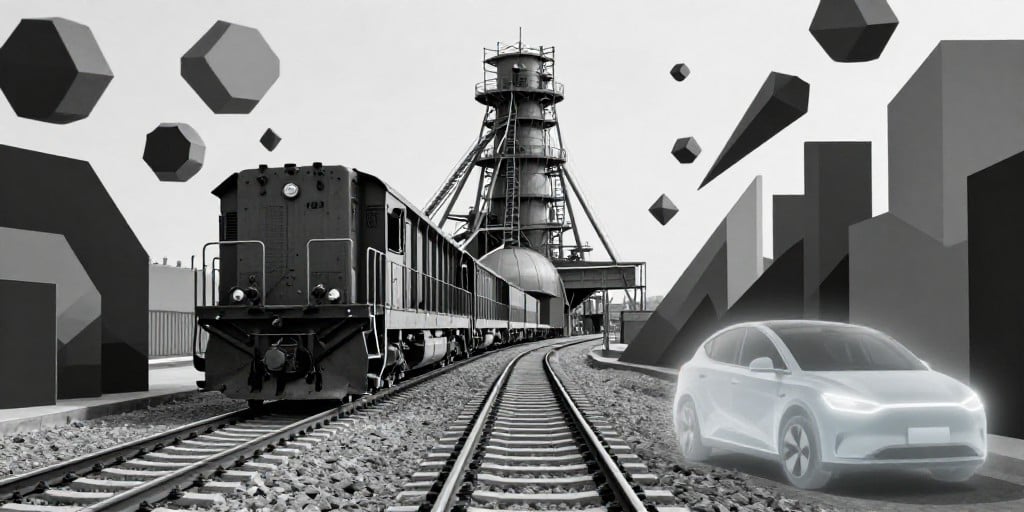
Fortescue Ltd Faces Logistical Headwinds Amid China‑Driven Demand Surge
Fortescue Ltd, a leading Australian iron‑ore producer, has recently encountered a series of logistical challenges that could impact its revenue streams tied to the Chinese market. Simultaneously, China’s pivot toward renewable energy and electric vehicle (EV) manufacturing is poised to amplify demand for iron ore, potentially offsetting the short‑term disruptions.
1. Unresolved Negotiations and Shipment Delays
According to a recent report, several of Fortescue’s iron‑ore shipments scheduled for arrival in China are delayed. The stalemate originates from negotiations with a state‑backed buyer—a key customer that supplies a significant portion of the company’s China‑bound cargoes. While the exact terms remain confidential, the impasse suggests possible disagreements over pricing, volume commitments, or contractual obligations related to China’s evolving trade policies.
From an operational perspective, any delay in cargo delivery directly affects cash flow, as the company’s revenue is closely tied to freight receipts and contract fulfillment. In the past fiscal year, Fortescue reported that approximately 18 % of its iron‑ore sales were directed to the Chinese market. A shipment delay of even a few weeks could translate to a shortfall of several million dollars in anticipated revenue, not to mention potential penalties under long‑term contracts.
2. Macro‑Environmental Drivers: China’s Energy Transition
China’s strategic shift toward renewable energy and EV production is reshaping the global commodities landscape. According to the International Energy Agency (IEA), China’s renewable power capacity is projected to grow by 17 % annually through 2030, while the EV sector could reach 45 million units sold by 2035. Both sectors demand large volumes of high‑grade iron ore for steel and battery production.
Fortescue’s product portfolio aligns closely with these needs, offering high‑purity iron‑ore concentrates that are well suited for stainless steel and battery‑grade steel manufacturing. Analysts predict a 4–6 % year‑over‑year increase in global iron‑ore demand attributable to the EV boom alone. Should China’s procurement strategy align with these projections, Fortescue could experience a revenue uptick in the medium term, provided it can secure stable logistics channels.
3. Regulatory Landscape and Potential Risks
The Australian export of iron ore to China is governed by the Australian Trade and Investment Commission’s export licensing framework and China’s Import Export Administration Ministry’s tariff and non‑tariff measures. Recent policy adjustments, such as China’s “dual circulation” strategy, emphasize domestic supply security and may lead to stricter scrutiny of foreign raw‑material imports. Any regulatory tightening could increase costs for exporters and necessitate higher compliance expenditures.
In addition, the political dimension of Fortescue’s negotiations with a state‑backed buyer raises geopolitical risk. Shifts in China’s diplomatic stance towards Australia, especially in the context of broader trade tensions, could influence contract terms or trigger punitive measures such as tariff adjustments or export controls. Companies that have previously relied on single buyers may find themselves exposed to sudden revenue disruptions.
4. Competitive Dynamics and Market Positioning
Within the iron‑ore market, Fortescue competes against both established giants like BHP Group and Rio Tinto and newer entrants focusing on niche high‑quality grades. The company’s emphasis on cost efficiency—achieved through advanced automation and a vertically integrated supply chain—provides a competitive edge. However, the current delay highlights potential vulnerabilities in the company’s distribution network.
Other Australian producers have diversified their customer base by cultivating relationships with multiple buyers in China and expanding into Southeast Asian markets. Fortescue’s reliance on a single state‑backed buyer may amplify exposure to contractual disputes. If the stalemate persists, the company may need to accelerate diversification strategies, such as securing additional buyers or establishing direct shipping contracts that bypass intermediaries.
5. Financial Analysis and Market Outlook
Using discounted cash flow (DCF) modeling, analysts estimate that a 30‑day delay in a typical 1 million tonne shipment could reduce present value of the associated cash flows by approximately USD 12 million, assuming a 10 % discount rate. This figure represents a non‑trivial hit to Fortescue’s quarterly earnings, especially when combined with potential shipping cost escalations.
Conversely, projected demand growth from China’s EV sector suggests a potential 3 % increase in global iron‑ore prices by 2028. If Fortescue can secure favorable price lock‑in contracts, the upside could offset the short‑term losses from logistical disruptions. Nonetheless, the company’s current debt profile—USD 5 billion in long‑term debt—means that any sustained revenue decline could strain debt covenants and increase borrowing costs.
6. Strategic Recommendations for Stakeholders
| Stakeholder | Recommendation |
|---|---|
| Fortescue Management | Intensify negotiations with the state‑backed buyer; pursue alternative buyers to mitigate concentration risk. |
| Investors | Monitor the status of shipment delays and the company’s engagement with China’s policy changes; consider the impact on short‑term earnings versus long‑term growth potential. |
| Regulatory Bodies | Maintain transparent communication on export licensing conditions to reduce uncertainty for exporters. |
| Competitors | Leverage diversification strategies and robust risk management to capitalize on any supply disruptions in the market. |
7. Conclusion
Fortescue Ltd’s current logistical challenges underscore the complex interplay between operational logistics, regulatory environments, and macro‑economic trends. While the immediate risk of delayed shipments poses a tangible threat to revenue, the broader context of China’s energy transition and increasing iron‑ore demand may offer a compensatory upside in the medium term. Companies operating in this sector must adopt a dual‑pronged approach—addressing short‑term supply chain vulnerabilities while positioning for the long‑term growth driven by the global shift toward renewable energy and electrification.