FirstEnergy Corp. Announces $1 B Equity Offering to Strengthen Grid Modernization Efforts
FirstEnergy Corp., a leading electric services provider headquartered in Ohio, filed a Form 8‑K with the Securities and Exchange Commission on 25 November 2026. The filing confirms that the company has submitted a prospectus supplement under Rule 424(b)(5) for a new equity offering of up to one billion dollars through the sale of common stock. The supplement follows an earlier prospectus dated 15 June 2026 and updates the offering terms, intended use of proceeds, and the company’s financial statements.
Capital Allocation Strategy
FirstEnergy’s management has emphasized that the capital raise is a strategic instrument to accelerate its growth agenda and reinforce its balance sheet. While the filing does not disclose operational or financial material changes beyond the equity issuance, the company’s guidance underscores several key initiatives:
- Grid Stability and Resilience
- Investment in advanced synchrophasor technology and Wide‑Area Measurement Systems (WAMS) to enhance real‑time monitoring of voltage and frequency stability across the interconnected Eastern Interconnection.
- Deployment of adaptive protection schemes that can dynamically reconfigure breaker settings in response to cascading fault events, thereby mitigating the risk of large‑scale blackouts.
- Renewable Energy Integration
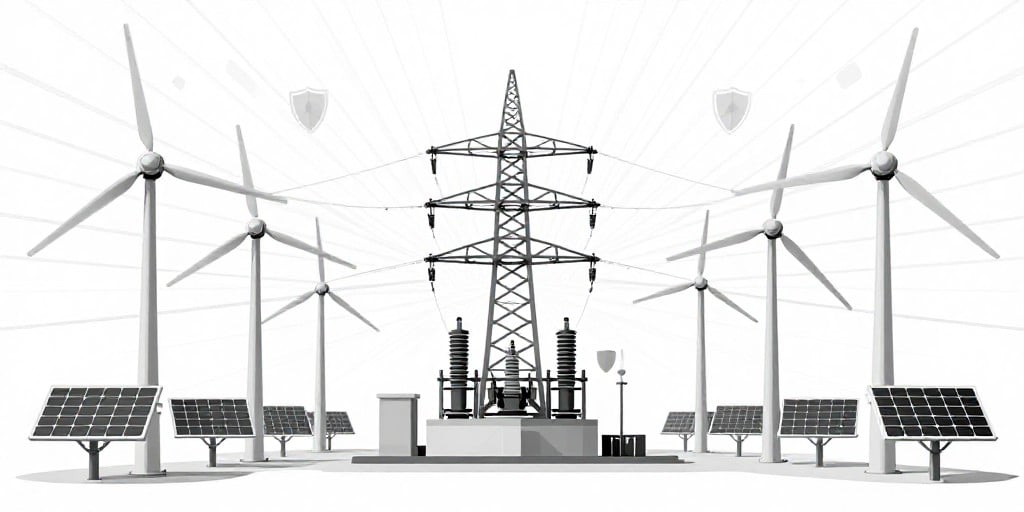
- Expansion of the utility’s renewable portfolio through the acquisition of solar and wind assets, necessitating upgrades to the transmission network to accommodate bidirectional power flows and mitigate congestion.
- Implementation of Energy Storage Systems (ESS) in key substations to buffer variability, support ancillary services such as voltage regulation and spinning reserve, and reduce curtailment of intermittent resources.
- Infrastructure Modernization
- Replacement of aging 230 kV transmission lines with high‑voltage, high‑capacity conductors that reduce transmission losses and increase line rating by up to 10 %.
- Integration of digital twins for substations to enable predictive maintenance, optimize asset utilization, and lower outage durations.
Regulatory and Economic Context
The capital infusion is also positioned to navigate evolving regulatory frameworks:
Rate Design and Incentives State Public Utility Commissions are increasingly mandating performance‑based rates that reward utilities for reliability metrics and grid modernization milestones. FirstEnergy’s investment plan aligns with these incentives, potentially qualifying for cost‑of‑service (COST) recoveries under new tariff structures that favor low‑carbon grid upgrades.
Federal Clean Energy Standards The Energy Policy Act of 2026 imposes a 50 % renewable energy target for utilities with a 100 MW service area by 2035. The new equity capital will be partially earmarked for meeting this requirement, ensuring compliance while avoiding punitive penalties that could impact investor confidence.
Economic Impact on Consumers While the immediate effect on retail rates is projected to be modest, the long‑term benefits include reduced outage costs, improved power quality, and the potential for lower wholesale energy procurement expenses through enhanced demand response capabilities. Moreover, the upgraded grid can better accommodate distributed generation, giving consumers greater flexibility and potentially lowering their net energy costs over time.
Technical Implications for the Energy Transition
From an engineering standpoint, FirstEnergy’s modernization trajectory illustrates the complex dynamics of power system operation in the context of the energy transition:
Dynamic System Modeling The integration of high‑penetration renewables necessitates advanced dynamic simulations to predict oscillatory behavior under varying load and generation scenarios. Accurate modeling ensures that the control strategy maintains system synchronism and limits power swings that could destabilize the grid.
Cyber‑Physical Security As control centers become increasingly networked, the risk of cyber‑attacks on protection relays and SCADA systems rises. The capital allocation includes investments in cybersecurity frameworks, intrusion detection systems, and secure communication protocols to safeguard grid integrity.
Smart Grid Analytics Real‑time analytics leveraging machine learning algorithms will process large volumes of sensor data, enabling predictive insights into voltage stability margins and fault likelihood. These capabilities are critical for preemptive dispatch adjustments and load‑shedding strategies that preserve supply‑demand balance.
Conclusion
FirstEnergy Corp.’s forthcoming equity offering represents a deliberate financial strategy to underpin its commitment to grid resilience, renewable integration, and infrastructure renewal. By aligning capital deployment with regulatory incentives and technical best practices, the company positions itself to navigate the challenges of a transitioning energy landscape while safeguarding consumer interests and supporting broader economic stability.