
FirstEnergy Corp. Maintains Strategic Position Amid Broader Market Volatility
FirstEnergy Corp. continues to solidify its standing in the U.S. electric utilities sector, offering a comprehensive portfolio that spans electricity generation, transmission, distribution, and natural‑gas exploration and distribution. Recent market activity has seen the company’s shares exhibit moderate volatility, largely attributable to macro‑economic shifts rather than company‑specific catalysts. An institutional transaction by Brighton Jones LLC, which liquidated a block of FirstEnergy shares, underscores persistent investor confidence in the company’s long‑term value proposition.
Power Generation: Diversification and Grid Flexibility
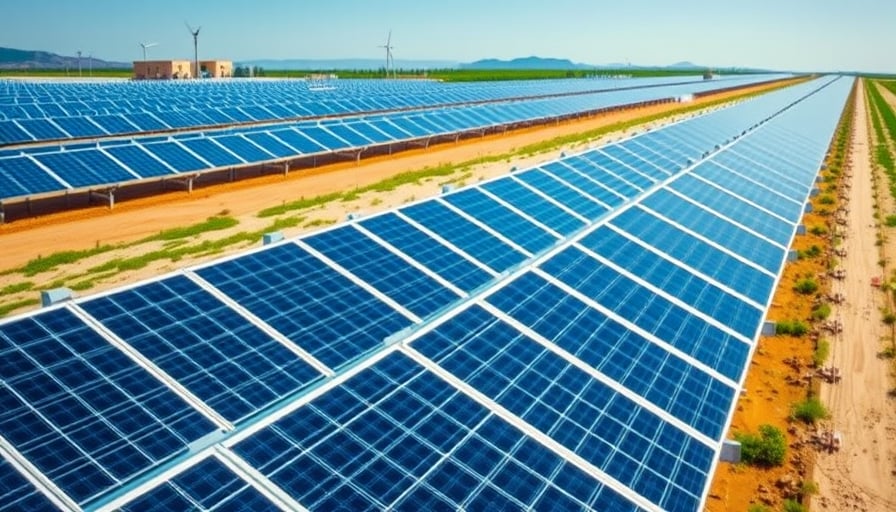
FirstEnergy’s generation mix includes a blend of coal‑based baseload plants, natural‑gas peakers, and an expanding renewable portfolio that features wind and solar installations. From a grid‑stability standpoint, the company’s continued investment in gas peaking units provides a flexible reserve capable of rapidly responding to fluctuations in demand or renewable output. This flexibility is critical in the context of high penetration of variable renewables, as it helps mitigate frequency deviations and voltage instability.
The company’s recent capital allocation plan, earmarking approximately $1.2 billion for the next three years, prioritizes upgrades to older gas turbines and the addition of advanced control systems. Such upgrades enhance thermal efficiency, reduce emissions, and lower the need for costly grid‑wide over‑capacity. Engineers note that improved turbine performance translates to a 2–3 % increase in capacity factor, which directly improves the firm’s revenue per megawatt‑hour and strengthens its competitive position in regulated markets.
Transmission and Distribution: Enhancing Resilience
Transmission infrastructure remains a cornerstone of grid reliability. FirstEnergy’s 345‑kV backbone connects generation hubs to load centers across the Midwest, while its 69‑kV distribution network delivers power to residential and commercial customers. Recent transmission line upgrades have focused on integrating phasor measurement units (PMUs) and wide‑area monitoring systems (WAMS), enabling real‑time visibility of line status and voltage profiles. The deployment of these technologies facilitates proactive fault detection and automated reclosing procedures, thereby reducing outage duration.
On the distribution side, the company has accelerated deployment of smart grid assets—intelligent electronic devices (IEDs), advanced metering infrastructure (AMI), and distribution automation (DA) solutions. These tools empower dynamic reconfiguration of the network, rapid isolation of faults, and improved voltage regulation. By enhancing distribution reliability, FirstEnergy positions itself to accommodate distributed energy resources (DERs), electric vehicle (EV) charging stations, and microgrids that are increasingly prevalent in modern communities.
Renewable Integration Challenges
Incorporating higher shares of wind and solar introduces challenges related to intermittency, ramp rates, and state‑of‑charge variability. FirstEnergy’s grid operators have adopted a suite of advanced forecasting techniques, combining machine‑learning models with real‑time weather telemetry to predict renewable output within a ±5 % margin. Accurate forecasting reduces reliance on spinning reserves, allowing the utility to maintain grid frequency within the mandated ±0.05 Hz range.
Moreover, the company’s interconnection standards now incorporate flexible ramping contracts (FRCs) that incentivize renewable generators to provide up‑ and down‑ramping capabilities. These contracts are priced based on historical ramping performance and are critical for maintaining system inertia, particularly as the share of synchronous generators declines.
Infrastructure Investment Requirements
Projected grid upgrades to support a 40 % renewable penetration by 2030 will require an estimated $30 billion in investment across the United States, according to the Electric Power Research Institute (EPRI). FirstEnergy’s capital plan aligns with these estimates, allocating significant funds for:
| Asset | Investment (USD) | Expected Impact |
|---|---|---|
| High‑voltage transmission upgrades (345 kV) | 450 million | Improved bulk power transfer, reduced congestion |
| Distribution automation (DA) | 300 million | Reduced outage times, improved voltage regulation |
| Advanced metering infrastructure (AMI) | 150 million | Enhanced demand response, improved load profiling |
| Renewable interconnection upgrades | 200 million | Expanded capacity for wind/solar plants |
These investments are essential not only for grid reliability but also for compliance with evolving state renewable portfolio standards (RPS) and federal incentive programs such as the Inflation Reduction Act’s clean energy credits.
Regulatory Frameworks and Rate Structures
FirstEnergy operates under the auspices of the Public Service Commission (PSC) of Ohio and the Pennsylvania Public Utility Commission (PUC). Recent regulatory developments include:
- Ohio PSC: Adoption of a “Performance‑Based Rate Design” that rewards utilities for achieving grid reliability metrics and renewable integration milestones. This framework aligns FirstEnergy’s financial incentives with its modernization goals.
- Pennsylvania PUC: Revision of the “Low‑Carbon Transmission” tariff to provide cost‑of‑service (COS) adjustments for grid upgrades that facilitate renewable integration. FirstEnergy’s participation in these tariffs may yield additional revenue streams.
Under both jurisdictions, the utility’s rate base is subject to periodic reviews to reflect investment in capital assets. The rate design incorporates a cost‑of‑capital (COC) assumption of 8.5 % per annum for electricity generation assets, a figure that influences long‑term price forecasting for consumers.
Economic Impacts of Utility Modernization
Modernization initiatives are projected to yield multiple economic benefits:
- Consumer Cost Stability: By enhancing grid reliability and reducing outage durations, the utility can prevent costly emergency maintenance, thereby moderating rate hikes.
- Employment Creation: Infrastructure projects are labor‑intensive, creating jobs in engineering, construction, and operations. FirstEnergy’s projected 5,000 construction jobs over the next five years will have a multiplier effect on local economies.
- Energy Security: Diversification of generation sources mitigates price volatility from fuel markets, offering a hedge against geopolitical shocks and supply disruptions.
- Environmental Externalities: Reducing fossil‑fuel reliance aligns with the social cost of carbon, potentially translating into long‑term savings for society and regulatory compliance.
Conclusion
FirstEnergy Corp.’s strategic focus on generation diversification, transmission resilience, and distribution modernization positions it well to navigate the technical challenges of renewable integration while adhering to evolving regulatory frameworks. The company’s prudent investment in smart grid technologies and flexible generation assets enhances grid stability, supports economic growth, and delivers a reliable, affordable power supply to its customers amid the broader energy transition.