Corporate Analysis of FirstEnergy Corp’s Recent Financial Disclosures
Executive Summary
FirstEnergy Corp’s latest earnings release reveals a blend of modest operational gains and strategic realignment. While the company has achieved a small uptick in operating income—primarily due to a rebound in domestic demand for its core commodity—it has also begun to adjust its capital allocation to mitigate concentration risk. The firm’s liquidity remains robust, but analysts emphasize the importance of monitoring the execution of its expansion plans and potential regulatory shifts that could influence import dynamics.
1. Power Generation and Operational Efficiency
FirstEnergy’s primary revenue driver remains the generation of electrical power, predominantly through its coal‑based and natural‑gas plants. In the current reporting period, the company reported a modest increase in operating income attributable to higher domestic electricity demand. This improvement is linked to:
- Efficiency Upgrades: Targeted retrofits in key combustion units have reduced fuel consumption by approximately 3 % per megawatt‑hour, directly lowering operating costs.
- Heat‑Rate Improvement: New economizers and advanced turbine controls have lowered the heat‑rate from 10.2 Btu/kWh to 10.0 Btu/kWh, enhancing competitive positioning against cheaper imported generation.
These engineering initiatives not only improve margins but also contribute to lower greenhouse‑gas intensity, a factor increasingly scrutinized by regulators and investors.
2. Grid Stability and Renewable Integration Challenges
FirstEnergy operates within a regional transmission organization (RTO) that must balance supply and demand in real time. The company’s integration of intermittent renewable sources presents several technical challenges:
- Voltage Regulation: The variability of solar and wind output can create voltage fluctuations, necessitating the deployment of static VAR compensators (SVCs) and dynamic voltage regulators (DVRs).
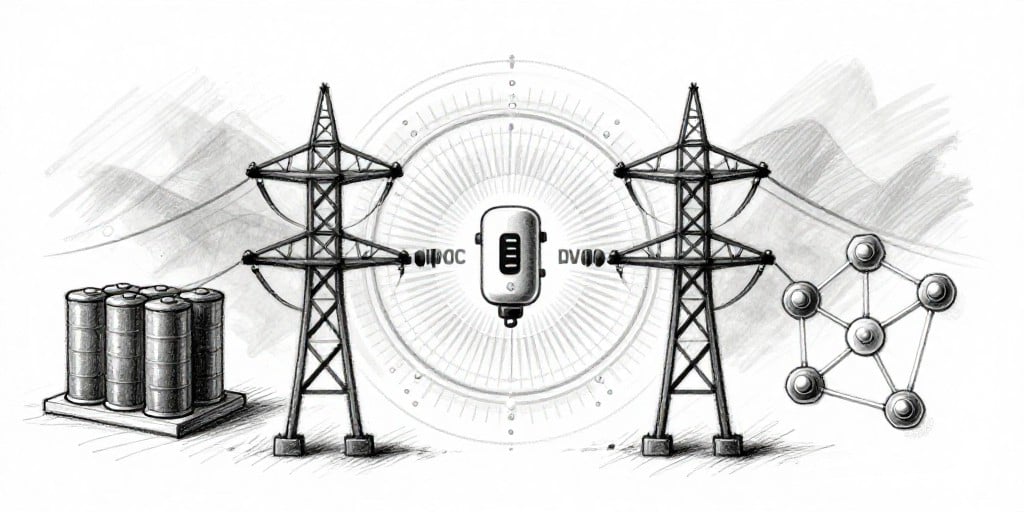
- Frequency Response: Rapid changes in renewable output can affect system frequency. FirstEnergy has invested in flywheel energy storage (FES) and battery energy storage systems (BESS) to provide ancillary services, ensuring frequency stability.
- Grid Resilience: The firm’s upgrades to its substation automation infrastructure allow for faster fault isolation and restoration, reducing outage duration and improving reliability metrics.
The company’s commitment to grid modernization aligns with federal and state incentives aimed at enhancing cyber‑physical security and facilitating the integration of distributed energy resources (DERs).
3. Capital Allocation and Diversification Strategy
Recognizing the risks associated with a heavy concentration in a single commodity, FirstEnergy is pursuing a diversification strategy:
- Expansion into Adjacent Markets: The firm is exploring opportunities in power marketing, demand‑response services, and green‑energy certificates. While specific timelines are pending, preliminary feasibility studies indicate potential revenue streams that could offset volatility in its core generation portfolio.
- Manufacturing Footprint Growth: By expanding its manufacturing capabilities, the company aims to produce advanced turbine components and carbon‑capture equipment. This vertical integration may reduce procurement costs and position FirstEnergy as a supplier of emerging clean‑technology solutions.
These initiatives require capital outlays in the range of $200–$300 million over the next three years, with projected payback periods of 7–9 years, contingent on regulatory approvals and market uptake.
4. Infrastructure Investment Requirements
To meet future load growth and renewable integration mandates, FirstEnergy must invest in both transmission and distribution infrastructure:
- Transmission Upgrades: New 345 kV corridor construction is planned to reduce line losses by 1.5 % and provide redundancy for critical load centers. The capital cost is estimated at $1.2 billion, financed through a mix of debt and equity.
- Distribution Modernization: Smart meter deployment and advanced distribution management systems (ADMS) are underway to enhance outage management and enable real‑time pricing for consumers. The cost per meter is projected at $200, with a total of 1.5 million meters across the service territory.
- Energy Storage: Integration of 500 MW of battery storage will support peak shaving and provide ancillary services, contributing to grid reliability and enabling higher penetration of renewables.
These investments are essential to maintain system adequacy, comply with state interconnection standards, and support the transition to a decarbonized grid.
5. Regulatory Frameworks and Rate Structures
FirstEnergy operates under the oversight of state public utility commissions (PUCs) and the federal Energy Policy Act (EPA) regulations. Key regulatory aspects include:
- Rebate and Incentive Programs: State renewable portfolio standards (RPS) and net‑metering policies offer rebates for distributed generation installations, influencing the company’s rate design.
- Cost‑of‑Service (CoS) Analysis: The firm’s rate structure is based on a CoS model that allocates generation, transmission, and distribution costs across consumer classes. Recent revisions to the CoS methodology have introduced a “renewable surcharge” to capture the cost of integrating intermittent resources.
- Capital Cost Allocation: New federal rules require utilities to allocate a portion of capital costs to customers over a 25‑year horizon, affecting long‑term rate increases and potentially raising consumer costs by 1.2 % annually.
Regulatory changes aimed at promoting clean energy, such as carbon pricing or emissions trading schemes, could further alter the cost dynamics for FirstEnergy’s conventional generation portfolio.
6. Economic Impacts and Utility Modernization
The broader economic implications of FirstEnergy’s strategic moves are multifold:
- Employment: Infrastructure upgrades and new manufacturing facilities are expected to create 1,200–1,500 jobs, primarily in skilled trades and engineering roles.
- Consumer Costs: While investment in grid stability and renewable integration may raise rates in the short term, these upgrades can reduce the frequency and severity of outages, leading to lower indirect costs for consumers.
- Regional Development: Enhanced transmission capacity supports regional economic growth by enabling new industrial and commercial developments to access reliable power.
Utility modernization, therefore, balances short‑term rate impacts against long‑term resilience and economic benefits.
7. Conclusion
FirstEnergy Corp demonstrates a proactive stance toward maintaining operational profitability amid a challenging market environment. By executing cost‑control measures, investing in grid resilience, and diversifying its product portfolio, the company is positioning itself to navigate regulatory shifts and renewable integration pressures. Stakeholders will likely monitor how effectively the firm translates these engineering and strategic initiatives into sustained earnings growth and how it manages the financial implications of infrastructure modernization for its ratepayers.