FirstEnergy Corp. Adjusts Long‑Term Outlook Amid New West Virginia Project
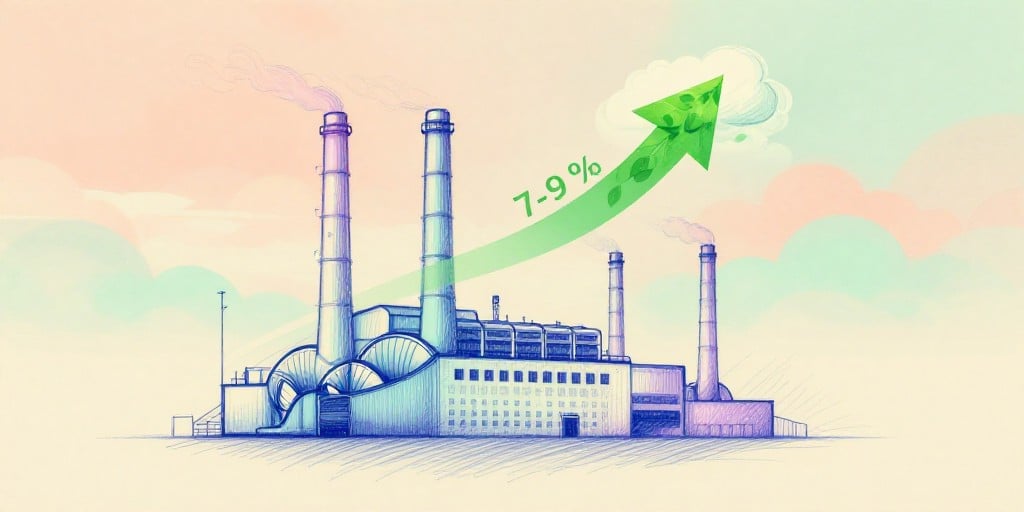
FirstEnergy Corporation’s latest filing, dated 20 November 2026, signals a modest but noteworthy shift in the utility’s strategic trajectory. In a presentation posted on the company’s investor‑relations website, management revised its core earnings‑growth forecast for the 2026‑2030 period to 7 %–9 %—with a clear preference for the upper end of the band—and increased its capital‑investment plan from $36 billion to $38 billion. The impetus for these adjustments is the Public Service Commission of West Virginia’s approval of the Maidsville Energy Center, a combined‑cycle natural‑gas plant that will require a larger equity contribution than previously anticipated.
A Deeper Look at the Maidsville Energy Center
The Maidsville facility represents a significant expansion in FirstEnergy’s generation portfolio. Unlike traditional coal‑ or nuclear‑based assets, the plant’s combined‑cycle design offers higher efficiency and lower emissions, aligning with the regulatory push toward cleaner fossil fuel generation. However, the project’s financing structure—particularly the need for a $2.8 billion equity infusion versus the prior $2.0 billion estimate—raises questions about the company’s risk appetite and its ability to attract capital in a market that has become increasingly skeptical of fossil‑fuel projects.
Key regulatory and market dynamics that frame this expansion include:
- West Virginia’s Renewable Portfolio Standard (RPS) – While the state’s RPS is comparatively modest, it mandates that utilities integrate renewable sources into their mix. FirstEnergy’s decision to invest in a natural‑gas facility could be seen as a bridge strategy, but it must still reconcile with long‑term RPS compliance.
- Federal Clean Energy Credits – The plant’s generation surcharge, intended to recover construction financing, may qualify for federal tax credits, yet the credit structure is sensitive to policy changes, especially under the evolving Biden administration’s clean‑energy agenda.
- Commodity Volatility – Natural‑gas prices have exhibited pronounced swings in recent years. FirstEnergy’s reliance on a gas‑fuelled plant exposes it to commodity‑price risk, potentially eroding the projected earnings‑growth range if prices remain elevated.
Capital Structure Implications
FirstEnergy’s capital‑investment increase will be partially financed through equity‑like securities—a hybrid instrument that blends debt and equity characteristics. This choice reflects the company’s desire to maintain a healthy debt‑equity ratio while avoiding the dilution that outright equity issuance would generate. However, investors should note:
- Valuation Impact – Equity‑like securities often trade at a discount to common equity, potentially lowering the company’s market valuation in the short term.
- Debt Covenant Flexibility – The hybrid nature of these instruments may provide more flexibility in meeting debt covenants, but also introduces complexity in the capital structure that can complicate future financing rounds.
- Investor Sentiment – Market participants are increasingly scrutinizing utilities’ exposure to fossil‑fuel projects. The inclusion of a natural‑gas facility in FirstEnergy’s portfolio may influence sentiment, particularly among ESG-focused investors.
Earnings‑Growth Forecast in Context
The revised earnings‑growth range of 7 %–9 % is based on the company’s updated capacity additions, projected load growth, and cost‑control initiatives. While the upper end of the range is ambitious, it aligns with industry peers that have successfully integrated combined‑cycle plants into their portfolios. Nevertheless, skepticism remains warranted:
- Cost Overruns – Construction projects of this scale historically experience overruns, especially in the energy sector where labor and material costs are volatile.
- Regulatory Uncertainty – Changes in federal or state renewable mandates could compel FirstEnergy to accelerate the integration of renewable assets, potentially diluting earnings from the new plant.
- Competitive Landscape – The proliferation of renewable energy developers in West Virginia may intensify competition for generation rights and wholesale power contracts, compressing margins.
Opportunities and Risks
| Opportunity | Risk |
|---|---|
| Higher Efficiency – The combined‑cycle design offers 55 %+ thermal efficiency, potentially lowering fuel costs. | Commodity Exposure – Reliance on natural gas makes the company vulnerable to price spikes. |
| Regulatory Favor – The generation surcharge could improve project economics and provide a competitive edge in bidding for new capacity. | ESG Scrutiny – Investors may penalize continued fossil‑fuel investments, affecting the company’s cost of capital. |
| Diversified Portfolio – Adding natural gas balances the utility’s existing coal and nuclear mix, enhancing reliability. | Capital Allocation – $2.8 billion equity need may dilute existing shareholders if not managed carefully. |
| Potential for Tax Credits – Federal incentives for low‑carbon natural‑gas plants could offset operational costs. | Regulatory Shifts – Future tightening of emissions standards could render the plant less attractive or require costly retrofits. |
Bottom Line
FirstEnergy’s revised outlook and investment plan underscore a cautious optimism about the utility sector’s trajectory. The company’s willingness to embrace a sizable natural‑gas project—despite commodity and regulatory headwinds—signals confidence in its strategic positioning. Yet, the increased equity requirement and reliance on a hybrid financing structure invite scrutiny. Investors should weigh the potential upside of higher efficiencies against the inherent risks of commodity volatility, regulatory uncertainty, and shifting ESG expectations. A nuanced view of FirstEnergy’s capital structure, coupled with vigilant monitoring of West Virginia’s energy policy environment, will be essential for those assessing the company’s long‑term value proposition.