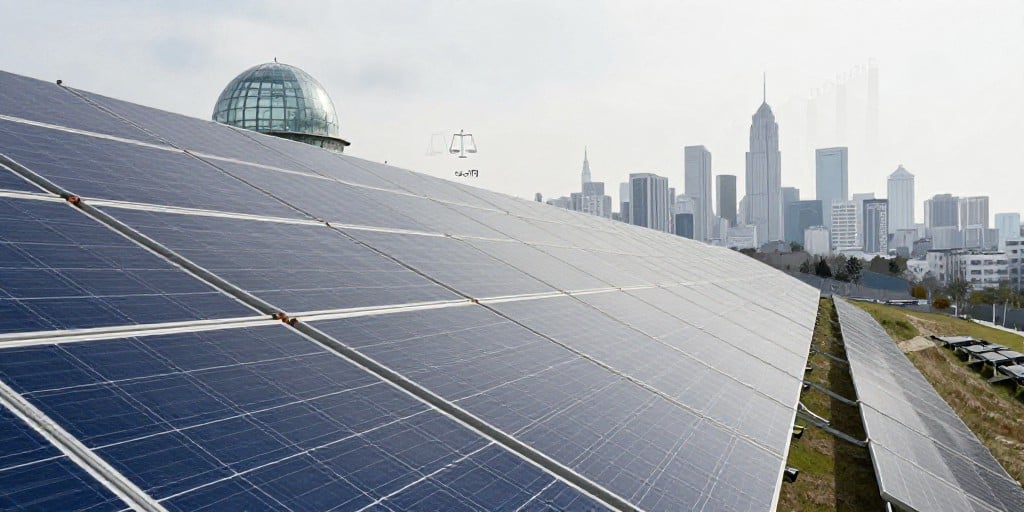
First Solar Inc. Faces Multifaceted Headwinds Amid Stock Decline
Macro‑Environmental Pressures
First Solar’s share price has contracted sharply over the past calendar year, prompting a split in investor sentiment. A key driver of this volatility is the broader macro‑environment: Treasury yields have risen, tightening the cost of capital for the large‑scale solar projects that constitute the majority of First Solar’s revenue stream. As financing costs climb, developers are lengthening project timelines and tightening return expectations, which directly dampens demand for the company’s thin‑film modules.
Simultaneously, federal policy uncertainty continues to weigh on the sector. The future of the Investment Tax Credit (ITC) and other clean‑energy subsidies remains in flux, creating a perception that the financial viability of new installations could shift abruptly. Even modest adjustments in these subsidies could alter project economics dramatically, feeding into the broader risk premium that investors are assigning to First Solar.
Management’s Long‑Term Narrative
Amid these macro‑headwinds, First Solar’s management has reiterated its long‑term guidance, emphasizing a backlog of contracted orders that spans a decade. The company’s thin‑film technology, combined with existing contracts, is viewed by some analysts as a buffer against supply bottlenecks and execution delays. Nevertheless, the narrative is not without caveats. Recent developments—such as the withdrawal of a trade complaint with the U.S. International Trade Commission and ongoing patent litigation—introduce a layer of legal and trade risk that could precipitate further price swings.
Regulatory and Legal Landscape
The company’s decision to retract its trade complaint appears to stem from a reassessment of the likelihood of securing favorable trade remedies, yet it may also signal a broader shift in strategy that could affect its competitive stance. Patent disputes, meanwhile, remain a lingering threat: any adverse rulings could erode the proprietary advantage that First Solar’s technology enjoys, potentially inviting new entrants or reducing the pricing power of existing customers.
Analyst Consensus and Valuation
Despite the headwinds, the consensus among analysts remains cautiously optimistic. “Buy” and “Hold” ratings dominate, with consensus price targets suggesting moderate upside. However, these targets are premised on a valuation that sits below historical averages, implying that any material improvement in the company’s fundamentals or a favorable policy shift could unlock significant upside.
Risks and Opportunities
- Risks:
- Escalating financing costs could suppress module demand further.
- Uncertainty surrounding federal subsidies may lead to abrupt changes in project economics.
- Ongoing intellectual‑property litigation could erode technological advantages.
- Trade policy fluctuations may alter supply chain dynamics and cost structures.
- Opportunities:
- A stable backlog of orders may provide cash‑flow resilience as the market matures.
- Thin‑film technology could position First Solar favorably in markets where grid integration challenges are paramount.
- Potential policy reforms, such as an expanded ITC or new subsidy mechanisms, could reverse current demand dampening.
Outlook
Market participants should monitor upcoming earnings releases, the resolution of patent disputes, and any substantive changes to federal subsidy frameworks. These factors are likely to dictate the short‑term trajectory of First Solar’s stock and will shape the company’s capacity to convert its contractual pipeline into sustained revenue growth. The interplay of rising financing costs, policy uncertainty, and legal developments will continue to be the focal point for investors assessing the risk‑return profile of the stock in the months ahead.