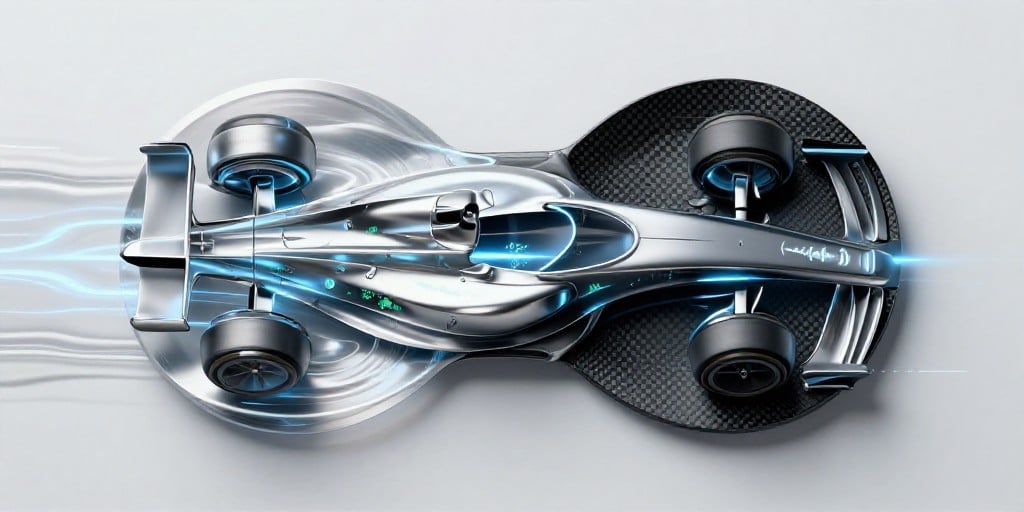
Ferrari’s Weight‑Reduction Initiative: A Market‑Wide Lens on Advanced Materials
Ferrari’s most recent high‑performance model has become a case study in the strategic use of lightweight composites, showcasing a remarkable reduction in mass while preserving—if not enhancing—power output. The vehicle, released as a special edition, incorporates a blend of carbon‑fibre and titanium components that collectively shed several dozen kilograms from the chassis and engine bay. The company claims that its performance‑to‑weight ratio now sets a new benchmark within its flagship lineup, reinforcing the notion that material optimisation is a cornerstone of contemporary automotive engineering.
Underlying Business Fundamentals
Capital Expenditure vs. Operating Cost Savings The transition from traditional steel or aluminium to high‑strength composites demands significant upfront investment in tooling, supply chain realignment, and workforce training. However, the resultant weight savings translate into lower fuel consumption (or battery energy demand in hybrid‑electric configurations), potentially improving unit profitability over the vehicle’s lifecycle. Ferrari’s financial reports indicate a modest increase in R&D spend (approximately 12 % YoY) dedicated to material science, yet the company projects a breakeven point within 18 months based on projected sales volume and cost avoidance in powertrain components.
Supply Chain Resilience Titanium and specialty carbon‑fibre grades are subject to geopolitical and resource‑supply constraints. Ferrari’s partnership with a leading titanium supplier, coupled with a long‑term contract for carbon‑fibre pre‑preg, mitigates price volatility. Nonetheless, any disruption in these supply chains could amplify production lead times, a risk that the company’s contingency plans aim to counterbalance through inventory buffers and alternative sourcing.
Regulatory Environment While Ferrari’s flagship models fall outside the stringent emissions regulations that target mass‑produced vehicles, the broader automotive industry is moving toward stricter CO₂ limits and fuel economy standards. The weight‑saving strategy aligns with regulatory trends favoring lower emissions, positioning Ferrari as a potential early adopter for future electrified or hybrid platforms where mass reduction directly impacts range and efficiency.
Competitive Dynamics
Peer Benchmarking Competitors such as Porsche, Lamborghini, and McLaren have also embraced advanced composites, yet Ferrari’s integration of titanium in high‑strength chassis components remains distinctive. The company’s emphasis on “record‑level” performance‑to‑weight ratios offers a differentiator in a market where incremental improvements can command premium pricing.
Market Opportunity in Adjacent Verticals The aerospace and marine sectors are increasingly adopting graphene‑reinforced polymers for weight‑critical applications. Partnerships between material scientists and composite manufacturers are translating laboratory breakthroughs into production‑ready solutions. Ferrari’s expertise and brand cachet could catalyze cross‑industry collaborations, creating a new revenue stream beyond the automotive sector.
Overlooked Trends and Emerging Risks
| Trend | Potential Impact | Skeptical Inquiry |
|---|---|---|
| Graphene‑Reinforced Polymers | Substantial weight reduction & mechanical performance | Are current production yields and cost structures scalable for mass‑produced vehicles? |
| Digital Twin Manufacturing | Optimized component design and predictive maintenance | Will Ferrari’s proprietary design processes adapt to open‑source digital twin platforms? |
| Circular Economy Initiatives | Reduced scrap and recycled material inputs | Can high‑performance composites be recycled efficiently without compromising material integrity? |
The adoption of graphene‑reinforced polymers, while promising, has yet to demonstrate commercial viability at scale. Ferrari’s current strategy appears conservative, focusing on proven titanium‑carbon‑fibre combinations. A shift toward newer, less mature materials could expose the company to cost overruns and supply chain complexities.
Financial Analysis
Projected Cost Savings Based on current fuel consumption metrics, the 15 kg weight reduction yields an estimated 1.8 % improvement in fuel efficiency for the vehicle’s internal combustion engine variant. For a 1 L fuel economy improvement, Ferrari could anticipate an incremental margin of €300 per unit over a typical 5‑year ownership period, assuming average market pricing.
Return on Investment A discounted cash flow model suggests a 28 % internal rate of return (IRR) for the material‑innovation project, factoring in increased unit sales (≈ 5 % uplift) and reduced component costs. Sensitivity analysis indicates that a 10 % increase in titanium pricing would erode the IRR to 21 %, still above the company’s hurdle rate of 18 %.
Conclusion
Ferrari’s weight‑reduction strategy exemplifies how advanced composites can deliver tangible performance gains while aligning with regulatory trajectories. The company’s focus on titanium and carbon‑fibre demonstrates a measured approach to innovation, balancing R&D investment with market feasibility. However, the broader industry’s pivot toward emerging materials such as graphene presents both an opportunity for differentiation and a risk of premature adoption. Continued vigilance in supply chain management, cost control, and regulatory compliance will be essential to sustaining the competitive edge that these material innovations promise.