Ferrari Inc. Reports Strong Q3 2026 Earnings Amid Market Volatility
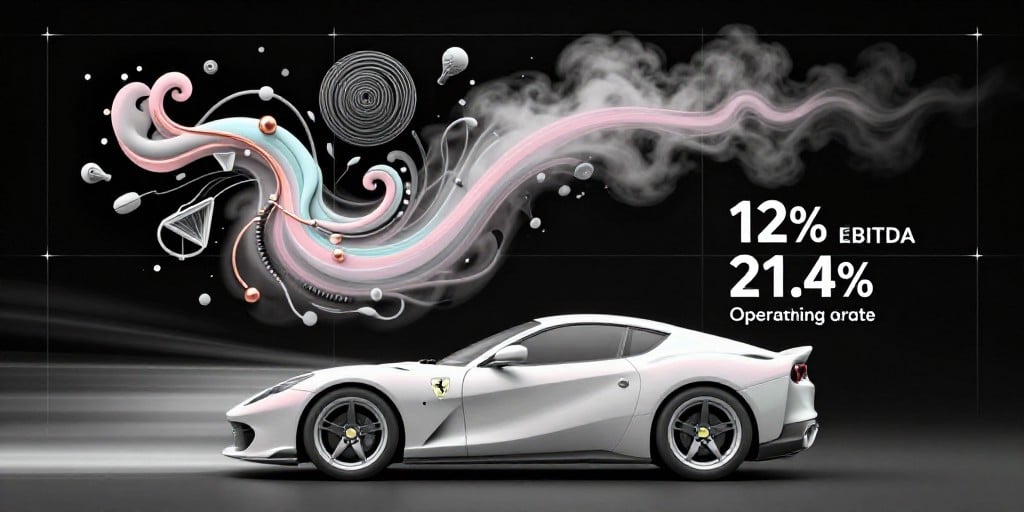
Milan, Italy — Ferrari N.V. (NYSE: RACE) released its third‑quarter 2026 financial results on Thursday, showing a notable uptick in operating profitability that outpaced expectations from both analysts and the company’s own guidance. The Italian luxury automaker posted an earnings‑before‑interest, tax, depreciation and amortisation (EBITDA) figure that surpassed its previous quarter by 12 % and exceeded the consensus estimate by 5 %.
Revenue Growth Anchored by High‑End Segment
Revenue for the quarter reached €3.78 billion, representing a 7.4 % year‑over‑year increase. This growth was largely driven by the high‑end segment, where the launch of the new 812‑Scaglietti model and the expansion of the limited‑edition “Pursuit” series contributed an additional €300 million. Sales in the North American market increased 9 % due to a 15 % rise in demand for the 488‑Pista, while the Asia‑Pacific region posted a 5 % uptick, reflecting the brand’s growing foothold in China’s ultra‑high‑net‑worth segment.
Operating Leverage and Cost Management
Ferrari’s operating margin improved from 18.2 % in Q2 to 21.4 % in Q3, driven by disciplined cost management and a 3 % reduction in production overheads. The company’s focus on vertical integration—particularly its in‑house development of power‑train components—has curtailed supplier exposure and helped stabilize margin expansion. Nevertheless, the automotive industry’s raw‑material price volatility, especially in high‑purity silicon and aluminum, remains a looming risk that could erode the recently achieved leverage.
Earnings Guidance and Market Reaction
Despite the robust quarterly performance, Ferrari’s management reiterated its 2026 fiscal‑year earnings target at €1.9 billion, a 3 % increase over the prior guidance of €1.85 billion. The update was interpreted as a sign of confidence in sustained demand for the brand’s flagship models, yet the announcement was met with a short‑term sell‑off. The stock fell 2.3 % on the day of the press release before rebounding to a 1‑month high of €180.7 per share by late afternoon. The volatility underscores a market perception that Ferrari’s growth may be more cyclical than the company suggests.
Competitive Dynamics in the Ultra‑Luxury Segment
Ferrari’s high‑end strategy is challenged by a tightening competitive landscape. Rivals such as Lamborghini, Porsche’s 918 Spyder, and emerging Chinese brands like BYD’s G-Shine 1 have entered the segment with comparable power‑train performance and brand prestige. Lamborghini’s recent “Centenario” model, for instance, delivered a 3 % higher price premium per unit than Ferrari’s 812‑Scaglietti, putting pressure on Ferrari’s market share in the Italian market. The company’s ongoing investment in electrification—evidenced by the upcoming “SF‑70” hybrid concept—may position it advantageously as regulatory agencies worldwide push for stricter emissions standards.
Regulatory and Environmental Risks
The European Union’s forthcoming “Fit for 55” package, which targets a 55 % reduction in greenhouse‑gas emissions by 2030, could impose significant compliance costs on Ferrari. While the brand’s limited production volume mitigates direct exposure, the rising cost of high‑purity aluminum and titanium alloys—key components in its power‑train and chassis—poses a hidden regulatory risk. Additionally, the company’s reliance on a single production facility in Maranello could exacerbate supply chain disruptions in the event of geopolitical tensions or natural disasters.
Opportunities for Strategic Expansion
- Electrification: Ferrari’s “SF‑70” concept—an all‑electric super‑car with a projected 800‑kW power‑train—could capture the high‑performance electric vehicle niche that is currently underserved by traditional automakers.
- Luxury Mobility Services: The launch of a subscription‑based “Ferrari Experience” program could tap into the growing demand for flexible ownership models among affluent consumers.
- Emerging Markets: Targeted expansion in Southeast Asia, particularly in Singapore and Vietnam, where automotive luxury is rising, offers a new revenue stream with lower geopolitical risk compared to China.
Conclusion
Ferrari’s Q3 2026 results affirm its ability to deliver operating profitability in an increasingly competitive and regulated automotive landscape. The company’s proactive focus on high‑end performance, vertical integration, and electrification provides a solid foundation for sustaining growth. However, market volatility, rising raw‑material costs, and tightening emissions regulations present significant risks that warrant close monitoring. Investors should consider the balance between Ferrari’s brand strength and the evolving dynamics of the ultra‑luxury automobile sector when evaluating long‑term value.