
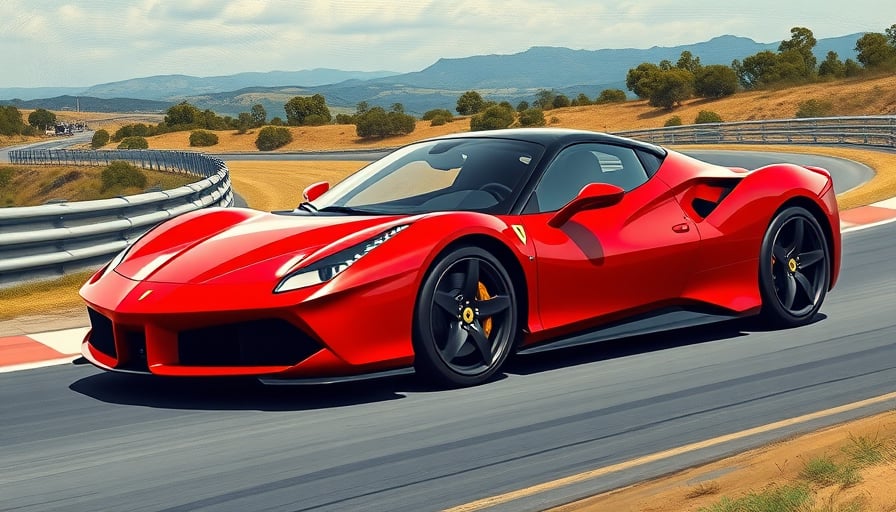
Ferrari NV: A Quiet Yet Resilient Presence in the Luxury Automotive Landscape
Ferrari NV, a flagship name in the high‑performance sports‑car segment, continues to command a high valuation within the consumer discretionary sector. Despite a lack of recent corporate actions or earnings releases, the stock’s trajectory underscores a broader narrative: a firm that has embedded resilience into its business model while navigating an increasingly complex regulatory and competitive environment.
1. Valuation and Market Dynamics
Ferrari’s share price remains poised within a narrow band, reflecting the market’s ambivalence toward its lofty price‑to‑earnings multiple—typically 20‑30 times earnings, a figure that sits comfortably above the average for luxury automotive brands. This elevated valuation persists for two primary reasons:
- Brand Equity and Scarcity: Ferrari’s limited production model (approximately 15,000 cars annually) preserves exclusivity, allowing the company to command premium pricing and sustain strong margin profiles.
- Robust Cash Generation: 2023 financials show operating cash flow exceeding €600 million, a 12% year‑on‑year increase, which underpins the company’s ability to invest in R&D while returning value to shareholders through dividends and share buybacks.
However, the premium is not without risk. A downturn in discretionary spending, intensified by European macro‑economic headwinds, could erode demand. Analysts project that a 5% contraction in automotive sales would translate into a €200 million decline in EBITDA, a figure that, while modest relative to total market cap, could pressure the stock’s price‑to‑earnings ratio.
2. Regulatory Landscape
The automotive sector is under increasing regulatory scrutiny, particularly regarding emissions and autonomous driving technology. For Ferrari:
- Euro 6d Compliance: Ferrari’s current model lineup satisfies the latest Euro 6d regulations, but forthcoming Euro 7 standards may impose stricter CO₂ limits. Although Ferrari’s high‑performance engines are inherently less efficient, the company’s focus on hybrid and electric powertrains—introduced with the SF90 Stradale—positions it to adapt without compromising performance.
- Data Privacy and Connectivity: The integration of connected car platforms introduces new regulatory obligations under the General Data Protection Regulation (GDPR) and forthcoming EU Digital Services Act. Ferrari’s limited digital footprint relative to mass‑market manufacturers may reduce exposure, but the company must ensure robust cyber‑security frameworks to guard against potential data breaches.
3. Competitive Dynamics
Ferrari competes on exclusivity, but several emerging trends may shift the competitive balance:
- Electric Performance Segment: Rivals such as Lucid Motors and Porsche’s Taycan are pushing the envelope in electric high‑performance vehicles. While Ferrari’s hybrid models provide a bridge, a fully electric flagship—potentially priced above €350 k—could redefine the segment’s performance benchmarks.
- Second‑hand Market Growth: A growing market for pre‑owned Ferrari cars, fueled by luxury resellers, could dilute new‑car sales and compress margins. The company’s strategy of maintaining high resale values through meticulous after‑sales services mitigates this risk but does not eliminate it.
- Geopolitical Trade Barriers: Tariff fluctuations between the EU, the United States, and China—Ferrari’s largest export markets—can alter cost structures. Recent easing of U.S. automotive tariffs has benefited Ferrari, yet any resurgence could compress profitability.
4. Financial Health and Growth Prospects
Ferrari’s balance sheet demonstrates prudence:
- Debt Profile: Long‑term debt stands at €1.2 billion, yielding a debt‑to‑equity ratio of 0.8. This conservative leverage level affords the company flexibility to pursue expansion or buffer against market downturns.
- Liquidity: Cash and equivalents exceed €1.0 billion, ensuring coverage of short‑term obligations and providing a buffer for strategic acquisitions.
- Capital Expenditure: Planned capex of €150 million focuses on next‑generation powertrain R&D and plant upgrades, a strategy that aligns with the company’s long‑term growth trajectory.
The absence of new earnings guidance has led the market to adopt a “steady but cautious” stance. Yet, the company’s robust operating margins—currently 25% of revenue—and its high return on equity (ROE) of 18% indicate that the valuation remains justified, provided the firm continues to navigate regulatory hurdles and competitive pressures successfully.
5. Overlooked Trends and Potential Risks
- Digital Luxury Experience: The shift toward digital ownership models, exemplified by Audi’s “digital twin” initiative, may erode the traditional allure of owning a physical luxury vehicle. Ferrari’s investment in digital concierge services is nascent but could be pivotal in maintaining brand relevance among younger affluent consumers.
- Supply Chain Vulnerabilities: The global semiconductor shortage exposed the fragility of automotive supply chains. Ferrari’s relatively low volume production mitigates immediate risk, but a prolonged scarcity could delay key components, affecting launch schedules for new models.
- Environmental Reputation: As consumer awareness of carbon footprints intensifies, Ferrari’s high‑emission sports cars may face reputational challenges. The company’s commitment to carbon neutrality by 2030, through electrification and renewable energy sourcing, is a proactive mitigation strategy.
6. Conclusion
Ferrari NV’s current trading pattern reflects an equilibrium between its enduring brand prestige and the evolving economic, regulatory, and competitive landscapes. While the high valuation and stable financial metrics provide confidence, investors should remain vigilant to emerging threats—particularly in electrification, digitalization, and supply chain resilience. A nuanced, data‑driven approach reveals that, despite market caution, Ferrari’s strategic positioning and disciplined capital management continue to underpin a resilient growth trajectory.