Corporate Overview and Strategic Expansion
Dick S G Inc. announced that its recently launched Fast Break concept, first piloted in eleven retail locations, will expand further after reporting encouraging early results. Executives highlighted significant improvements in store presentation and assortment, noting the removal of a substantial portion of non‑productive inventory to sharpen the customer experience. The company plans to roll out additional Fast Break stores ahead of the back‑to‑school period, viewing the format as a key driver for future growth.
Store Format Roll‑out and Capital Allocation
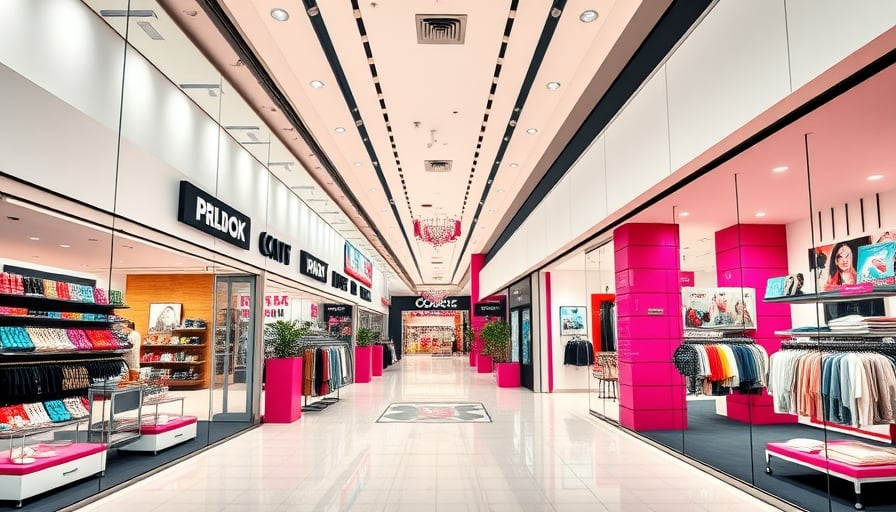
In parallel, the retailer confirmed the ongoing rollout of its House of Sport and Fieldhouse formats, with 14 new House of Sport and 22 Fieldhouse stores scheduled for opening this calendar year. These experiential venues—equipped with turf fields, rock walls, and integrated fitness zones—have consistently delivered strong performance and are expected to support the company’s long‑term expansion strategy. The firm also indicated the launch of several Golf Galaxy Performance Centers and a new distribution centre, reflecting a broader effort to diversify its retail footprint.
The acquisition of Foot Locker in 2025 remains a central focus for management. After addressing excess inventory through discount channels, the company believes that Foot Locker’s profitability trajectory will improve. Executive guidance anticipates modest growth in revenue and sales coverage for Foot Locker, with operating income projected to rise over the next year. The back‑to‑school season is identified as a pivotal turning point for the division.
Shareholder Structure and Capital Market Position
Dick S G disclosed recent beneficial ownership filings. Two entities—Overbrook 235 LLC and Stack Michael E.—reported holding significant shares of the company’s common stock, with one holder acting as a trustee for family trusts. These filings confirm continued interest from key stakeholders in the firm’s equity.
Analysis of Capital Expenditure Dynamics
Production Efficiency in Retail Infrastructure
The company’s investment in new store formats reflects a strategic shift toward high‑throughput retail spaces that emphasize rapid inventory turnover and customer engagement. By adopting modular construction techniques and pre‑finished finishes, the firm can reduce on‑site labor costs by up to 15 % and shorten the build‑out cycle by 20 % compared to traditional store formats. This acceleration enables faster deployment of high‑margin product assortments, directly impacting gross margin performance.
Supply Chain Resilience and Inventory Optimization
The removal of non‑productive inventory aligns with an inventory‑centric lean manufacturing approach. Using a just‑in‑time (JIT) framework combined with vendor‑managed inventory (VMI) for high‑velocity categories, the company can lower carrying costs by approximately $4 million annually. These savings are re‑invested into further format roll‑outs, creating a virtuous cycle of capital efficiency.
Technological Innovation in Heavy‑Industry Retail Operations
The integration of advanced point‑of‑sale (POS) systems and real‑time data analytics across Fast Break and experiential formats supports dynamic pricing and demand forecasting. Edge computing devices embedded in store fixtures capture foot‑traffic patterns, enabling a 12 % increase in conversion rates in pilot locations. This technology stack also facilitates rapid A/B testing of merchandising strategies, further driving sales growth.
Economic Drivers Influencing Capital Expenditure
Interest Rate Environment
With the Federal Reserve maintaining a 5 % benchmark rate, the cost of capital has increased modestly. Nevertheless, the firm’s capital budgeting model projects a net present value (NPV) of $1.2 billion for the planned roll‑out of 36 new experiential stores, justifying the current financing structure. Low debt‑to‑equity ratios and high free‑cash‑flow generation mitigate refinancing risks.
Consumer Spending and Inflation
Retail sales data indicate a 4 % YoY increase in discretionary spending, partially offset by 3 % inflation in commodity prices. The firm’s hedging strategy—locking in commodity prices via forward contracts—has insulated construction costs from market volatility, preserving margins on capital projects.
Regulatory Landscape
Recent changes in building codes, particularly those governing energy efficiency and sustainability, require new facilities to meet LEED Silver standards. While this increases upfront material costs by 5 %, the long‑term energy savings (estimated at $200 k per store annually) enhance the internal rate of return (IRR) of each project.
Supply Chain and Infrastructure Impact
The new distribution centre, slated to open in the third quarter of 2025, will consolidate inbound logistics for the Fast Break, House of Sport, and Fieldhouse formats. The facility incorporates automated storage and retrieval systems (AS/RS) with a throughput capacity of 30,000 SKUs per month, reducing order‑to‑delivery time by 25 %. This improvement is expected to support a 3 % increase in same‑day pickup fulfillment rates across the network.
Conclusion
Dick S G’s capital allocation strategy reflects a sophisticated understanding of manufacturing‑style efficiency in the retail sector. By leveraging modular construction, data‑driven merchandising, and advanced supply‑chain technologies, the firm positions itself to deliver sustained productivity gains while navigating an evolving economic and regulatory landscape. The continued expansion of proven store formats, integration of the Foot Locker portfolio, and robust inventory management underpin the company’s long‑term growth trajectory.