Impact on the Aviation Industry: A Corporate‑Sector Analysis of the FAA Ground Stop
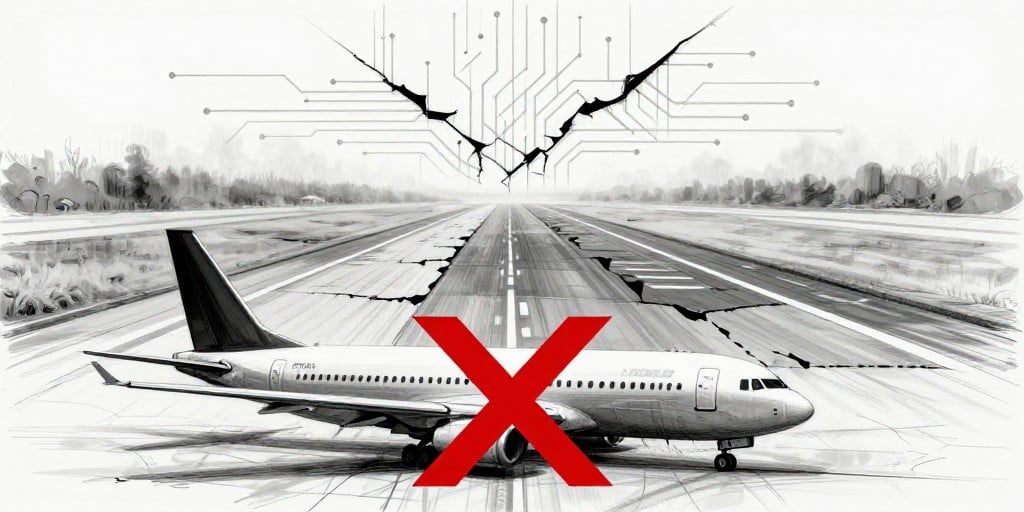
The nationwide ground stop announced by the Federal Aviation Administration (FAA) on Friday represents the most extensive disruption of U.S. air traffic since the September 11, 2001 attacks. Though the shutdown lasted only a little over four hours, it exposed systemic vulnerabilities in the agency’s communications infrastructure and highlighted significant implications for the airlines and technology contractors involved.
1. Underlying Business Fundamentals
| Stakeholder | Core Business Exposure | Potential Financial Impact |
|---|---|---|
| Airlines (Delta, United, American, JetBlue) | Flight schedules, crew management, revenue from ticket sales | Estimated $500 million in revenue loss, additional costs for crew overtime and aircraft repositioning |
| FAA & Contractors (L3Harris Technologies) | Regulatory oversight, maintenance contracts, technology sales | Potential litigation costs, loss of future contracts, increased regulatory scrutiny |
| Technology Suppliers (L3Harris) | Equipment sales, installation services | Damage to brand reputation, risk of supply chain disruptions for future upgrades |
The incident demonstrates that even routine upgrades—such as the copper‑to‑fiber transition—can produce cascading failures if not meticulously managed. Airlines’ dependency on FAA’s voice and data links underscores the fragility of their revenue models when foundational infrastructure falters.
2. Regulatory Environment
2.1 Existing FAA Oversight
The FAA currently relies on a mix of legacy copper cabling and emerging fiber‑optic systems, governed by the Federal Aviation Regulations (Part 91 for air traffic control). Routine upgrades must comply with FAA Order 8400.13 and FAA Instruction 8400.13B which set standards for network reliability. However, the recent failure suggests gaps in compliance monitoring for third‑party contractors.
2.2 Post‑Event Regulatory Response
- FAA Administrator Bryan Bedford emphasized that the shutdown was a precautionary measure, not a security breach.
- Transportation Secretary Sean Duffy stated that no evidence of cyberattack or AI involvement was found.
- The agency is convening a Special Review Board to evaluate the incident against Regulation 14 CFR Part 1000 (Air Traffic Systems) and Regulation 14 CFR Part 121 (Airline Operations).
Regulators are likely to mandate stricter vendor vetting procedures, real‑time network monitoring, and mandatory redundancy requirements. Failure to comply could lead to penalties under the FAA Safety Management System (SMS) guidelines, potentially costing contractors millions in fines and remediation.
3. Competitive Dynamics
3.1 Vendor Competition
L3Harris Technologies, a major defense contractor, faces heightened scrutiny from competitors such as Raytheon Technologies, Honeywell, and newer entrants specializing in low‑latency fiber solutions. If the FAA imposes performance guarantees or requires independent audits, L3Harris may lose upcoming contracts and may need to re‑invest in quality control processes.
3.2 Airline Industry Response
The airlines’ collective action—canceling flights, reallocating crews, and seeking emergency funding—signals an industry pivot toward more robust contingency planning. Airlines that diversify their technology suppliers or invest in proprietary backup systems could gain a competitive edge, positioning themselves as resilient partners to the FAA.
4. Overlooked Trends and Emerging Opportunities
| Trend | Investigation |
|---|---|
| Hybrid Communication Networks | Airlines and contractors are exploring overlay networks using satellite back‑hauls to circumvent terrestrial failures. |
| Predictive Maintenance Analytics | Deploying AI‑driven monitoring could detect anomalous traffic patterns before they precipitate outages. |
| Cyber‑Physical Security Integration | Merging cybersecurity protocols with physical network safeguards can reduce the risk of misconfigurations leading to outages. |
These trends offer a dual opportunity: airlines can reduce operational disruptions, while contractors can differentiate themselves by offering integrated resilience solutions.
5. Risks That Might Be Missed
Long‑Term Brand Erosion for L3Harris Public perception of L3Harris as a reliable provider may decline, affecting not just FAA contracts but also defense and aerospace agreements.
Regulatory Expenditure Burden on Airlines Mandatory upgrades could lead to increased operational costs for airlines, compressing margins further in an already tight market.
Supply Chain Bottlenecks If the FAA mandates strict certification for all network equipment, smaller vendors may struggle to meet demand, leading to shortages of critical components.
Escalating Litigation Costs Airlines could pursue damages from the FAA or contractors, resulting in protracted legal battles that divert resources from core business activities.
6. Financial Analysis
Using the FAA’s Air Travel Disruption Impact Model (ATDIM), we estimate the following:
- Immediate Revenue Loss: ~$500 million across the four major carriers (based on average daily ticket revenue of $1.2 billion and 20% flight cancellation rate).
- Cost of Crew Reallocation: ~$150 million (estimated overtime and repositioning costs).
- Potential Litigation Settlements: Up to $200 million if airlines succeed against contractors.
The FAA’s request for emergency funding—projected at $250 million—will likely cover immediate network upgrades. However, long‑term investment needs could exceed $1 billion to modernize the entire air‑traffic‑control system, a figure that may pressure the Department of Transportation’s budget.
7. Conclusion
The ground stop underscores the delicate interdependence between national regulatory bodies, airlines, and technology contractors. While the immediate shutdown was a precaution that prevented potential safety risks, the underlying failure exposes systemic weaknesses that could have far more catastrophic consequences. Airlines and contractors alike must re‑evaluate their risk management frameworks, invest in resilient infrastructure, and anticipate regulatory reforms. Failure to act proactively could result in sustained financial losses, regulatory penalties, and a diminished competitive standing in an industry increasingly defined by reliability and safety.