
Evergy Inc. Strengthens Capital Structure While Advancing Grid Modernization
Evergy Inc. (NYSE: EVGY) announced today that it has secured a significant term loan and has repurchased a portion of its 4.50 % convertible notes due in 2027. These financial maneuvers are designed to strengthen the company’s liquidity position and optimize its capital structure, enabling greater flexibility to fund long‑term infrastructure upgrades across the Mid‑Continent Independent System Operator (MISO) region.
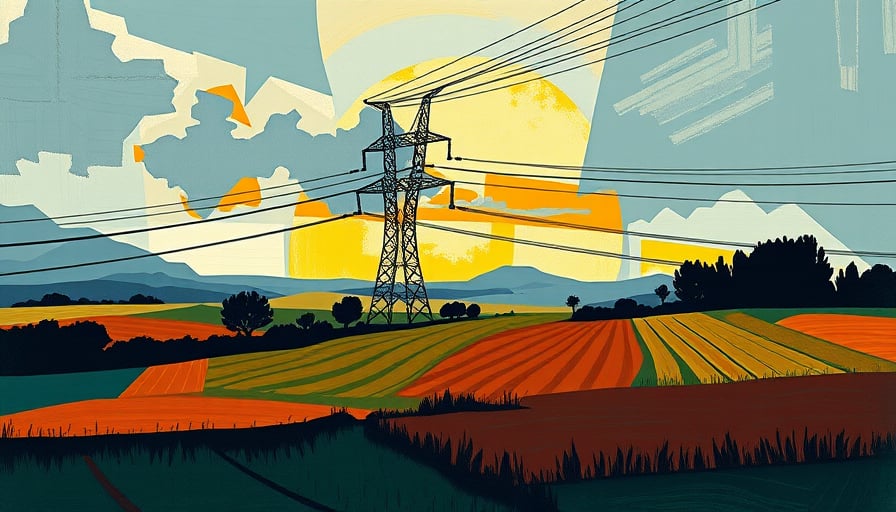
Simultaneously, the company’s continued ownership stake in the Transource Energy partnership—responsible for developing a 765‑kV transmission line in Wisconsin—underscores Evergy’s commitment to large‑scale grid infrastructure projects aimed at enhancing reliability and accommodating rising energy demand. This dual focus on financial prudence and grid expansion reflects a strategic alignment of capital allocation with the operational realities of an evolving electric utility landscape.
Grid Stability and Renewable Integration
The Mid‑Continent region is undergoing rapid penetration of intermittent renewable resources, particularly wind and solar. The addition of a 765‑kV corridor is a critical measure for maintaining grid stability. High‑voltage transmission reduces reactive power losses and improves voltage regulation across long distances, which is essential when dispatchable generation is displaced by variable renewables. By providing a robust conduit for power flows between generation hubs and load centers, the new line will mitigate congestion, lower line losses, and reduce the need for costly reactive power compensation equipment.
From an engineering standpoint, the 765‑kV infrastructure allows for higher apparent power capacity, which translates to a larger share of renewable generation that can be accommodated without compromising system security margins. This is particularly relevant when considering the need for dynamic voltage support during sudden changes in generation output—a common scenario in wind‑heavy systems. The corridor’s design incorporates phase‑shift transformers and adaptive protection schemes that provide operator flexibility in reconfiguring the network to respond to real‑time contingencies.
Infrastructure Investment Requirements
Modernizing the transmission and distribution grid necessitates substantial capital outlays. For a utility of Evergy’s scale, investment estimates for a 765‑kV line in Wisconsin range from $1.5 bn to $2.0 bn, inclusive of right‑of‑way acquisition, pole and tower construction, conductor installation, and associated substation upgrades. The term loan secured by Evergy, coupled with the repurchase of convertible notes, will provide the financial depth required to meet these costs without imposing disproportionate rate increases on consumers.
In addition to high‑voltage transmission, distribution modernization—such as the deployment of smart grid sensors, automated switchgear, and voltage regulation equipment—demands further investment. These upgrades enable utilities to manage distributed energy resources, demand‑response programs, and electric‑vehicle charging fleets more effectively. The integration of advanced forecasting models and real‑time monitoring systems supports grid resilience by allowing operators to anticipate and mitigate the impact of renewable intermittency and load volatility.
Regulatory Frameworks and Rate Structures
State and federal regulatory bodies, including the Public Service Commission (PSC) in Illinois, play pivotal roles in approving infrastructure projects and setting rate structures. The PSC’s rate‑setting process evaluates the cost of service (COS) and allocates capital expenditures across a regulated customer base. In the context of Evergy’s financing activities, the company must demonstrate that the term loan and note repurchase will not lead to excessive cost of service charges.
To align with contemporary regulatory trends, utilities are increasingly adopting performance‑based regulation (PBR) that rewards efficient capital deployment and grid reliability improvements. Under PBR, Evergy could achieve higher revenue adequacy limits while maintaining transparent, consumer‑friendly rate designs. Moreover, the company may explore renewable portfolio standard (RPS) incentives and federal tax credits for transmission upgrades, which can offset a portion of the capital burden and provide a competitive edge in the market.
Economic Impacts on Consumer Costs
While the capital expenditures required for grid upgrades are substantial, the long‑term economic benefits include reduced outage frequency and duration, lower maintenance costs, and improved system efficiency. These gains translate into lower marginal costs for electricity generation and delivery, which can be reflected in modest rate adjustments over time. The strategic financial decisions—specifically the repurchase of convertible notes—help limit the debt service burden, thereby protecting consumers from steep rate hikes.
Furthermore, the enhanced transmission corridor will facilitate the integration of lower‑cost, clean energy sources from wind‑rich regions of Wisconsin into Evergy’s service area. By diversifying the generation mix, the company can stabilize wholesale price volatility and pass on those savings to end users. The projected return on investment for the 765‑kV line is anticipated to materialize within a decade, offering both financial and societal benefits.
Conclusion
Evergy Inc.’s recent financial initiatives, coupled with its active role in the Transource Energy partnership, position the company to effectively navigate the twin imperatives of grid reliability and renewable integration. Through judicious capital structure optimization and targeted infrastructure investment, Evergy is poised to support the energy transition while maintaining a consumer‑friendly rate environment. The technical and economic rigor applied to these decisions exemplifies how modern utilities can balance fiscal prudence with the pressing demands of a rapidly evolving power system.