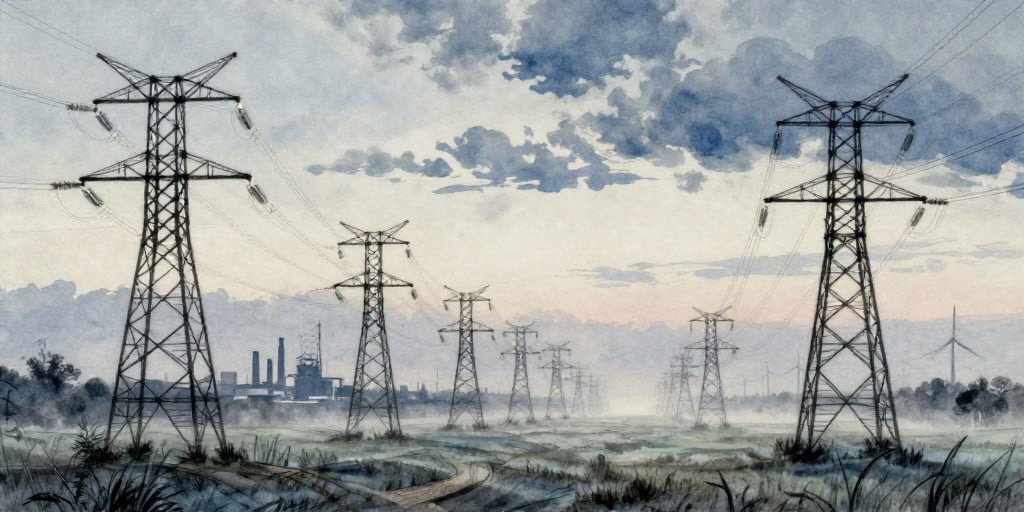
Evergy, Inc. Raises $300 Million via 6 % Mortgage Bonds to Support Grid Modernization
Evergy, Inc., a Missouri‑based electric services provider, filed a current report on November 20, 2026 detailing the issuance of $300 million of 6 % mortgage bonds due 2036. The bonds, registered under a shelf filing and to be sold in book‑entry form through the Depository Trust Company, will be issued by Evergy Metro, the debt‑issuing subsidiary. The securities are secured by a long‑standing mortgage indenture that has been duly qualified under the Trust Indenture Act and recorded in the required state and federal offices.
Transaction Structure and Legal Compliance
The filing includes a comprehensive set of exhibits, such as the underwriting agreement, supplemental indenture, and legal opinions. These documents affirm that the registration statement and all accompanying disclosures comply with securities law, and that Evergy has not experienced any material adverse change in its financial condition or business operations. Evergy Metro’s principal operating subsidiary is the only significant operating subsidiary, and the company maintains valid franchises and permits necessary for its regulated utility activities.
Internal controls, financial reporting, and compliance with the Sarbanes‑Oxley Act and other statutes have been confirmed as adequate. No sanctions, environmental liabilities, or significant tax issues were identified that would alter the outlook for the issuer. The bonds will be rated in accordance with the final term sheet, and the proceeds will be used for general corporate purposes.
Strategic Rationale: Power Generation, Transmission, and Distribution
Evergy’s capital raise is a critical enabler for its grid‑stability initiatives. The utility’s generation mix includes a blend of natural‑gas peaking plants, existing coal facilities, and a growing portfolio of wind and solar assets. Recent studies indicate that integrating renewable resources at higher penetrations necessitates enhancements to both transmission and distribution networks to mitigate voltage fluctuations and maintain system frequency.
Transmission Upgrades: The utility plans to invest in high‑voltage direct current (HVDC) links to interconnect with neighboring transmission owners, reducing congestion and improving bulk‑power transfer capability. These upgrades will also provide a pathway for importing renewable energy from wind farms in the Great Plains region.
Distribution Modernization: Smart grid technologies—such as adaptive protection schemes, dynamic line rating, and advanced metering infrastructure—are essential for real‑time monitoring and control. By deploying these solutions, Evergy aims to reduce outage durations, enhance fault isolation, and support distributed generation integration.
Grid Stability and Renewable Integration Challenges
The transition to a high‑renewable grid presents several technical challenges:
Voltage Regulation: Wind and solar generation exhibit variability in both magnitude and timing, which can cause voltage sags or swells. Advanced inverter controls, energy storage systems, and real‑time voltage regulation algorithms are necessary to keep voltage within permissible limits.
Frequency Control: Rapid fluctuations in generation can disturb system frequency. Power electronics‑based inertia, flywheel storage, and demand‑response programs can provide fast‑acting frequency support.
Reliability Standards: Compliance with NERC Reliability Standards (e.g., S‑3, S‑6, and S‑12) requires that the grid maintain defined levels of availability, voltage stability, and fault ride‑through capability. Modernization investments must align with these standards to avoid penalties and maintain consumer confidence.
Regulatory Frameworks and Rate Structures
The Missouri Public Service Commission (MPSC) governs Evergy’s rate setting process. Under the “Incremental Load‑Based” rate schedule, the utility recovers its cost of service, including the cost of capital for infrastructure investments. The current bond issuance will increase Evergy’s weighted average cost of capital (WACC) modestly; however, the expected return on infrastructure upgrades is projected to outweigh the additional debt servicing costs over the 2036 maturity horizon.
Additionally, the MPSC has adopted a Renewable Portfolio Standard (RPS) that requires a minimum percentage of power from renewable sources. Integrating RPS compliance with grid stability necessitates a Time‑of‑Use (TOU) tariff structure, incentivizing consumers to shift load to periods of high renewable generation. This strategy can reduce the need for peaking capacity and lower overall system costs.
Economic Impacts and Consumer Costs
The bond proceeds are earmarked for general corporate purposes, primarily capital expenditures on transmission and distribution infrastructure. While the debt issuance may slightly elevate the utility’s overall cost of capital, the strategic investments are expected to:
Reduce Transmission Losses: Upgraded lines and HVDC links can lower line loss rates from the current 3.5 % to below 2.5 %, translating to savings that can be passed to consumers.
Lower Outage Costs: Improved reliability diminishes downtime costs for both the utility and its customers, which can be reflected in lower outage‑related rate components.
Enable Renewable Integration: By facilitating higher renewable penetration, the utility can benefit from lower fuel costs associated with wind and solar, potentially offsetting debt service expenses.
Conclusion
Evergy’s $300 million mortgage bond issuance represents a strategic financial maneuver designed to fund critical grid‑stability and renewable integration projects. By leveraging modern transmission technologies and smart grid solutions, the utility aims to uphold regulatory compliance, enhance reliability, and support the broader energy transition, while carefully managing the economic impact on consumers through considered rate‑setting mechanisms.