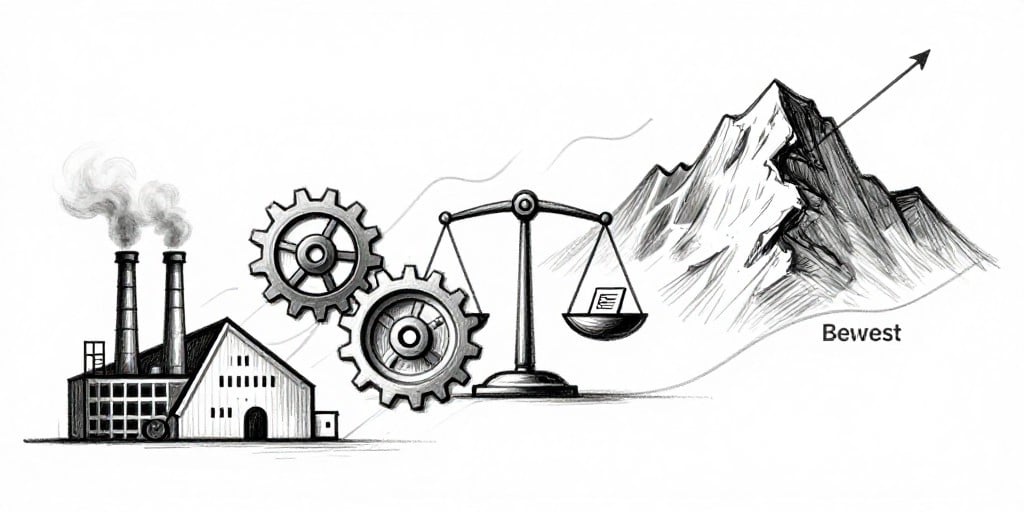
Corporate Update – Everest Group Ltd. (Quarterly Review)
Business Environment and Operational Performance Everest Group Ltd. reported a modest decline in revenue for the most recent quarter. Management attributes this downward trend to a combination of strategic adjustments in its production processes and temporary constraints in the supply of key raw materials. Despite these headwinds, the company underscores progress in its transition to a newer production platform. The main manufacturing facility is now capable of increased output without the need for additional shifts, signaling operational efficiencies that could offset current revenue compression in the near term.
Market Penetration and Distribution Expansion Professional adoption of Everest’s product portfolio has continued to rise, with a measurable increase in industry professionals integrating the company’s offerings into their workflows. The firm has broadened its network of professional fitters, adding several new accounts in the East Coast region. A new sales appointment has been announced to further support this growth, positioning Everest to capture a larger share of the high‑value professional services segment.
OEM Partnerships and Product Placement Everest is actively pursuing partnerships with original equipment manufacturers (OEMs). The company has secured initial orders from a significant OEM that will incorporate Everest’s components into its flagship locations and fitting centers. This collaboration represents a strategic foothold in the OEM channel, potentially providing a stable demand pipeline and enhancing brand visibility within the broader supply chain ecosystem.
Capital Structure and Financing Activities The company entered into new financing arrangements, including a revolving credit facility and the conversion of convertible notes into preferred stock. Additionally, a common‑stock transaction has been completed, raising supplementary capital. While Everest remains cash‑flow negative and acknowledges that additional capital may be required to support expansion and working‑capital needs, these financing moves demonstrate a proactive approach to maintaining liquidity and funding strategic initiatives.
Strategic Implications for Financial Markets
- Operational Resilience – The upgraded production platform enhances Everest’s capacity to scale output, which could translate into improved margins if supply chain constraints are mitigated.
- Professional Market Dynamics – Continued growth in professional adoption signals robust demand within a discretionary consumer segment that is sensitive to macro‑economic sentiment. Investors should monitor consumer confidence indicators to gauge potential volatility in Everest’s revenue stream.
- OEM Exposure – Securing OEM orders diversifies revenue sources and reduces dependence on direct consumer sales. This shift could insulate the company against cyclical downturns in the discretionary market and improve long‑term earnings stability.
- Capital Structure Evolution – The conversion of convertible notes and the issuance of preferred stock alter the capital base, potentially affecting dilution and earnings per share. The revolving credit facility provides a flexible buffer for operational needs, but ongoing cash‑flow deficits warrant close scrutiny of future capital deployment and return on investment metrics.
- Regulatory and Listing Compliance – Ongoing compliance with exchange listing requirements remains a critical oversight area. Any lapses could jeopardize market access and investor confidence, underscoring the need for rigorous governance and transparency.
Competitive Landscape and Emerging Opportunities Within the broader financial services ecosystem, Everest’s focus on professional fitters and OEM partnerships positions it well against competitors that rely predominantly on direct consumer sales. The emerging opportunity lies in leveraging its newly upgraded production platform to introduce higher‑margin, technologically advanced components that appeal to OEMs seeking to differentiate their flagship offerings. Furthermore, the company’s expanding East Coast presence taps into a region with historically strong demand for specialized fitting services, offering a strategic growth corridor.
Investment Considerations
- Risk‑Reward Balance – While Everest’s current cash‑flow profile poses a short‑term risk, its strategic moves toward operational efficiency, OEM partnerships, and diversified financing suggest a potential upside if market conditions remain favorable.
- Valuation Sensitivity – Investors should adjust expectations based on the company’s evolving capital structure and the impact of new debt obligations on leverage ratios.
- Macro‑Economic Exposure – The discretionary nature of the consumer market necessitates monitoring of broader economic sentiment, particularly consumer confidence indices and interest rate movements that could influence spending on professional services.
In summary, Everest Group Ltd. is navigating a challenging but evolving landscape, executing strategic initiatives that aim to strengthen its market presence, operational capacity, and financial footing. The company’s ability to capitalize on OEM relationships, manage its capital structure prudently, and maintain compliance will be pivotal in shaping its trajectory within the competitive financial services arena.