
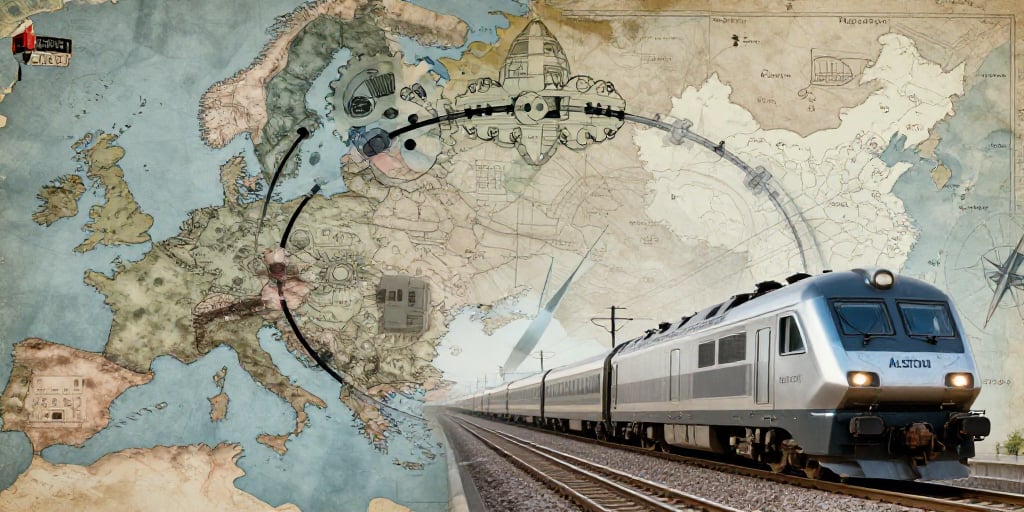
Corporate News: European Commission’s Merger Guideline Review and its Implications for Alstom
Overview
The European Commission’s decision to review its merger guidelines marks a significant shift in the regulatory landscape for large-scale consolidation within the European Union. The initiative aims to strike a balance between safeguarding consumer interests and fostering the emergence of stronger, more competitive European players. This policy shift, coupled with operational challenges faced by Alstom in its rail division, may reshape the company’s strategic trajectory and alter its competitive posture in the global transportation sector.
Regulatory Reform: Objectives and Mechanisms
The Commission’s draft framework seeks to refine the criteria used to evaluate the market impact of proposed mergers. Key features include:
- Efficiency Justification: Companies will be permitted to demonstrate that a transaction delivers tangible efficiencies in innovation, sustainability, and resilience, provided that such benefits are clearly measurable and outweigh any potential anti‑competitive effects.
- Market Power Safeguard: Despite a more permissive stance on consolidation, the guidelines retain provisions that preclude the accumulation of excessive market power, ensuring that the competitive balance of the internal market is preserved.
- Sector‑Specific Considerations: While the new rules apply broadly, the Commission acknowledges that certain sectors—such as high‑tech infrastructure—exhibit unique dynamics that may warrant tailored assessments.
Historically, the Commission’s 2019 ruling that blocked a proposed merger between Siemens and Alstom illustrated the tension between encouraging European scale and protecting market competition. The forthcoming framework may alleviate some of this tension, allowing firms to pursue strategic alliances that were previously deemed too risky.
Alstom’s Current Operational Landscape
Alstom’s rail division has recently encountered significant operational headwinds, particularly regarding the delivery of high‑speed and regional train sets:
- Contractual Delays: European transport authorities have reported that several high‑speed and regional train contracts have fallen behind schedule, undermining confidence in Alstom’s project management and supply‑chain coordination.
- Competitive Pressure: Chinese rolling‑stock manufacturers, known for rapid delivery timelines and cost competitiveness, have increasingly captured market share in Europe. This has intensified scrutiny of Alstom’s ability to meet the rising demand for modern, efficient, and environmentally sustainable trains.
- Infrastructure Reliability Concerns: Stakeholders emphasize that any delay or quality issue in rolling‑stock deliveries can have cascading effects on broader transportation infrastructure, potentially affecting service reliability, safety, and passenger satisfaction.
These operational challenges are not isolated to the rail sector. Similar supply‑chain bottlenecks are observable across the automotive and aerospace industries, where just‑in‑time manufacturing models have been strained by geopolitical tensions, raw‑material shortages, and a post‑pandemic shift in consumer expectations.
Potential Strategic Implications for Alstom
The convergence of a more permissive merger policy and operational scrutiny presents a complex environment for Alstom:
- Opportunities for Consolidation
- With reduced regulatory barriers, Alstom may explore strategic acquisitions or joint ventures that could expand its product portfolio, strengthen its technological capabilities, and enhance geographic reach.
- Partnerships with complementary firms (e.g., suppliers of digital signaling or energy‑efficient propulsion systems) could help Alstom address performance gaps and meet the sustainability expectations of European clients.
- Risk Management of Supply‑Chain Challenges
- Even as regulatory hurdles ease, the firm must continue to confront logistical constraints and capacity shortages that threaten delivery schedules.
- Investing in advanced analytics, predictive maintenance, and modular manufacturing can mitigate the risk of overruns and improve turnaround times.
- Competitive Positioning Against Non‑European Suppliers
- Alstom’s strategic decisions should consider the competitive advantage of Chinese manufacturers: lower production costs, aggressive pricing, and rapid deployment.
- Emphasizing value‑added services—such as integrated maintenance contracts, digital twins, and sustainability certifications—could differentiate Alstom’s offerings in the European market.
Broader Economic and Sectoral Context
The regulatory and operational developments affecting Alstom reflect larger trends within the European manufacturing landscape:
- Shift Toward Sustainable Mobility: EU policy initiatives (e.g., the Green Deal and the Next Generation EU recovery package) emphasize decarbonization, driving demand for low‑emission rolling stock and electrified infrastructure.
- Digital Transformation of Industrial Supply Chains: Advanced manufacturing technologies, AI‑driven logistics, and digital twins are increasingly integral to ensuring reliability and competitiveness across multiple sectors.
- Geopolitical Dynamics: Trade tensions and the re‑configuration of global supply chains have underscored the need for resilience and diversification in production networks.
By aligning its strategic initiatives with these macro‑economic drivers, Alstom can position itself as a resilient, innovation‑driven leader capable of navigating both regulatory shifts and market pressures.
Conclusion
The European Commission’s forthcoming merger guideline reform, combined with Alstom’s operational challenges, presents a dual-edged scenario. While a more permissive regulatory environment could unlock consolidation and partnership opportunities, ongoing supply‑chain constraints and intensifying competition from non‑European manufacturers will continue to test the firm’s capacity to deliver high‑quality, timely solutions. Success will hinge on Alstom’s ability to integrate sector‑specific operational improvements with broader economic imperatives, thereby sustaining its competitive edge in an increasingly dynamic European market.