Corporate News – European Equity Markets and Eurofins Scientific
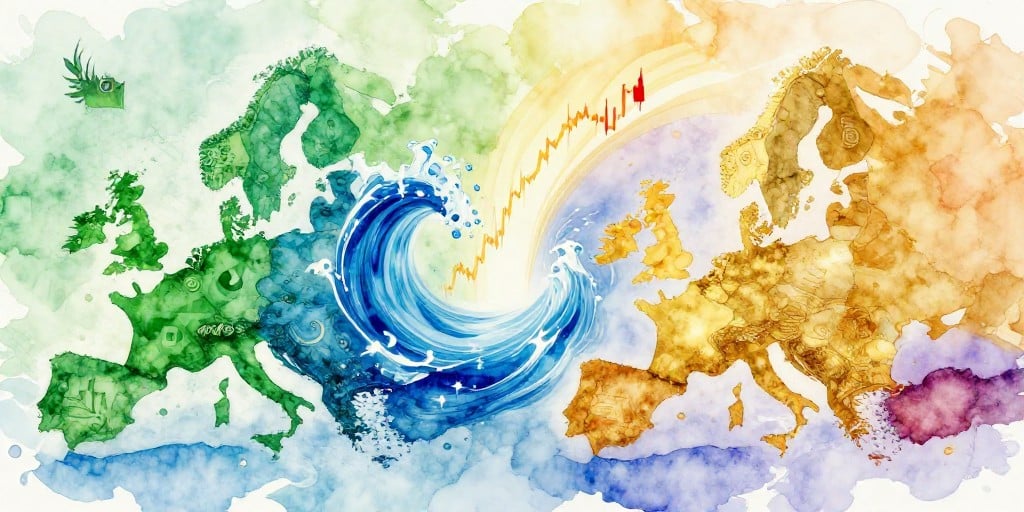
European equity indices concluded the week with a cautious tone, reflecting the interplay of macro‑financial pressures and sector‑specific developments. While the broader European market edged lower, the United Kingdom’s FTSE 100 posted a modest gain, underscoring divergent investor sentiment within the Eurozone and the UK. Oil price volatility—driven by a temporary pipeline disruption in Saudi Arabia and broader geopolitical concerns—continued to weigh on market sentiment, and investors are poised for forthcoming central‑bank meetings in the United States, United Kingdom, and Japan that may further shape market dynamics.
Market Overview
European Indices: The European benchmarks slipped modestly. The CAC 40 in France fell to a four‑month low, driven by higher oil prices and a spike in inflation expectations. While large names contributed to a net decline, gains in certain chemical and energy stocks provided a partial counterbalance. The DAX in Germany recorded a minor decline, with industrial and automotive stocks reflecting a broader slowdown in European manufacturing. However, German energy and industrial groups posted modest gains, buoyed by a handful of positive corporate reports.
United Kingdom: The FTSE 100 gained, propelled by pharmaceutical, energy, and consumer‑staples stocks. The UK market’s resilience to oil‑price swings highlights a divergence in investor sentiment between the Eurozone and the UK.
Focus on Eurofins Scientific
Eurofins Scientific, a global leader in analytical testing for the life‑science sector, saw its shares rise on the Paris exchange. The uptick was supported by a favourable market environment for life‑science providers and recent corporate disclosures. Senior‑management share‑option transactions were disclosed in compliance with market‑abuse regulations but did not materially affect the share price.
Eurofins operates an extensive laboratory network that delivers a broad portfolio of analytical services—ranging from genomic and proteomic profiling to environmental and food safety testing. These capabilities are increasingly critical as pharmaceutical development accelerates and regulatory scrutiny tightens. The company’s business model is anchored in:
- Regulatory Compliance: Providing validated assays that meet international standards (e.g., ISO 17025, FDA 21 CFR Part 11), thereby reducing time‑to‑market for new therapeutics.
- Technological Innovation: Deploying next‑generation sequencing, mass spectrometry, and bioinformatics platforms that enable high‑throughput, high‑resolution analyses.
- Strategic Partnerships: Collaborating with biopharmaceutical firms to support preclinical and clinical studies, thereby positioning Eurofins as an integral part of the drug development pipeline.
These factors contribute to sustained demand for Eurofins’ services, even amid a cautiously optimistic macroeconomic backdrop. Investors may view the company’s stable revenue streams and expansion into emerging markets as a hedge against broader market volatility.
Scientific Rationale Behind Emerging Therapies
Within the life‑science sector, several therapeutic modalities are advancing through clinical trials, offering both promise and caution:
| Therapeutic Modality | Current Development Stage | Key Scientific Rationale | Regulatory Considerations |
|---|---|---|---|
| Gene‑edited CAR‑T cells | Phase 3 (selected indications) | Harnessing CRISPR/Cas9 to knock‑out inhibitory receptors (e.g., PD‑1) enhances persistence and efficacy in hematologic malignancies. | Requires rigorous off‑target analysis; FDA’s Q&A on gene‑edited cell products is evolving. |
| mRNA‑based vaccines for oncology | Phase 2 (multiple solid tumours) | Leveraging lipid nanoparticle delivery to present neoantigen epitopes; induces robust cytotoxic T‑cell responses. | Must demonstrate consistent mRNA stability and low innate immune activation; EMA’s mRNA‑COVID guidance provides a reference framework. |
| Small‑molecule inhibitors of epigenetic regulators | Phase 1/2 (AML, solid tumours) | Targeting BET bromodomains or EZH2 to re‑activate tumour suppressor genes; synergy with DNA‑damage agents. | Biomarker‑driven trials needed; regulatory agencies emphasize companion diagnostics. |
| Microbiome‑modulating therapeutics | Phase 2 (IBD, metabolic syndrome) | Using defined consortia of commensal bacteria to restore gut homeostasis and reduce inflammation. | Manufacturing under GMP, ensuring viability and safety; FDA’s guidance on live biotherapeutics is still being refined. |
These advances illustrate the complex therapeutic mechanisms at play: from precise genome editing to harnessing the immune system’s adaptability. While preclinical data are compelling, the translational journey remains fraught with regulatory and safety challenges. Consequently, investors must weigh the high upside potential against the inherent uncertainty of early‑stage therapies.
Conclusion
European equities closed the week on a subdued trajectory, largely influenced by oil‑price volatility and inflation expectations. The United Kingdom’s FTSE 100, however, delivered a modest gain, reflecting resilience in key sectors. Eurofins Scientific’s performance mirrored its peers in the life‑science sector, underscoring continued demand for analytical and testing services amid a cautiously optimistic outlook. As the therapeutic landscape evolves—driven by molecular biology breakthroughs and rigorous clinical research—stakeholders should remain mindful of the balance between promising innovation and proven efficacy when navigating investment decisions.