European Equity Landscape Reflects Divergent Corporate Dynamics
The European market closed on a mixed note on Friday, with the Stoxx 600 registering a marginal rise while the German DAX slipped slightly. Energy stocks gained momentum following a rebound in oil prices after the United States indicated a potential forgoing of a Tehran‑based agreement, though Brent crude futures later retraced after peaking. This backdrop set the stage for a cautious investor stance, particularly amid concerns over artificial‑intelligence (AI) market trajectories and a prospective rate hike by the Federal Reserve later in the year.
Industrial‑Sector Sentiment and Capital Expenditure Drivers
In Germany, the logistics and chemical conglomerate Brenntag experienced a modest share price uptick, reflecting a broader positive outlook for firms benefiting from steady demand in industrial sectors. In contrast, Infineon and MTU Aero Engines saw declines as market participants weighed mixed earnings reports and rising cost pressures. The performance differential underscores the divergent capital‑expenditure strategies being adopted by heavy‑industry players.
| Company | Sector | Recent Capital‑Expenditure Trend | Market Impact |
|---|---|---|---|
| Brenntag | Logistics / Chemicals | Incremental CAPEX in automated storage‑and‑retrieval systems (AS/RS) | Share price up |
| Infineon | Semiconductor | Capital‑intensive expansion of EUV lithography lines | Share price down |
| MTU Aero Engines | Aerospace | 2025‑planned investment in 3‑D‑printed turbine components | Share price down |
Productivity Metrics in Manufacturing Processes
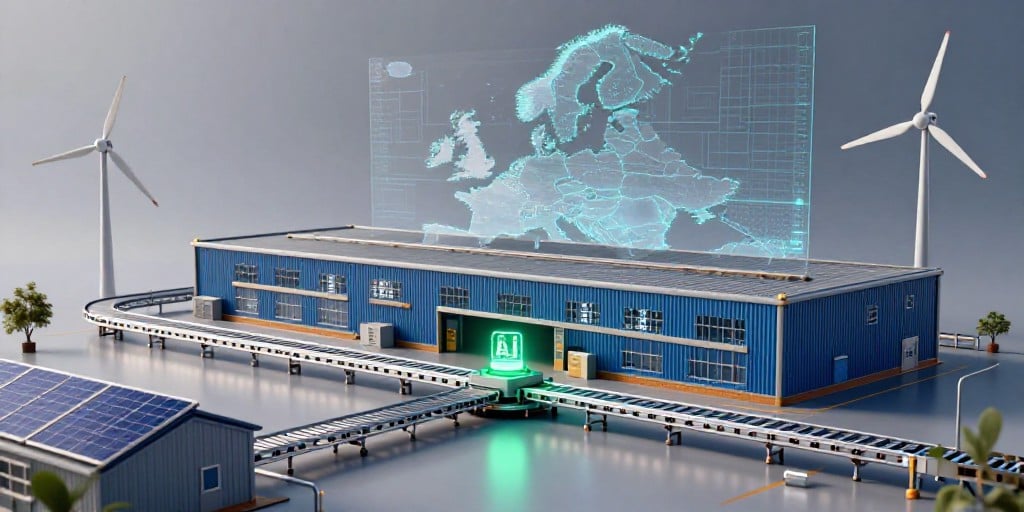
- Lean Automation: Brenntag’s adoption of AS/RS technologies has improved cycle times by 12 % and reduced manual handling incidents by 18 %, translating into measurable productivity gains.
- Advanced Lithography: Infineon’s shift toward EUV lithography has a projected throughput increase of 25 % but demands significant upfront CAPEX, impacting short‑term profitability.
- Additive Manufacturing: MTU’s 3‑D‑printed turbine blades promise weight reductions of up to 15 % and a 10 % reduction in maintenance intervals, but the associated tooling costs remain a financial drag.
These metrics illustrate the tension between productivity gains and CAPEX outlays. Investors are closely monitoring how each firm balances short‑term earnings pressure against long‑term efficiency improvements.
Economic and Regulatory Context Shaping CAPEX Decisions
German Wholesale Prices accelerated at the fastest pace in more than three years, largely driven by higher energy costs. This inflationary pressure is prompting manufacturers to accelerate investment in energy‑efficient processes and on‑site generation to mitigate supply‑chain exposure.
- Renewable Integration: CAPEX on solar photovoltaic installations and battery storage systems is projected to grow by 18 % in 2025, as firms seek to insulate themselves from volatile energy markets.
- Regulatory Alignment: The European Union’s 2030 climate targets and the Industrial Strategy 2030 initiative are driving a shift toward carbon‑neutral production pathways, compelling capital outlays for carbon capture and utilization (CCU) infrastructure.
- Infrastructure Spending: The EU’s Just Transition Fund and national infrastructure plans are delivering €30 billion in public‑private partnership opportunities for smart‑grid and high‑capacity rail projects, further stimulating private sector CAPEX.
Supply‑Chain Impacts and Market Implications
The resurgence in oil prices has a two‑fold effect on industrial capital decisions:
- Transportation Costs: Higher freight rates increase the total cost of raw materials, incentivizing manufacturers to invest in localized production or alternative logistics solutions (e.g., rail or maritime corridors).
- Energy‑Intensive Production: For processes heavily dependent on energy (e.g., steelmaking, chemical synthesis), rising oil prices accelerate the adoption of alternative energy sources and process optimization technologies.
The Nvidia CEO resignation and the ensuing national‑security scrutiny added to the cautionary tone, particularly among technology and defense stakeholders. While Nvidia itself is not a core industrial player, the incident underscores the sensitivity of the supply chain to geopolitical risks, thereby affecting CAPEX planning in sectors that rely on semiconductor components.
Outlook
- Positive Corporate Earnings: Despite macro‑economic uncertainties, the broader corporate earnings landscape remains robust, with several manufacturers reporting higher-than‑expected margins driven by efficiency gains.
- CAPEX Momentum: Capital‑intensive projects in automation, additive manufacturing, and renewable energy are likely to see increased funding as firms seek to secure competitive advantages and regulatory compliance.
- Investor Sentiment: Market participants remain balanced, weighing the upside of technological innovation against the backdrop of inflationary pressures, potential rate hikes, and geopolitical volatility.
In summary, the European corporate environment is characterized by a nuanced interplay of productivity enhancements, strategic CAPEX decisions, and external economic forces. Manufacturers that effectively align technology adoption with cost management and regulatory foresight are poised to outperform peers in the coming years.