
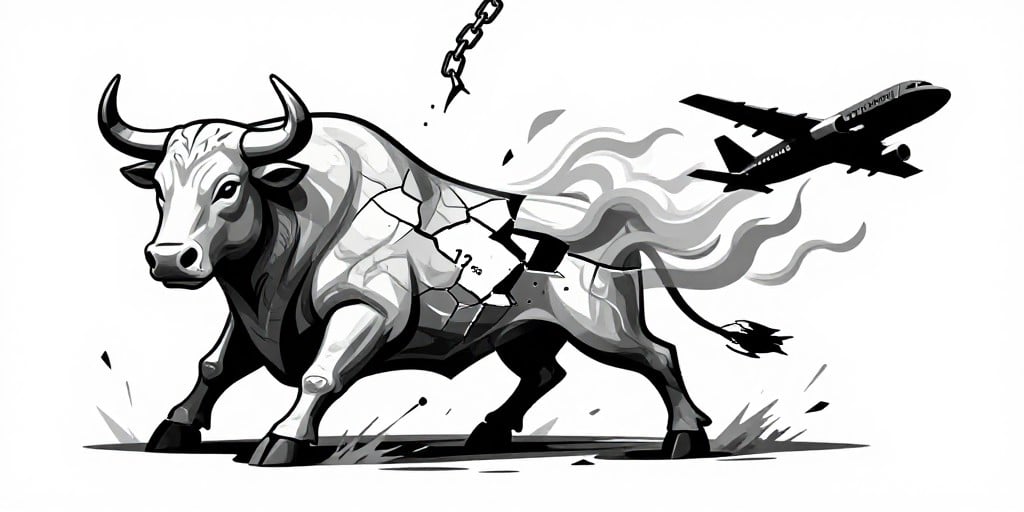
European Equity Markets Converge on Inflation and Geopolitical Headwinds
European equities closed the week on a decline, reflecting sustained inflationary pressure and escalating tensions in the Middle East. The German benchmark, the DAX, slipped 1.5 % while France’s CAC 40 fell nearly 1 %. Oil prices rallied on fears of supply disruptions, and bond yields rose, signalling market expectations of a tightening monetary stance from the European Central Bank and other central banks worldwide.
Sectoral Impact on Industrial Names
Within Germany, the aerospace and engineering sector was hit by a modest but noticeable sell‑off. MT U Aero Engines, a leading German aircraft engine supplier, experienced a decline that was in line with several of its industrial peers. No material operational updates were disclosed during the period, suggesting that the price movement was driven primarily by market sentiment rather than company‑specific fundamentals.
BlackRock’s Voting‑Rights Threshold in MT U Aero Engines
On 1 September, MT U Aero Engines filed a regulatory disclosure under German securities law, announcing that the U.S. asset‑management giant BlackRock, Inc. had reached a voting‑rights threshold in the company. The notification confirmed that BlackRock held roughly ten per cent of the company’s voting rights, a level that triggers mandatory public disclosure. The filing detailed the breakdown of shares and associated instruments but refrained from providing any insight into potential governance actions or strategic intentions.
The disclosure was issued as part of a routine update from the company’s distribution service and did not include commentary on future strategic plans. It came against a backdrop of cautious investor sentiment, heightened by expectations of further interest‑rate adjustments by central banks across the globe.
Analytical Context and Broader Economic Implications
Inflation and Monetary Policy Rising inflation continues to weigh on corporate earnings across Europe, prompting central banks to consider tightening policies. The rise in bond yields indicates that markets anticipate higher rates, which can dampen borrowing costs for companies and potentially slow investment spending.
Geopolitical Tensions Ongoing instability in the Middle East elevates concerns about supply chain disruptions, particularly for energy‑dependent sectors. Higher oil prices can compress profit margins for energy‑intensive industries, while simultaneously supporting energy‑sector stocks.
Investment‑Grade Asset Management BlackRock’s attainment of a ten‑percent voting‑rights stake places it at a threshold that requires enhanced transparency. While the current disclosure does not indicate immediate governance changes, the size of the holding may position BlackRock to influence strategic discussions, especially if the company seeks to align its operations with global sustainability and risk‑management trends.
Cross‑Sector Dynamics The aerospace and engineering decline mirrors broader challenges faced by manufacturing firms that are exposed to commodity price fluctuations and higher financing costs. Simultaneously, rising oil prices benefit oil‑producing companies but increase operating costs for manufacturers that rely on petroleum‑derived inputs.
Future Outlook The market’s cautious stance is likely to persist until clear signals emerge regarding the trajectory of inflation and central‑bank policy. For industrial names, maintaining cost‑control measures and diversifying supply chains will be critical to weather potential supply shocks. For investment stakeholders like BlackRock, strategic engagement may focus on sustainability, digital transformation, and resilience building—factors that are increasingly central to long‑term value creation in the European industrial landscape.
In summary, European equities are navigating a complex environment shaped by persistent inflation, geopolitical uncertainty, and evolving stakeholder influence. Companies such as MT U Aero Engines must monitor both macro‑economic signals and regulatory developments to sustain competitive positioning in an increasingly interconnected market.