
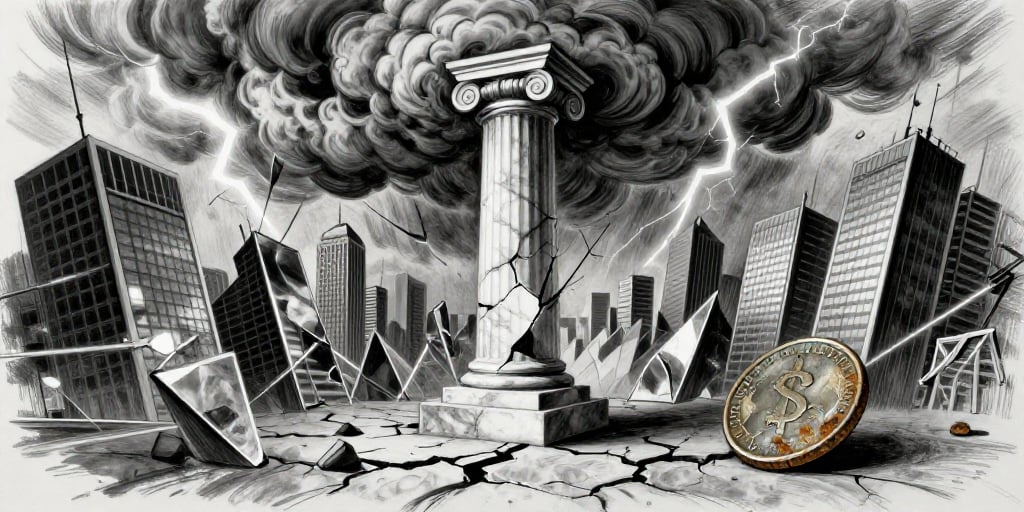
European Equity Markets Conclude Second‑Day Decline Amid Heightened U.S.–Iran Tension
European equity markets finished lower for a second consecutive session, a trend that underscored the pervasive impact of geopolitical uncertainty on risk appetite across the continent. Investor sentiment cooled as tensions between the United States and Iran escalated, prompting a broader retreat from equities in key European hubs.
Market Performance
- Brussels: The benchmark index registered a modest decline, reflecting cautious positioning by investors across the Eurozone.
- Frankfurt: The DAX index slipped, with a notable drop in technology and industrial stocks that are highly sensitive to macro‑environmental shifts.
- Paris: The CAC 40 mirrored the same trajectory, with declines in both consumer staples and financial services sectors.
In London, several prominent firms recorded modest falls, most notably Haleon, whose share price moved in line with the broader market weakness rather than company‑specific developments. Haleon’s performance thus reflects overall sentiment rather than fundamental shifts in its business model or product pipeline.
Economic Context
Trade Dynamics
German export figures for March displayed a slight uptick, yet the growth rate remained modest. Import volumes rose more sharply, resulting in a trade surplus that fell short of the previous month. This pattern suggests a tightening of domestic demand and potential supply‑chain frictions that could constrain future export growth.
Consumer Sentiment
Swiss consumer sentiment improved marginally, climbing from a more negative reading in March to a less negative level in April. While the improvement is modest, it indicates a gradual easing of consumer pessimism, albeit still below pre‑pandemic norms.
Housing Market
In the United Kingdom, housing price data for April indicated a slight decline, continuing a trend of modest reductions. The trend is consistent with the dual pressures of geopolitical uncertainties and apprehensions surrounding rising interest rates, which collectively dampen mortgage demand and reduce price growth.
Industry‑Specific Insights
- German Industrial Output: March figures showed a decline in industrial production, attributed in part to disruptions linked to the Middle East conflict. The downturn is likely to persist if geopolitical tensions remain elevated, as it can curtail the flow of critical raw materials and increase transportation costs.
- Corporate Performance: Across Europe, leading firms posted mixed results. While a subset of companies reported gains driven by resilient demand or operational efficiencies, others experienced declines that mirrored the broader market movement. The pattern underscores the interconnectedness of corporate performance and macro‑economic conditions.
Conclusion
The snapshot of European financial markets and key economic indicators demonstrates the pronounced influence of global geopolitical dynamics on investor expectations and sectoral performance. As tensions between the United States and Iran continue, the European equity market remains sensitive to any escalation, while underlying economic fundamentals—trade balances, consumer sentiment, housing activity, and industrial output—provide a more nuanced backdrop for assessing corporate resilience and competitive positioning.