
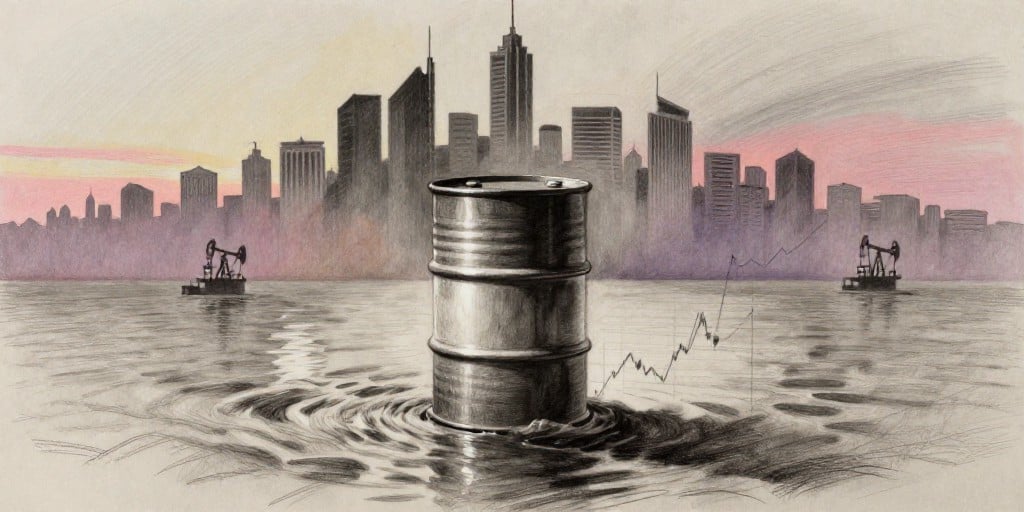
European Energy Markets React to Geopolitical Tension
European equity markets opened in a subdued tone on Thursday, as heightened geopolitical tension in the Middle East—stemming from recent military exchanges between the United States and Iran—continued to keep oil prices elevated. The pan‑European Stoxx 600 index slipped marginally, with all major bourses registering small declines at the open. By contrast, Brent crude reached a new daily high, a movement that has benefited energy producers across the continent.
Commodity Price Dynamics and Supply‑Demand Fundamentals
Brent crude’s surge reflects a confluence of supply‑side constraints and robust demand expectations. On the supply side, OPEC+ has maintained a cautious stance, limiting output growth in response to perceived regional instability. Production data from the U.S. Energy Information Administration (EIA) indicate that U.S. crude output remained flat at 8.7 million barrels per day, while Russian production—an influential supplier in Europe—has been subject to export restrictions that tighten the global supply curve.
Demand fundamentals remain supportive, driven by industrial activity in Asia and a gradual rebound in travel demand as pandemic restrictions ease. The World Bank projects global energy demand to grow at 1.2 % annually over the next five years, a figure that sustains upward pressure on crude prices. This short‑term dynamic is mirrored in the daily volatility of the Stoxx 600, where energy‑heavy constituents experienced modest gains despite a broader market dip.
Technological Innovation in Energy Production and Storage
Amid the commodity‑price backdrop, several European energy firms have highlighted investment in technological innovation. Equinor, a leading Norwegian operator, saw a modest uptick in its share price during the early trading session, reflecting the positive impact of the higher crude benchmark and the market’s favourable view of its exposure to rising energy demand. The company’s strategic emphasis on advanced drilling technologies—such as horizontal drilling and hydraulic fracturing—has improved recovery rates at its onshore assets, contributing to a more resilient production profile.
Equinor’s corporate venture arm is preparing to participate in a forthcoming founder‑funder exchange event in Little Rock. The initiative underscores the company’s commitment to nurturing innovation in physical‑economy domains, including grid technology, battery materials, and advanced mobility solutions. By engaging with early‑stage technology firms, Equinor aims to accelerate the deployment of complementary assets that enhance the efficiency and reliability of its upstream and downstream operations.
Regulatory Impacts on Traditional and Renewable Energy Sectors
Regulatory developments continue to shape the trajectory of both traditional and renewable energy sectors in Europe. The European Commission’s “Fit for 55” package, which targets a 55 % reduction in greenhouse‑gas emissions by 2030, imposes stricter carbon pricing on fossil‑fuel‑based production. In response, several European oil majors—such as Shell, BP, and TotalEnergies—have announced plans to expand renewable portfolios, particularly in solar, wind, and green hydrogen. These moves are intended to offset the regulatory cost of carbon capture and storage (CCS) and to diversify revenue streams as the energy transition accelerates.
Meanwhile, renewable energy projects have benefited from regulatory support in the form of accelerated permitting and investment tax credits. The European Investment Bank’s financing of large‑scale offshore wind farms has increased the capital available for renewable infrastructure, bolstering the sector’s growth potential. However, the regulatory environment also imposes compliance costs, particularly for small‑to‑medium enterprises (SMEs) that operate within the renewable niche, potentially curbing investment in the near term.
Balancing Short‑Term Trading Factors with Long‑Term Transition Trends
The day’s market dynamics illustrate how geopolitical events can swiftly influence commodity prices, which in turn affect the performance of energy companies like Equinor. Short‑term trading factors—such as Brent crude’s daily high and the immediate supply‑side constraints—have driven modest gains for oil majors. In contrast, long‑term energy transition trends—encompassing regulatory shifts, technological innovation, and capital allocation toward renewables—continue to shape the strategic landscape.
Equinor’s resilience in this environment is underpinned by its strategic positioning within a sector that benefits from commodity price movements, while simultaneously investing in complementary technologies that will be critical for its long‑term competitiveness. As the company prepares for forthcoming earnings disclosures, market participants remain attentive to both the evolving geopolitical landscape and the regulatory roadmap that will dictate the pace of the energy transition.