Market Rebound Amidst European Banking Consolidation
European Equity Landscape
On Thursday, the German equity market rebounded from a week‑long trough that had seen the DAX fall to its lowest level since July. The index rose by nearly two percent, a recovery that was largely attributable to a reversal in the U.S. technology sector that had pulled back earlier in the week. The rebound spilled over into Europe, with European technology shares gaining momentum and contributing to the DAX’s upturn. Complementary gains in commodities and automotive stocks helped to broaden the rally, and the EuroStoxx 50 and the MDAX mirrored the trend, each posting double‑digit percentage gains.
Despite the positive headline numbers, the underlying dynamics warrant a closer look. The recovery was triggered by a specific sector—U.S. technology—that historically exhibits higher volatility and is often influenced by regulatory and geopolitical developments. A sudden shift in investor sentiment in that sector can, therefore, amplify movements in related European equities, raising questions about the durability of the rebound and the extent to which it reflects genuine market strength versus a temporary technical correction.
UniCredit’s Strategic Move into Commerzbank
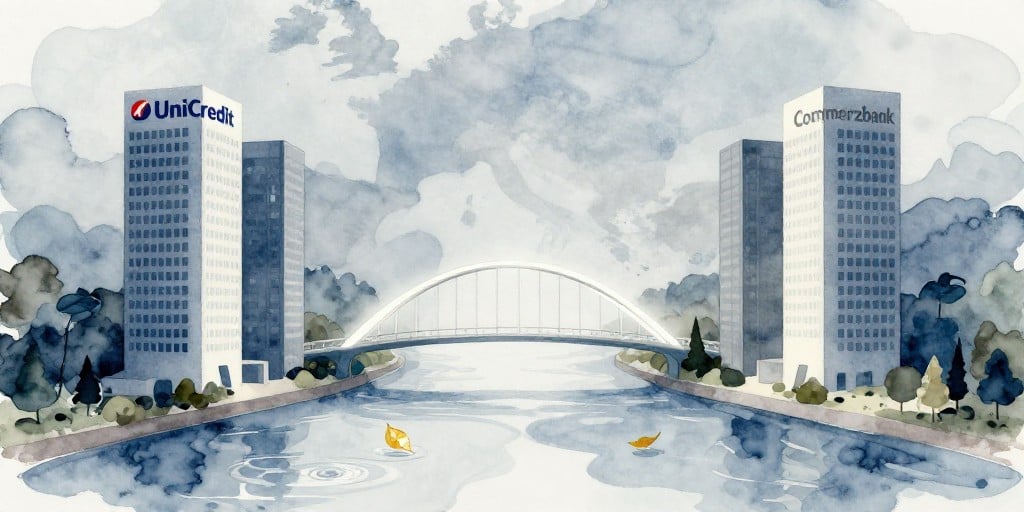
In parallel with the market’s technical resurgence, Italian lender UniCredit announced its intent to consolidate control over German rival Commerzbank. The announcement followed regulatory clearance and an agreed takeover, and it now appears that UniCredit has secured a majority of Commerzbank’s shares. The Italian bank seeks to replace most of the supervisory‑board members, with its chief executive Andrea Orcel proposed as the new chairman.
Potential Conflicts of Interest and Governance Concerns
Regulatory Approval and Oversight The regulatory clearance granted by German supervisory authorities is a critical milestone; however, the process often involves a degree of discretion. A deeper examination of the conditions imposed—such as requirements to maintain certain levels of German ownership or mandates for independent directors—would clarify whether the approval was purely procedural or if it reflects broader strategic considerations.
Board Reshuffle and Board Independence Replacing the majority of the supervisory board raises concerns about the independence of corporate governance. An investigative audit of the proposed board members’ affiliations, past affiliations with other financial institutions, and potential conflicts of interest would provide transparency on whether the new composition could be susceptible to undue influence from UniCredit.
Impact on Dividend Policy and Share‑Buyback Plans Analysts have noted that the acquisition could affect Commerzbank’s dividend policy and share‑buyback activity. A forensic review of the bank’s past dividend history, buyback plans, and the proportion of capital allocated to shareholder returns versus risk buffers could reveal whether the new governance structure might shift priorities toward higher payouts at the expense of financial resilience.
Risk Profile Alterations UniCredit’s strategic objectives and risk appetite may differ from those historically followed by Commerzbank. A comparative analysis of risk‑weighted assets, capital adequacy ratios, and credit exposure of both banks pre‑ and post‑merger would help assess whether the consolidation introduces higher concentration risk or systemic exposure that could destabilize the broader banking sector.
Market Reaction and Investor Sentiment
The immediate reaction in the market was a decline in Commerzbank’s share price, reflecting investor unease about the shift in governance and potential changes to payout policies. This price erosion suggests that market participants are cautious about the new structure and its implications for shareholder value. In contrast, the broader European banking sector displayed resilience, with several bank stocks recording gains—indicative of a more nuanced view that perhaps the consolidation could create synergies, cost efficiencies, or enhanced capital adequacy for the combined entity.
Human Impact of the Consolidation
While financial statements and market indices provide quantitative metrics, the human dimension is equally significant. Employees at both banks face uncertainty regarding job security, changes in corporate culture, and potential restructuring. Customers, particularly those in the small‑business segment, may experience alterations in loan terms, service accessibility, and relationship management. A qualitative assessment involving interviews with stakeholders and a review of employee turnover and customer satisfaction surveys could illuminate the consolidation’s social consequences.
Conclusion
The Thursday market rebound, driven by sectoral reversals and broad gains across the European equity spectrum, masks an underlying fragility that becomes evident when scrutinizing the Italian lender’s aggressive consolidation strategy. A cautious, investigative approach reveals potential conflicts of interest, governance restructuring, and the risk of altered financial practices that could affect both shareholders and the broader financial ecosystem. Balancing the headline optimism with rigorous forensic analysis ensures that institutions are held accountable for decisions that have far‑reaching implications beyond the balance sheet.