
Corporate Update: EssilorLuxottica’s Strategic Advances in Smart‑Glasses and Shareholder Returns
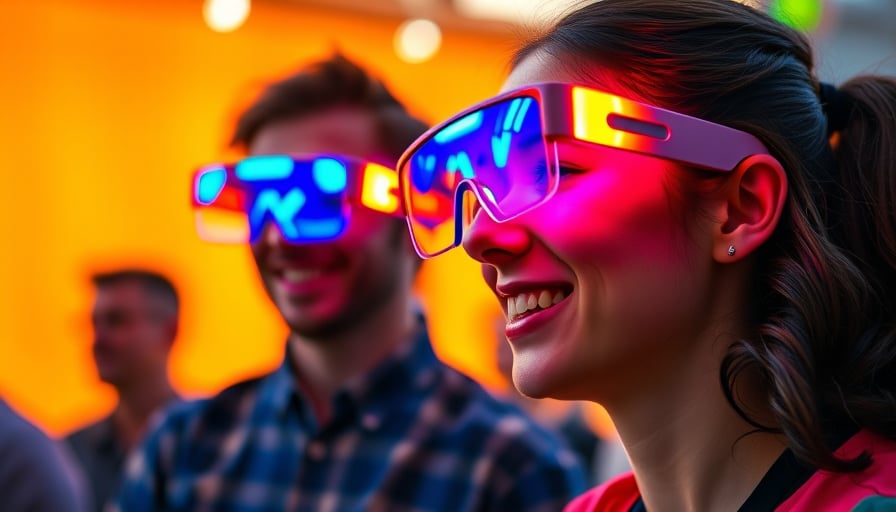
EssilorLuxottica SA, the prominent global eyewear manufacturer traded on the NYSE and Euronext Paris, has reiterated its commitment to core product lines—sunglasses, lenses, and ancillary eye‑care accessories—while simultaneously expanding into high‑technology eyewear. In February, the company and its partner Meta Platforms disclosed that sales of hybrid smart‑glass frames, which fuse the classic Ray‑Bans aesthetic with advanced sensor technology, surged to over seven million units in the preceding year. The partnership is actively negotiating pricing and distribution strategy in response to heightened demand, underscoring EssilorLuxottica’s pursuit of a foothold at the convergence of fashion and digital innovation.
Market Context and Competitive Positioning
The eyewear sector, traditionally driven by brand heritage and optical performance, is experiencing a paradigm shift as consumer expectations increasingly intertwine with wearable computing. By integrating Meta’s proprietary technology stack—encompassing augmented‑reality overlays and real‑time data analytics—EssilorLuxottica positions itself against emerging incumbents such as Vuzix, Snap Inc., and established players like Samsung and Apple, who are also venturing into smart‑glass platforms. The partnership leverages Ray‑Bans’ robust brand equity to mitigate consumer apprehension regarding the transition from conventional eyewear to connected devices, thereby creating a differentiated value proposition that balances style, functionality, and brand loyalty.
Key drivers of this strategic pivot include:
- Technological Maturation: Advances in miniaturized display, battery efficiency, and low‑power connectivity have lowered entry barriers for high‑quality smart‑glass products.
- Consumer Behavior Shifts: The acceleration of remote work, e‑learning, and digital lifestyle adoption has amplified demand for hands‑free, context‑aware solutions that can be seamlessly integrated into daily routines.
- Regulatory Support: Increasing emphasis on health monitoring and telemedicine has spurred interest in wearable health devices, opening avenues for smart‑glasses that can capture biometric data.
In terms of financial implications, the projected volume of seven million units represents a significant revenue stream, potentially offsetting the costs associated with research and development, manufacturing retooling, and supply‑chain realignment required for high‑technology eyewear production.
Shareholder‑Return Activity
On February 24th, EssilorLuxottica announced transactions involving its own shares. While specific details—including transaction volume, price, and the exact mechanism (e.g., open market purchases, tender offers, or share‑repurchase programs)—were not fully disclosed, the disclosure aligns with the company’s broader shareholder‑return policy. Such activities typically aim to:
- Enhance Liquidity: By buying back shares, the firm reduces the number of outstanding shares, potentially increasing earnings per share (EPS) and providing a buffer against market volatility.
- Signal Confidence: Repurchases often communicate management’s confidence in the firm’s valuation and future prospects, potentially improving investor sentiment.
- Maintain Shareholder Value: Consistent dividend payments and share‑repurchase initiatives serve to preserve or grow shareholder wealth, especially in periods of stable cash flows.
The timing of the transaction—coinciding with a period of robust sales data and strategic announcements—suggests that EssilorLuxottica is capitalizing on favorable market conditions to reinforce its financial position and reward shareholders without compromising liquidity necessary for ongoing investments in technology and expansion.
Broader Economic and Sectoral Implications
EssilorLuxottica’s dual focus on heritage product lines and cutting‑edge smart‑glasses exemplifies a broader corporate trend wherein traditional manufacturers diversify into technology‑driven markets to sustain growth and remain competitive. This approach mirrors similar strategies across unrelated sectors:
- Automotive: Legacy carmakers integrating autonomous driving technology and connectivity services.
- Retail: Brick‑and‑mortar retailers embracing e‑commerce platforms and digital payment systems.
- Healthcare: Traditional medical device firms expanding into digital health and telemedicine solutions.
By aligning with these macro‑trends, EssilorLuxottica taps into cross‑industry synergies—such as shared supply‑chain logistics, data‑analytics capabilities, and consumer behavior insights—thereby creating a more resilient business model. Additionally, the partnership with Meta, a leading technology conglomerate, enhances the firm’s access to capital, intellectual property, and global distribution channels, further strengthening its competitive positioning in the rapidly evolving wearable market.
Conclusion
EssilorLuxottica’s recent disclosures illustrate a strategic blend of product diversification and shareholder‑return initiatives. The company’s foray into smart‑glass technology, backed by a high‑profile partnership with Meta Platforms, positions it at the intersection of fashion, optics, and digital innovation. Concurrently, share repurchase activity reflects a commitment to maintaining liquidity and delivering shareholder value. These moves collectively underscore EssilorLuxottica’s adaptability within a shifting economic landscape, as it seeks to capitalize on emerging market drivers while reinforcing its foundational business principles.