
Ericsson Accelerates Enterprise, Industrial, and Defense 5G Adoption Through Strategic Partnerships and Technological Innovation
A Cohesive Vision for AI‑Enhanced, Resilient Connectivity
Ericsson’s February 17 portfolio of announcements illustrates a deliberate shift toward positioning the company as a linchpin in the next phase of 5G deployment. By marrying advanced network capabilities with edge‑intelligence and fail‑over resilience, Ericsson is crafting a differentiated value proposition that extends beyond conventional telecom service provision. The company is simultaneously targeting high‑value verticals—public safety, transportation, maritime defense, and enterprise mobility—thereby embedding 5G as an enabler of mission‑critical operations.
Embedding 5G into the Windows 11 Experience
The collaboration with Microsoft represents a milestone in converging consumer‑grade operating systems with carrier‑grade network assurance. By integrating 5G policy control directly into Windows 11, Ericsson delivers:
- Secure, Policy‑Driven Access – Centralized cloud‑based policy enforcement ensures that corporate data remains protected regardless of the user’s location, mitigating the risk of data exfiltration inherent in unmanaged mobile networks.
- Continuous Performance Optimisation – Edge computing resources evaluate real‑time network metrics, automatically steering traffic to the most efficient paths and thus sustaining the low‑latency demands of emerging applications such as AR/VR collaboration and remote diagnostics.
- Simplified Management – A single, unified dashboard abstracts complex network parameters, enabling IT departments to focus on strategic priorities rather than day‑to‑day connectivity troubleshooting.
This initiative directly addresses a growing concern among enterprises: the difficulty of scaling 5G connectivity while maintaining tight security controls. By leveraging Microsoft’s ubiquitous user base, Ericsson taps into a vast potential customer pool, thereby accelerating market penetration.
Dual‑SIM 5G Routers for Public‑Safety and Fleet Operators
The introduction of a 5G in‑vehicle router featuring dual‑SIM failover and edge AI marks a decisive move into the high‑availability segment. Key attributes include:
- Dual‑SIM Failover – Guarantees uninterrupted connectivity across multiple carriers, essential for first responders and transit operators who cannot afford single points of failure.
- Edge AI Processing – Enables real‑time decision‑making onboard, reducing reliance on centralized cloud resources and mitigating latency that could compromise safety-critical functions.
- High‑Performance Wi‑Fi – Provides local hotspot capabilities for crew communications, thereby consolidating the device’s role as both a backhaul and a local network hub.
By targeting public‑safety, transit, and fleet markets, Ericsson positions itself as a preferred partner for operators seeking to upgrade to 5G while preserving legacy communications and ensuring regulatory compliance. The dual‑SIM architecture also satisfies the growing industry trend toward network redundancy as a core component of operational resilience.
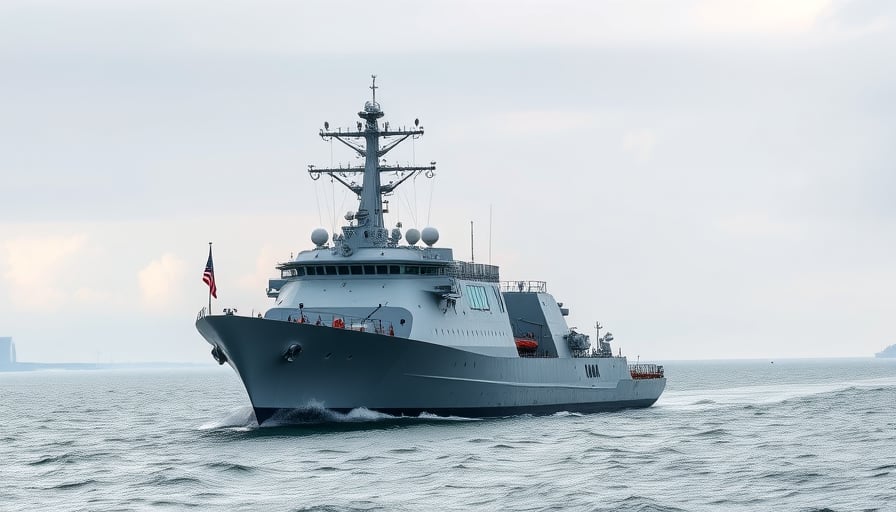
Autonomous 5G Stand‑Alone Network on an Italian Naval Vessel
Demonstrating a fully autonomous 5G standalone (SA) network aboard an Italian naval vessel showcases Ericsson’s capacity to deliver high‑throughput, reliable communications in challenging maritime environments. The demonstration underscores several strategic narratives:
- Operational Autonomy – SA architecture decouples the network from legacy LTE control planes, enabling faster deployment and lower latency—a necessity for real‑time situational awareness and automated systems onboard.
- Reliability Under Constraints – The naval platform’s dynamic topography and limited spectrum availability pose significant challenges; Ericsson’s solution proves robust under these conditions, bolstering confidence in 5G for defense applications.
- Strategic Partnerships – Collaborating with a European defense client strengthens Ericsson’s foothold in the defense market, which is increasingly looking to commercial 5G standards to meet interoperability and cybersecurity requirements.
The naval demonstration also signals a broader industry shift: defense organizations are moving from siloed, proprietary networks toward commercial, standards‑based solutions that can be rapidly re‑configured and scaled across diverse platforms.
Pattern Recognition Across Ericsson’s Offerings
| Vertical | Key Challenge | Ericsson’s Response | Broader Trend |
|---|---|---|---|
| Enterprise Mobility | Security & manageability | Microsoft Windows 11 5G integration | Edge‑based policy control |
| Public Safety / Fleet | Reliability & redundancy | Dual‑SIM failover router | Multi‑SIM carrier aggregation |
| Defense / Maritime | Autonomy & resilience | Autonomous SA network | Commercial‑grade defense networks |
Ericsson’s initiatives converge on three core themes:
- AI‑Driven Edge Intelligence – Each product leverages edge AI to offload latency‑sensitive tasks, aligning with the industry’s move toward distributed computing.
- Integrated Security Posture – The emphasis on policy‑driven access and fail‑over mechanisms reflects heightened enterprise demands for end‑to‑end security.
- Modular, Scalable Architecture – From standalone SA networks to dual‑SIM routers, Ericsson demonstrates modular designs that can be adapted across sectors, a hallmark of future‑proof telecom solutions.
Challenging Conventional Wisdom
Historically, telecom infrastructure upgrades were viewed as capital‑intensive, vendor‑centric endeavors. Ericsson’s approach disrupts this paradigm by:
- Democratizing Advanced Connectivity – Embedding 5G functionality into consumer‑grade operating systems and commercially available routers lowers entry barriers for small‑to‑mid‑size enterprises.
- Leveraging Existing Ecosystems – Partnerships with Microsoft and maritime defense partners illustrate a shift from pure hardware provisioning to ecosystem integration.
- Prioritising Resilience Over Redundancy Costs – Dual‑SIM and autonomous network designs show that resilience can be achieved without proportionally increasing operational expenditure.
These shifts suggest that the next wave of 5G adoption will be less about network densification and more about intelligent, secure, and resilient application layers.
Forward‑Looking Analysis
Opportunities
- Vertical‑Specific Market Growth – As public‑safety, transit, and defense budgets increasingly allocate toward digital transformation, Ericsson’s tailored solutions position the company for accelerated adoption.
- AI‑Ops Monetisation – The cloud‑based optimisation platform can evolve into a subscription‑based AI‑Ops service, providing recurring revenue streams.
- Cross‑Industry Collaboration – The Microsoft partnership paves the way for joint development of industry‑specific 5G workloads (e.g., remote surgery, autonomous logistics).
Risks
- Competitive Pressure – Other telcos and system integrators may replicate similar edge‑AI and dual‑SIM capabilities, eroding differentiation.
- Regulatory Hurdles – Defense deployments often involve stringent compliance requirements; any misstep could delay rollouts.
- Technology Adoption Lag – Enterprises may be slow to adopt 5G‑enhanced Windows 11 if they lack legacy network management capabilities.
Recommendations for Stakeholders
- Invest in AI‑Ops Infrastructure – Allocate resources to expand cloud‑based policy platforms, ensuring scalability as user bases grow.
- Deepen Ecosystem Partnerships – Pursue alliances with other operating system vendors and industry consortia to broaden the 5G application landscape.
- Focus on Interoperability – Ensure that dual‑SIM and SA solutions adhere to open standards, facilitating integration across heterogeneous networks.
Conclusion
Ericsson’s February 17 announcements exemplify a strategic pivot from traditional telecom service delivery toward an ecosystem‑centric, AI‑enhanced connectivity model. By embedding 5G into widely used operating systems, deploying resilient in‑vehicle routers, and demonstrating autonomous maritime networks, the company is crafting a unified narrative: 5G is not merely a speed upgrade—it is a platform for secure, intelligent, and resilient operations across enterprise, industrial, and defense domains. As the technology landscape continues to evolve, stakeholders who recognize and capitalize on these integrated capabilities will likely reap the most significant strategic advantages.