Equinor ASA’s Resilience Amid Cyber‑Security and Geopolitical Uncertainties
Operational Continuity in the Face of Cyber Threats
Equinor ASA’s recent cyber‑incident—although it did not result in production downtime or data loss—highlights a critical vulnerability shared across the energy sector: highly efficient, highly automated infrastructures often lack the defensive depth required to withstand sophisticated adversaries. The company’s rapid containment and swift restoration of normal operations illustrate the effectiveness of its layered defense strategy, yet the event underscores the necessity of continuous investment in cyber‑security controls.
From a financial perspective, the incident incurred no direct cost to the balance sheet but created a measurable opportunity cost. Downtime in upstream operations can trigger contractual penalties and supply chain disruptions, which may erode margins. Equinor’s ability to avoid such losses suggests that its risk‑management protocols are operating at a level comparable to the industry’s best practices. Nonetheless, the incident serves as a cautionary tale for peers whose cyber‑security frameworks may not be equally robust.
The Shipping Partner’s LNG Charter Dynamics
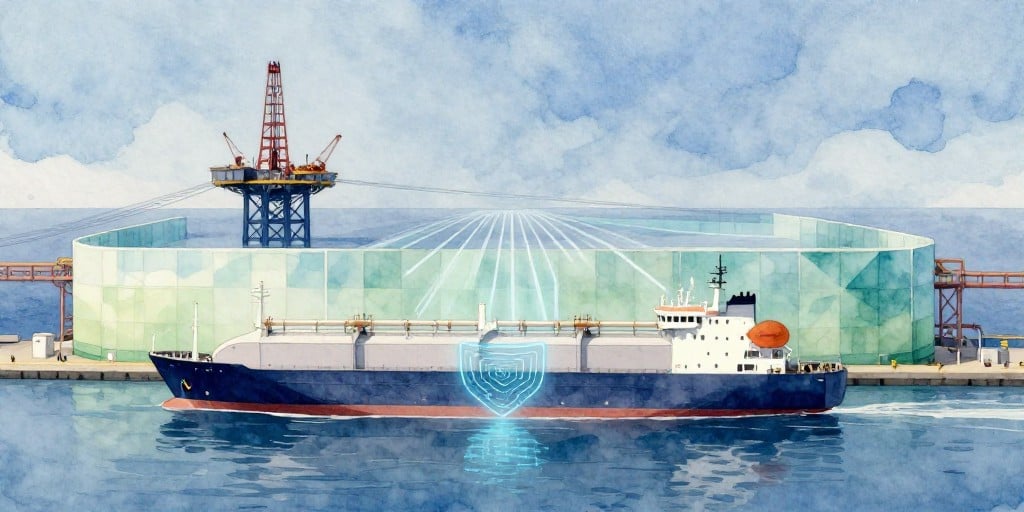
Equinor’s global shipping partner reported a strong third‑quarter performance, buoyed by the high utilisation of LNG carriers operating under long‑term charters. The partner’s fleet achieved utilisation rates above 80 %, translating into a stable revenue stream that cushions the company against short‑term market volatility. However, this profitability is not immune to macro‑economic shocks:
- Geopolitical Sanctions – Ongoing sanctions targeting Russia and its allies could restrict the transport of Russian‑origin LNG. A sudden curtailment of these cargoes would reduce charter demand and pressure freight rates.
- Insurance Availability – War risk and sanctions risk premiums may spike, increasing the cost of insuring vessels on routes deemed high‑risk. This could erode the net revenue derived from charters and complicate contract renewal negotiations.
- Regulatory Scrutiny – Emerging environmental regulations on LNG shipping (e.g., CO₂ emission limits) could necessitate fleet upgrades or lead to stranded assets if compliance is delayed.
Financial modeling indicates that a 10 % decline in charter utilisation, coupled with a 15 % rise in insurance premiums, could reduce the partner’s EBITDA margin by 2–3 %. While such a scenario would not immediately threaten Equinor’s liquidity, it would constrain the partner’s capacity to honour existing contractual commitments, potentially triggering renegotiations and additional costs.
Balancing Efficiency with Resilience
Equinor’s strategy to maintain essential production while tightening cyber‑security protocols aligns with a broader industry movement toward “resilience engineering.” The company’s emphasis on sustaining operations under duress reflects an understanding that technological efficiency must be paired with robust risk mitigation. Several observations emerge:
- Redundancy vs. Cost – Implementing redundant systems and diversified supply chains adds capital and operating expenses, yet the cost of downtime far exceeds these incremental investments.
- Cyber‑Resilience Metrics – Adoption of measurable cyber‑resilience KPIs (e.g., mean time to recovery, incident response coverage) provides a tangible benchmark for performance improvement.
- Cross‑Sector Collaboration – Sharing threat intelligence with industry consortia can pre‑empt attacks, reducing the likelihood of coordinated disruptions that target multiple entities simultaneously.
Investors and stakeholders should evaluate Equinor’s resilience posture not only through current performance metrics but also via its forward‑looking governance framework. The company’s recent disclosures indicate a planned increase in cyber‑security spend by 5 % over the next fiscal year, an investment that aligns with the projected growth in digital threat sophistication.
Risk–Reward Outlook
| Risk | Impact | Mitigation |
|---|---|---|
| Cyber‑attack leading to production halt | High | Layered defense, rapid response, redundancy |
| Sanctions affecting LNG transport | Medium | Diversified charter mix, alternative routes |
| Insurance premium spikes | Medium | Long‑term insurance contracts, risk pooling |
| Regulatory changes (CO₂ limits) | Low–Medium | Fleet upgrade plans, compliance monitoring |
From an analytical standpoint, Equinor’s diversified portfolio—combining upstream production, downstream assets, and a shipping partnership—offers a balanced risk profile. The company’s proactive stance on cyber‑security and its strategic engagement with global shipping partners position it favorably against peers that may under‑invest in these critical areas.
In sum, Equinor’s recent operational experience and partnership dynamics reveal a nuanced landscape where efficiency, resilience, and geopolitical factors intertwine. The company’s continued focus on robust risk management, coupled with its disciplined financial oversight, suggests a capacity to navigate emerging threats while sustaining long‑term value creation for shareholders.