
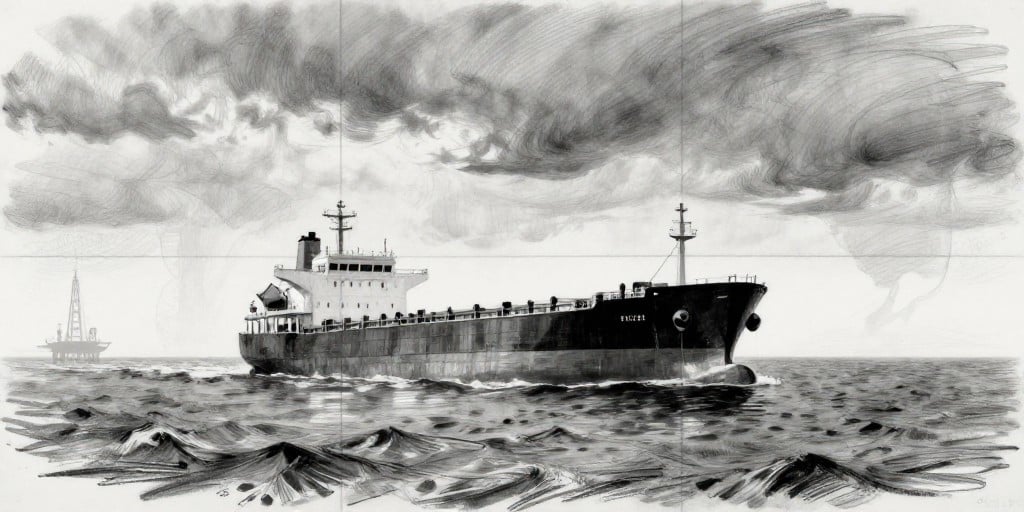
Corporate Overview of Equinor ASA’s Offshore Tanker Operations
Equinor ASA has confirmed that its offshore tanker operations are proceeding without significant disruption, underscoring a strategic focus on fleet utilization and long‑term charter agreements. The company’s recent disclosures highlight sustained activity in Brazil and the North Sea, where production levels are on an upward trajectory and investment in floating production storage and offloading (FPSO) assets remains robust.
Fleet Composition and Charter Strategy
Equinor’s tanker fleet averages ten years of service life and operates predominantly under multi‑year charters that include renewal options. This structure provides a predictable revenue stream and mitigates the volatility typically associated with short‑term freight cycles. By securing forward‑booked contracts that often span three to five years, Equinor enhances its cash‑flow stability and strengthens its position in markets where demand for shuttle services is rising.
The company’s charter portfolio is further reinforced by its liquidity strategy, which combines substantial cash reserves with access to credit facilities. Through the use of interest‑rate hedging instruments, Equinor has aligned its financing costs with prevailing market conditions, thereby preserving margin resilience even during periods of tightening credit.
Market Dynamics in Brazil
Petrobras’ record production pace in Brazil has elevated demand for shuttle tanker services, creating a favorable environment for Equinor’s operations. Commodity price analysis indicates that crude oil spot prices in the region have remained above $80 per barrel for the past six months, supporting a stable freight rate environment. Moreover, the continued expansion of offshore platforms in the Campos Basin has translated into higher throughput, which is expected to outpace the supply of available tankers in the medium‑term horizon.
North Sea Activity
The North Sea market has shown positive momentum, driven by increased FPSO activity and investment in new production projects. Recent data from the UK’s National Offshore Petroleum Board suggest that the number of FPSOs operating in the region has risen by 12% year‑on‑year, while new project approvals have reached a record level. These developments underpin Equinor’s expectation that demand for charter services will continue to outstrip supply growth for the foreseeable future.
Technological Innovations and Energy Transition Considerations
While the core of Equinor’s strategy remains focused on traditional oil transportation, the company acknowledges the broader energy transition landscape. Technological innovations in energy production and storage—such as advanced battery technologies for on‑site power generation and the deployment of floating wind farms—are reshaping the offshore energy infrastructure. Equinor’s fleet, though primarily designed for oil transport, has the potential to support hybrid operations that incorporate renewable energy assets, thereby creating new revenue streams that align with long‑term sustainability goals.
In addition, regulatory frameworks in both Brazil and the North Sea are increasingly favoring low‑carbon initiatives. The European Union’s Green Deal and the UK’s offshore wind targets are encouraging investment in renewable platforms, which may alter the demand profile for tankers over the next decade. Equinor’s proactive engagement in strategic acquisitions aimed at expanding its fleet is positioned to capture these evolving opportunities.
Financial Position and Outlook
Equinor’s financial discipline—reflected in its robust liquidity and disciplined debt management—provides the flexibility to pursue growth initiatives such as fleet acquisitions. By integrating complementary vessels into its charter portfolio, the company can enhance capacity, reduce per‑unit costs, and further strengthen its market position.
Looking forward, Equinor projects that the offshore tanker market will remain supportive, particularly in Brazil and the North Sea. The company’s focus on long‑term charters, coupled with a vigilant monitoring of market dynamics, positions Equinor to deliver sustainable returns for its stakeholders while navigating the complexities of the global energy transition.