Corporate News – Market Analysis and Strategic Implications
Equinor ASA’s completion of the third tranche of its 2026 share‑buyback programme is a significant event for investors and market analysts alike. While the transaction itself is a routine exercise in capital management, it is set against a backdrop of dynamic energy markets that combine traditional oil and gas fundamentals with accelerating renewable and storage innovations. The following analysis integrates Equinor’s financial maneuvering with broader market trends, commodity pricing, and regulatory developments to illustrate how the company’s actions reflect and influence the evolving energy landscape.
1. Contextualising the Share‑Buyback
- Transaction Details: Between 5 and 9 October, Equinor repurchased more than 700,000 shares at an average price slightly below NOK 408 per share. The purchases were made predominantly on the Oslo Stock Exchange, with supplementary trades on the Czech and Turkish markets.
- Capital Position: Post‑transaction, Equinor holds roughly 0.3 % of its own capital in treasury shares. When shares acquired through the company’s savings programme are excluded, this figure rises to about 0.5 %. These percentages underscore Equinor’s modest yet deliberate reduction of the share base, a strategy aimed at enhancing earnings‑per‑share metrics while preserving capital for strategic investments.
- Regulatory Compliance: The buy‑back complies with the EU Market Abuse Regulation and Norwegian securities law, and an itemised trade schedule is publicly available on Equinor’s news portal.
2. Market Dynamics in the Nordic Region
On the day of the announcement, the Oslo Stock Index (OSEBX) edged upward, buoyed by gains in energy and maritime stocks. Equinor’s share price moved in line with a modest rise for the group, reflecting a broader positive sentiment around oil and gas equities. Contributing factors included:
- Freight Rate Increases: Higher ocean freight rates have bolstered maritime earnings, creating a favourable backdrop for energy firms that rely on shipping for crude and product transport.
- Middle‑East Supply Tightening: Ongoing geopolitical tensions in the Middle East have constrained crude oil supply, supporting higher crude benchmarks and reinforcing investor confidence in upstream assets.
3. Supply‑Demand Fundamentals in Energy Markets
3.1 Oil and Gas
- Crude Benchmarks: WTI and Brent futures have maintained a stable range above USD 70 per barrel, supported by OPEC+ production cuts and reduced output from non‑OPEC producers.
- Gas Supply: Natural gas inventories in the Euro‑Asia corridor have rebounded after a dip in summer 2023, aided by increased liquefied natural gas (LNG) imports from the US and Qatar. However, persistent supply constraints in the Middle East and Russia‑Ukraine conflict have kept spot prices at elevated levels.
3.2 Renewable Energy
- Solar and Wind Capacity: Installed capacity for wind and solar has accelerated, with new offshore wind farms in the North Sea and the Baltic Sea reaching critical mass. Grid integration costs remain a barrier, but advances in grid‑storage coupling are beginning to mitigate curtailment.
- Storage Technologies: Battery storage (lithium‑ion, flow batteries) and hydrogen production (electrolysis) are becoming increasingly cost‑competitive. Pilot projects in Scandinavia demonstrate that combined heat and power (CHP) plants can integrate renewable sources with storage, smoothing supply and reducing grid strain.
4. Technological Innovations Impacting Energy Production and Storage
- Carbon Capture, Utilisation, and Storage (CCUS): Equinor’s investment in the Svalbard CCUS project exemplifies the firm’s commitment to decarbonisation while maintaining oil production. The project’s 0.3 MtCO₂ capture capacity will serve as a template for larger scale deployments.
- Digitalisation of Operations: Predictive maintenance driven by AI analytics reduces downtime in offshore platforms, enhancing throughput. Real‑time asset monitoring also allows for rapid response to fluctuating market conditions.
- Hydrogen Economy: Equinor’s exploration of green hydrogen production in the North Sea leverages surplus wind energy. The integration of hydrogen into existing gas pipelines could enable a gradual transition while preserving infrastructure.
5. Regulatory Impacts on Traditional and Renewable Sectors
- EU Climate Target Regulations: The EU’s 2030 emission reduction target of 55 % relative to 1990 levels is driving stricter licensing for new fossil projects and incentivising renewables through the Green Deal. Equinor’s capital allocation strategy reflects this shift, balancing conventional upstream projects with renewable investments.
- Carbon Pricing: The EU Emissions Trading System (ETS) and Norway’s carbon tax influence operating costs for oil and gas. Higher carbon prices make CCUS and renewable projects comparatively attractive, encouraging diversification of the asset base.
- Infrastructure Funding: Public‑private partnership frameworks for grid expansion and hydrogen infrastructure are becoming more accessible, reducing financial risk for large-scale renewable deployments.
6. Balancing Short‑Term Trading and Long‑Term Transition
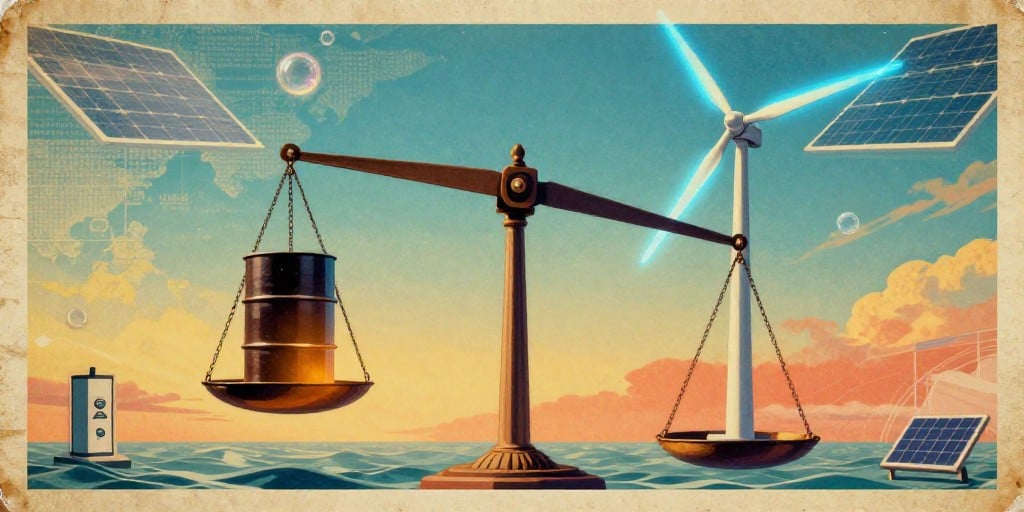
Equinor’s share‑buyback can be viewed as a short‑term mechanism to support equity valuation amid market volatility. Yet, the company’s strategic narrative is firmly rooted in the long‑term energy transition:
- Capital Management vs. Investment Flexibility: The reduction in treasury shares improves short‑term financial metrics while leaving ample cash flow for investments in CCUS, hydrogen, and renewables.
- Market Signalling: A stable or modest rise in Equinor’s share price, coupled with a disciplined buy‑back, signals confidence to investors in the company’s ability to navigate both high‑priced fossil markets and emerging low‑carbon opportunities.
- Portfolio Diversification: Equinor’s simultaneous operation of upstream oil fields, CCUS facilities, and renewable projects creates a resilient portfolio that can adapt to fluctuating commodity prices and policy shifts.
7. Conclusion
Equinor’s third tranche of the 2026 share‑buyback programme demonstrates a nuanced approach to corporate finance in an era of rapid energy transformation. By securing a modest capital reduction against the backdrop of favourable oil and gas markets, while simultaneously investing in CCUS and renewable technologies, the company positions itself to capture value in both the current and future energy landscapes. The interplay between commodity pricing, supply‑demand fundamentals, regulatory frameworks, and technological innovation will continue to shape Equinor’s trajectory, offering investors a compelling blend of short‑term performance and long‑term strategic vision.