Equinor ASA Announces New North Sea Discovery Amid Positive Energy‑Sector Sentiment
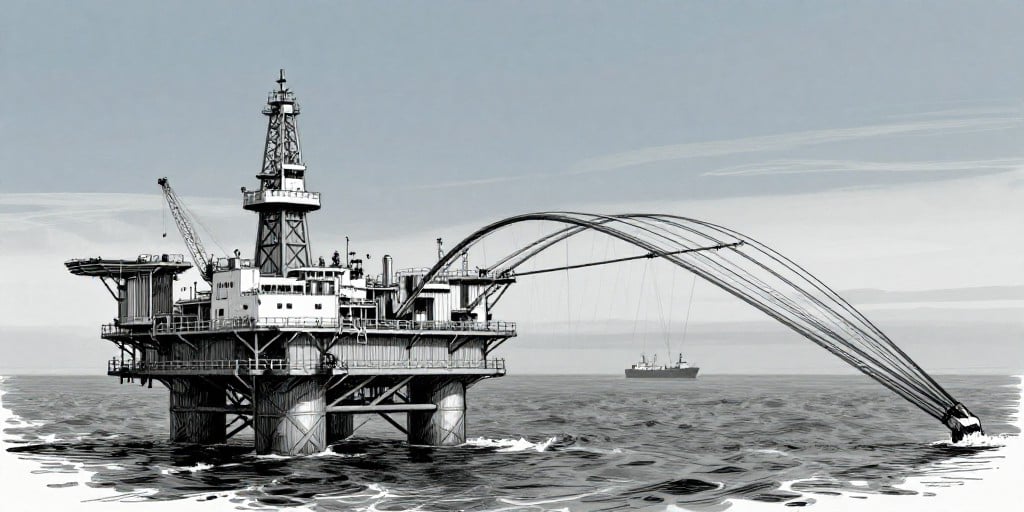
Equinor ASA, in collaboration with Petoro and TotalEnergies, has reported the discovery of a new oil and gas field located in proximity to the existing Oseberg Sør platform on the Norwegian continental shelf. The find is expected to be integrated into the current subsea infrastructure, enabling a rapid and cost‑effective path to market.
Field Characteristics and Production Outlook
- Estimated recoverable resources: 20 – 50 million barrels of oil equivalent (Mboe).
- Integration strategy: The field will be linked to the Oseberg Sør platform, eliminating the need for a new surface installation.
- Expected contribution: Although the resource size is modest compared with flagship Norwegian assets, the discovery adds resilience to Equinor’s production portfolio and supports its commitment to maintaining production levels on the shelf.
Long‑Term Exploration and Development Plan
Equinor has outlined an aggressive activity schedule for the next decade:
| Item | Target | Year |
|---|---|---|
| New exploration‑near drilling programmes | ~200 | 2024‑2035 |
| Subsea development projects | ~75 | 2024‑2035 |
| Production target | 1.3 million boe d per day | 2035 |
The strategy places the bulk of output in new wells and subsea developments, reflecting the gradual decline of mature fields. By sustaining exploration and development intensity, Equinor aims to underpin European energy security and preserve its market position amid a shifting energy landscape.
Market Performance and Financial Outlook
Equinor’s shares experienced modest fluctuations in the Nordic and broader European equity markets, mirroring the overall strength of the energy sector. The company cited robust refining margins across Europe as a key driver for its marketing, midstream, and processing businesses in the forthcoming quarter.
Analysts note that Equinor’s diversified asset base—encompassing upstream production, substantial marketing operations, and a growing renewable portfolio—provides a buffer against commodity price volatility. The company’s integrated approach positions it to capture upside from current oil and gas price dynamics while preparing for long‑term energy transition trends.
Energy‑Market Context
Supply‑Demand Fundamentals
The North Sea continues to exhibit a balanced supply‑demand dynamic. Global oil demand remains resilient, with the International Energy Agency projecting a modest rebound to pre‑pandemic levels by 2025. However, the region faces a gradual decline in production from mature fields, creating a supply gap that exploration and subsea development can offset.
Technological Innovations
Subsea integration, exemplified by the Oseberg Sør linkage, underscores the importance of digitalization and automation in reducing operational expenditures. Advances in subsea drilling and production technology enable operators to extract resources from deeper and more complex reservoirs while minimizing surface footprint.
Simultaneously, battery‑storage solutions and hydrogen pathways are gaining traction as part of the broader energy transition. Equinor’s ongoing investments in renewable gas and offshore wind projects signal an adaptive strategy that aligns with global decarbonization trajectories.
Regulatory Impact
European regulatory frameworks continue to emphasize carbon reduction targets and renewable energy deployment. While this creates headwinds for conventional hydrocarbons, it also opens opportunities for gas as a bridge fuel. Equinor’s focus on natural gas marketing, coupled with its renewable commitments, positions it favorably within current policy environments.
In sum, Equinor’s new North Sea discovery, coupled with its long‑term exploration blueprint, illustrates a balanced approach that leverages short‑term trading advantages while anchoring the company in the evolving paradigm of energy transition.