
Equinor ASA’s Position in the Evolving North Sea Landscape
Equinor ASA, Norway’s flagship energy group, has long maintained a strategic foothold in the United Kingdom’s North Sea through its joint venture with Shell, the Adura partnership. The recent political shift—marked by the new prime minister’s pragmatic approach to offshore drilling—has injected fresh dynamism into the region’s licensing environment. Coupled with BP’s announcement to divest its North Sea assets, market observers are assessing the likelihood that Equinor could step into a larger role, either through acquisition or expanded partnership.
Supply‑Demand Fundamentals in the North Sea
The North Sea remains a pivotal segment of Europe’s gas supply chain, supplying roughly 15 % of the UK’s natural gas consumption. Current production levels, at around 0.5 billion cubic metres (bcm) per year, are projected to decline by ~30 % over the next decade absent new development. The sector’s supply side is thus characterized by a scarcity of high‑quality, low‑cost wells, which in turn exerts upward pressure on gas prices.
Simultaneously, the UK’s gas demand is projected to fall by ~5 % annually through 2030 due to decarbonisation policies and the electrification of heat. This demand contraction, however, is offset by the need to maintain gas as a bridge fuel in the transition to renewables, sustaining a baseline demand that fuels ongoing production.
Technological Innovations Driving Value
Equinor’s focus on high‑value projects aligns with industry trends that favour deepwater, long‑life, and low‑cost wells. Technological breakthroughs in subsea production systems—particularly single‑well pad platforms and high‑temperature, high‑pressure (HTHP) drilling—enable more efficient extraction from mature fields such as Jackdaw and Rosebank.
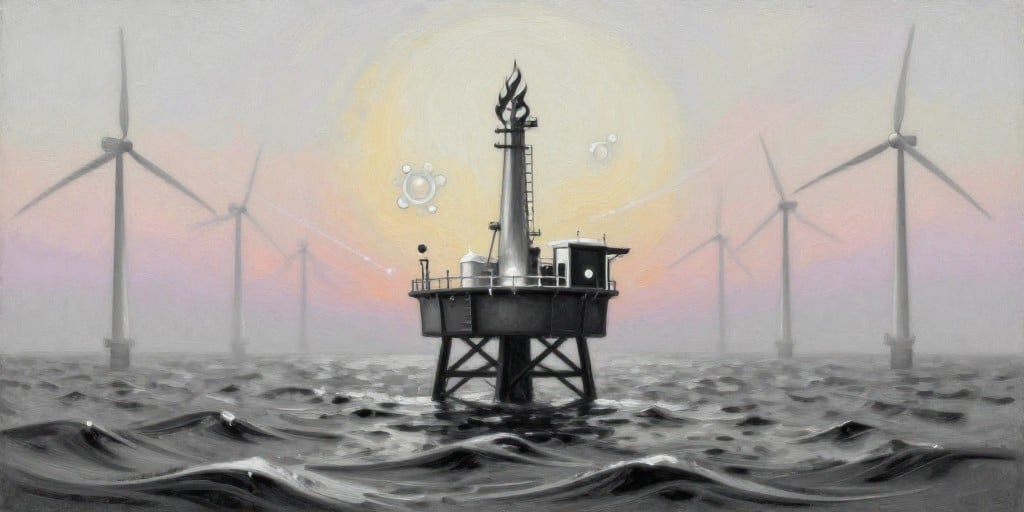
In addition, Equinor’s investment in energy storage—including large‑scale battery systems and hydrogen production via electrolysis—positions it to add value beyond conventional hydrocarbons. For instance, the company’s Killer Whale project in the North Sea, which couples offshore wind with offshore hydrogen generation, could provide a competitive edge in a market where hydrogen is projected to account for 10 % of UK energy consumption by 2040.
Regulatory Impact on Traditional and Renewable Sectors
The UK’s Offshore License Allocation (OLA) 2026 is expected to incorporate stricter environmental criteria, particularly concerning greenhouse gas (GHG) emissions and blue carbon preservation. This regulatory tightening will likely favor operators with robust carbon capture and storage (CCS) capabilities. Equinor’s existing CCS installations at the Stabroek and Kissak projects, along with its partnership in the UK CCS consortium, will enhance its credibility in securing future licences.
In the renewable domain, the UK government’s Net Zero Strategy emphasizes the need for grid integration of offshore wind and renewable gas. Equinor’s Skagen wind farm, which already interconnects with the UK grid, serves as a testbed for hybrid operation models that combine wind and gas production, thereby mitigating intermittency issues and improving overall energy reliability.
Commodity Price Analysis
Recent data show natural gas spot prices in the UK spiking to £80 /MMBtu in early 2026, a 30 % increase from the previous year, largely driven by supply constraints and geopolitical tensions in Eastern Europe. Oil prices have remained relatively stable around $80–$90 per barrel, but the volatility in the gas market is likely to influence gas-to-oil conversion rates and the economics of gas‑to-liquids (GTL) projects.
Equinor’s gas revenue forecast for 2026 indicates a 15 % uplift relative to 2025, primarily due to higher spot prices and the potential inclusion of additional assets such as BP’s Clyde field. However, the capital expenditure (CapEx) requirement for deepwater projects—estimated at $1.5 billion for new developments in the North Sea—necessitates careful assessment of return on investment, especially under the current high‑interest-rate environment.
Infrastructure Developments and Market Dynamics
Key infrastructure projects, such as the North Sea Gas Hub (NSGH) and the East of England Offshore Pipeline (EEOP), are critical to the region’s market structure. Equinor’s stake in the Norsk Hydro LNG terminal and its involvement in the UK LNG import pipeline provide ancillary assets that could be leveraged for gas storage and distribution.
The UK government’s planned digital twins for offshore infrastructure will also enable operators to optimize field performance and maintenance schedules. Equinor’s investment in digital oilfield technologies—including real‑time monitoring and predictive analytics—could enhance its competitive advantage in both exploration and production phases.
Balancing Short‑Term Trading and Long‑Term Transition
While the immediate opportunity to acquire or partner in BP’s North Sea portfolio presents a short‑term trading advantage—capitalizing on the current price premium for mature assets—Equinor must also align its strategy with the long‑term decarbonisation trajectory. This dual focus manifests in:
- Portfolio diversification: Expanding beyond conventional oil and gas into renewable and green hydrogen projects.
- Capital allocation: Balancing high‑yield, low‑cost production with high‑capex renewable investments.
- Risk management: Mitigating exposure to commodity price volatility through hedging and long‑term contracts.
In summary, Equinor’s existing operational ties, coupled with the UK’s policy shift and BP’s divestment plans, create a fertile environment for the Norwegian company to enhance its North Sea footprint. By leveraging technological innovations, aligning with regulatory demands, and managing commodity price risks, Equinor is positioned to navigate the evolving energy landscape while contributing to Europe’s broader transition toward sustainable energy systems.