Equinor Secures Drilling Permission for Norwegian Continental Shelf Prospecting Well
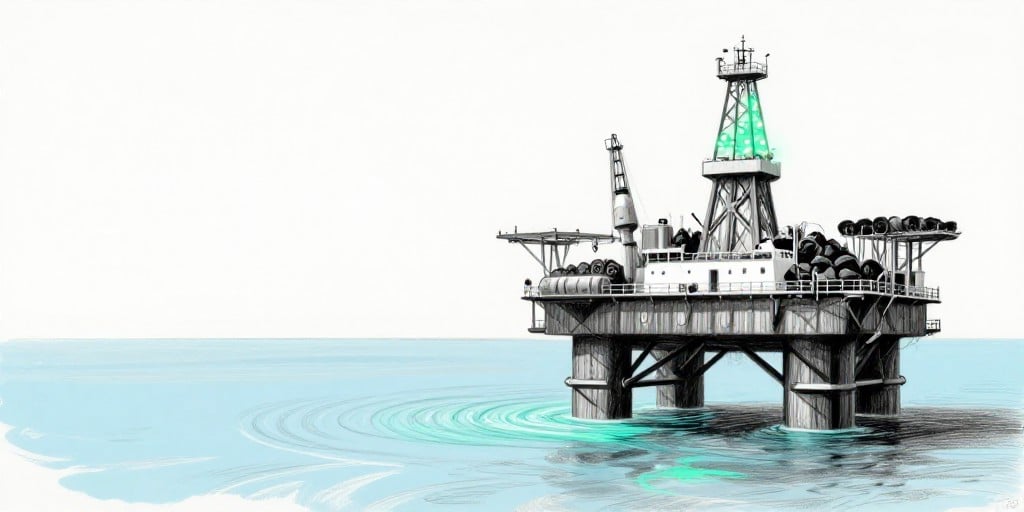
Equinor has obtained formal drilling permission for a prospecting well on the Norwegian continental shelf, a development underscored in a recent industry briefing. The permit, issued under the 1042 extraction licence, authorises the commencement of drilling operations in the autumn of 2026 using the COSLInnovator rig. The licence is jointly held by several partners: Equinor holds a 30 % stake, while Aker BP and Vår Energi hold 40 % and 30 % respectively. This collaboration underscores the sustained interest of Norwegian energy companies in expanding exploration activities in the region.
Supply‑Demand Fundamentals in the North Sea
The North Sea remains a pivotal hub for both conventional and renewable energy supply. Current demand for natural gas in Europe continues to be buoyed by the transition from coal to cleaner sources, yet the region faces a gradual decline in oil output. Production data for 2025 indicate a 3 % year‑over‑year decrease in Norwegian oil output, while gas production has stabilized around 200 MMBtu/day. This contraction in conventional supply heightens the importance of new projects, such as the Equinor prospecting well, to sustain gas exports to European markets.
Commodity price analysis reveals that Brent crude has traded between $70 and $80 per barrel over the last quarter, reflecting geopolitical tensions in the Middle East and supply constraints in the Gulf. Natural gas prices have ranged from €30 to €35 per MWh, a level that supports continued investment in offshore gas infrastructure. These price dynamics provide a backdrop for evaluating the economic viability of new drilling operations.
Technological Innovations in Energy Production and Storage
Equinor’s engagement in the 1042 licence aligns with broader technological trends aimed at enhancing extraction efficiency and reducing environmental footprints. Advanced seismic imaging, 3D reservoir modelling, and real‑time drilling analytics are being employed to minimise drilling risk and optimise well performance. Moreover, the use of the COSLInnovator rig, equipped with cutting‑edge mud logging and downhole monitoring systems, is expected to increase drilling speed and safety.
In the renewable sector, the Norwegian government has accelerated investment in offshore wind, targeting 7 GW of capacity by 2030. Storage technologies, particularly floating battery arrays and hydrogen production, are integral to this transition. Equinor’s participation in both conventional and renewable projects positions it to leverage cross‑sector synergies, such as using offshore wind power for green hydrogen production.
Regulatory Impacts on Traditional and Renewable Energy
Norwegian regulatory frameworks continue to promote a balanced energy mix. The 1042 extraction licence, part of a broader licensing scheme that emphasizes environmental stewardship, ensures that new projects adhere to strict carbon‑emission limits and biodiversity protection measures. Additionally, the Norwegian Petroleum Directorate’s recent amendment to the “Clean Energy Transition Act” requires a 30 % reduction in CO₂ emissions from oil and gas operations by 2030, prompting companies to adopt carbon capture and storage (CCS) technologies.
On the renewable side, the Ministry of Petroleum and Energy’s updated tariff structure offers levelised cost of energy (LCOE) incentives that favour large‑scale offshore wind farms. Regulatory support for renewable hydrogen projects has also been strengthened, with grants covering up to 50 % of capital costs for pilots that demonstrate commercial viability.
Market Dynamics: Balancing Short‑Term Trading and Long‑Term Transition
Short‑term trading in oil and gas is still highly sensitive to geopolitical developments, inventory levels, and seasonal demand fluctuations. The upcoming drilling season in autumn 2026 will likely be influenced by mid‑year supply disruptions in the United States and increased competition from shale producers. Nevertheless, Equinor’s strategic positioning in the Norwegian shelf provides a hedge against such volatility.
In the long term, the energy transition will shape market dynamics through sustained growth in renewable generation, electrification of transport, and decarbonisation of industry. Investment in infrastructure—pipelines, LNG terminals, offshore wind farms, and hydrogen hubs—will dictate the trajectory of energy prices and supply resilience. Equinor’s partnership structure, with significant stakes held by Aker BP and Vår Energi, reflects a collaborative approach to sharing capital expenditure and technical risk, thereby accelerating project timelines and enhancing competitiveness.
Conclusion
Equinor’s newly secured drilling permission illustrates a strategic alignment with Norway’s energy policy objectives and global supply‑demand realities. By integrating advanced extraction technologies, adhering to stringent regulatory standards, and positioning itself within a broader transition framework, the company is poised to contribute meaningfully to both conventional and renewable energy supply chains. The forthcoming operations on the Norwegian continental shelf will serve as a barometer for how traditional energy producers navigate the evolving landscape of energy markets, technology, and policy.