
Equinor Extends Strategic Partnerships with Baker Hughes Amid Shifting Energy Landscape
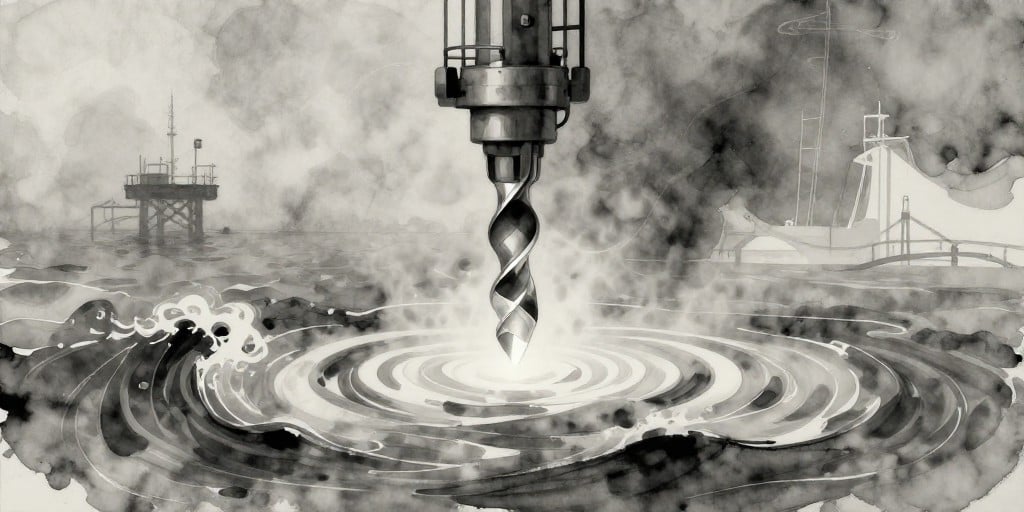
Equinor ASA announced the extension of two critical service contracts with Baker Hughes, covering integrated drilling and well‑services solutions as well as wireline intervention services in the North Sea. The agreements are designed to support Equinor’s offshore production objectives across Norway’s continental shelf, reinforcing its strategy of securing reliable partners for both mature and green‑field developments. While no financial details were disclosed, the long‑term nature of the extensions signals confidence in the joint technical capabilities and aligns with broader market dynamics.
Technical Synergy and Production Optimization
Baker Hughes will deploy a suite of advanced technologies, including:
- Kantori Autonomous Well‑Construction System – enabling rapid, low‑emission well construction with precision automation.
- PRIME Technology Platform – integrating real‑time data analytics for well‑completion optimization.
- Advanced Well‑Construction, Completion, and Measurement Capabilities – designed to enhance reservoir performance and extend well life.
These tools are expected to reduce operational costs and emissions, thereby improving the economics of both conventional and low‑carbon projects. By integrating automation and data‑driven decision‑making, Equinor can accelerate the deployment of green‑field projects while maintaining production from mature fields—a key requirement as the North Sea transitions to lower‑carbon outputs.
Market Context: Supply‑Demand Fundamentals and Commodity Prices
The North Sea has historically been a major contributor to European gas supplies, yet its output has plateaued over the past decade. Current supply‑demand fundamentals are shifting due to:
- Increasing European gas demand driven by the transition away from Russian supplies.
- Growing renewable generation reducing peak demand for conventional gas but elevating the need for flexible gas supply during grid balancing.
- Commodity price volatility: Natural gas spot prices in the UK have risen from ~£40/MBtu in 2022 to over £70/MBtu in 2024, reflecting tightening supply and geopolitical tensions in Eastern Europe.
These price movements incentivize investment in offshore production where technological efficiencies can offset higher capital costs. Equinor’s partnership with Baker Hughes exemplifies a strategy to capture higher gas prices while maintaining a low carbon footprint.
Technological Innovations in Energy Production and Storage
Beyond drilling and completion technologies, the broader energy sector is witnessing significant innovations:
- Advanced hydrogen production via offshore electrolysis plants, leveraging excess wind energy.
- Grid‑scale battery storage to mitigate variability in renewable outputs, with several large‑scale projects under development in the North Sea region.
- Carbon capture, utilization, and storage (CCUS) facilities, with Equinor’s existing Sleipner CCUS pipeline providing a template for future expansions.
By integrating such technologies with traditional production, operators can diversify revenue streams and comply with increasingly stringent regulatory frameworks.
Regulatory Impacts and Policy Landscape
European policy continues to favor decarbonization while ensuring energy security:
- EU Green Deal and Net Zero Strategy set ambitious targets, encouraging investment in low‑carbon offshore projects.
- Carbon Pricing under the EU Emissions Trading System (ETS) has increased the cost of carbon-intensive gas production, making low‑emission technologies more economically attractive.
- National Regulations in Norway, including the Energy Act and Climate Protection Act, mandate a reduction of greenhouse gas emissions across the energy sector, supporting the adoption of technologies like Kantori and PRIME.
These regulatory frameworks create a conducive environment for long‑term investments in offshore infrastructure, while also imposing short‑term compliance costs that operators must manage through technological innovation.
Infrastructure Developments and Production Outlook
Norway’s North Sea infrastructure continues to modernize:
- Expansion of subsea pipeline networks to connect new wells with existing export points.
- Upgrade of offshore platforms for enhanced digital monitoring and automation.
- Development of dedicated hydrogen export pipelines linking offshore electrolysis plants to continental Europe.
Production data indicates that Norway’s offshore gas output is projected to remain stable at ~200 billion cubic meters (bcm) annually until 2030, with a gradual shift toward higher‑value products such as hydrogen and methanol. The extended contracts with Baker Hughes position Equinor to capitalize on these infrastructure upgrades and maintain competitiveness amid evolving market conditions.
Balancing Short‑Term Trading with Long‑Term Transition Trends
While short‑term trading factors—such as spot price fluctuations, inventory levels, and weather‑driven demand—continue to influence daily revenue streams, long‑term trends are reshaping the industry:
- Decarbonization trajectory drives demand for cleaner gas and alternative fuels.
- Geopolitical risks underscore the need for diversified supply sources and resilient infrastructure.
- Technological convergence (automation, AI, digital twins) reduces operating costs and improves safety.
Equinor’s strategic extensions with Baker Hughes embody this balance: they secure immediate operational capabilities while embedding long‑term technological resilience and regulatory alignment. This dual focus positions Equinor to navigate short‑term market volatility and sustain growth within the global energy transition framework.
Conclusion
The extension of Equinor’s service contracts with Baker Hughes reflects a broader corporate strategy that integrates advanced drilling technologies, regulatory compliance, and infrastructure modernization. By doing so, Equinor not only enhances its offshore production efficiency but also aligns with the evolving dynamics of energy markets—where supply‑demand fundamentals, technological breakthroughs, and policy mandates converge to shape the trajectory of both traditional and renewable energy sectors.