
Equinor ASA Expands Share‑Buyback While Market Outlook Tightens
Equinor ASA (NASDAQ: EQNR) today announced the initiation of a fourth tranche in its share‑buyback programme, a continuation of a strategy that has already returned substantial capital to shareholders over the past two years. The new buy‑back will run until early February 2026 and will be executed at market‑determined prices, subject to regulatory approval. The programme aligns with Equinor’s broader objective of managing its equity base, improving earnings‑per‑share metrics, and signaling confidence in the company’s long‑term fundamentals.
Market Context and Technical Analysis
From a supply‑demand standpoint, the global energy market has remained in a delicate equilibrium. Oil inventories in the United States have hovered near the upper limits of the World Bank’s “tight” threshold, while European demand continues to be buoyed by the gradual wind‑down of fossil‑fuel reliance in the power sector. Meanwhile, renewable electricity generation has surged, with wind and solar capacity additions eclipsing new coal and gas projects in many jurisdictions.
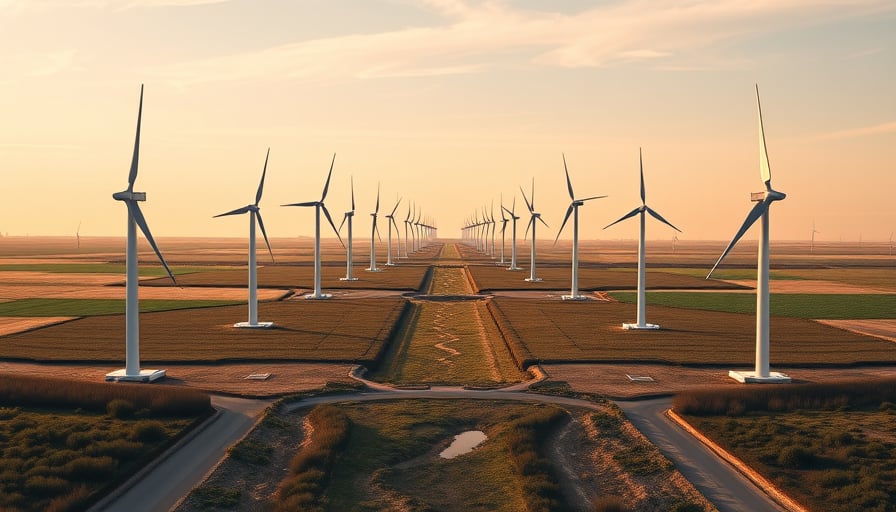
Equinor’s portfolio, which includes significant onshore and offshore wind assets in the North Sea and an extensive natural‑gas field in the Ormen Lange block, positions the company at the intersection of these trends. The firm’s recent investments in advanced gas compression technology and hydrogen blending infrastructure are indicative of a dual‑track approach: maintaining a robust conventional hydrocarbon base while accelerating entry into the low‑carbon value chain.
Technological Innovations and Infrastructure Developments
Equinor’s emphasis on storage and carbon capture is reflected in its deployment of liquid‑natural‑gas (LNG) liquefaction facilities and its partnership with Shell on the Northern Lights CO₂ capture, transport, and storage (CCS) project in Norway. The company’s LNG export terminal upgrades are expected to enhance throughput by 20 % by 2025, thereby increasing flexibility in meeting both domestic and international demand spikes.
In renewable projects, Equinor’s 1.6 GW offshore wind portfolio is slated for completion in 2024, with an estimated capacity factor of 55 %. The integration of battery storage systems, ranging from 30 MW to 100 MW, will allow the firm to mitigate intermittency and deliver more reliable power to European grids, aligning with the EU’s 2030 renewable energy targets.
Regulatory Environment and Policy Impact
Regulatory frameworks continue to shape Equinor’s strategic choices. The European Union’s Green Deal and the upcoming Energy Transition Law in Norway are pushing for a 40 % reduction in CO₂ emissions by 2030, influencing capital allocation toward low‑carbon projects. Conversely, U.S. and Canadian policymakers are tightening methane‑emission standards, which will increase operational costs for gas fields but also present opportunities for companies that invest early in emission‑control technologies.
At the same time, the United Nations’ Sustainable Development Goals (SDGs) and the Paris Agreement are encouraging states to diversify supply contracts. This policy backdrop has prompted the recently signed Argentine crude procurement agreement between ENAP and Equinor, which secures a stable supply of Argentine crude over the next decade. The long‑term nature of the contract mitigates price volatility risks and supports Equinor’s liquidity management strategies.
JP Morgan’s Revised Outlook
JP Morgan analysts, in their latest equity research note, have lowered Equinor’s target price by 8 % to $6.80, citing heightened valuation concerns and a cautious stance on the company’s role in the energy transition. The analysts remain bullish on the company’s core assets but express uncertainty around the pace at which renewable projects will generate returns sufficient to offset the decline in conventional hydrocarbon margins. Their forecast reflects broader market sentiment, which is increasingly sensitive to the trajectory of global oil prices, renewable energy subsidies, and policy developments.
Commodity Price Dynamics
Oil prices have traded within a narrow band of $85–$95 per barrel over the last quarter, influenced by OPEC+ production caps and the U.S. shale boom. Gas prices, meanwhile, have spiked to $5.60 per MMBtu, driven by a combination of supply constraints in Europe and increased demand for gas as a bridge fuel. Equinor’s hedging strategy, which locks in 40 % of its gas output at a 12‑month forward price, positions the company to benefit from any future price rebounds while limiting downside exposure.
Short‑Term Versus Long‑Term Outlook
Short‑term trading factors—such as quarterly earnings releases, inventory reports, and geopolitical tensions in key supply regions—continue to exert volatility on Equinor’s stock price. However, the company’s long‑term energy transition strategy, underscored by significant investments in renewables, CCS, and hydrogen, aligns with the global decarbonization trajectory.
As Equinor progresses through the fourth tranche of its share‑buyback programme, investors will closely monitor the interplay between the firm’s capital‑return policy and its evolving asset mix. While regulatory headwinds and a cautious market outlook may temper immediate valuation gains, Equinor’s diversified portfolio and strategic partnerships position it well to navigate the shifting dynamics of both conventional and renewable energy markets.