
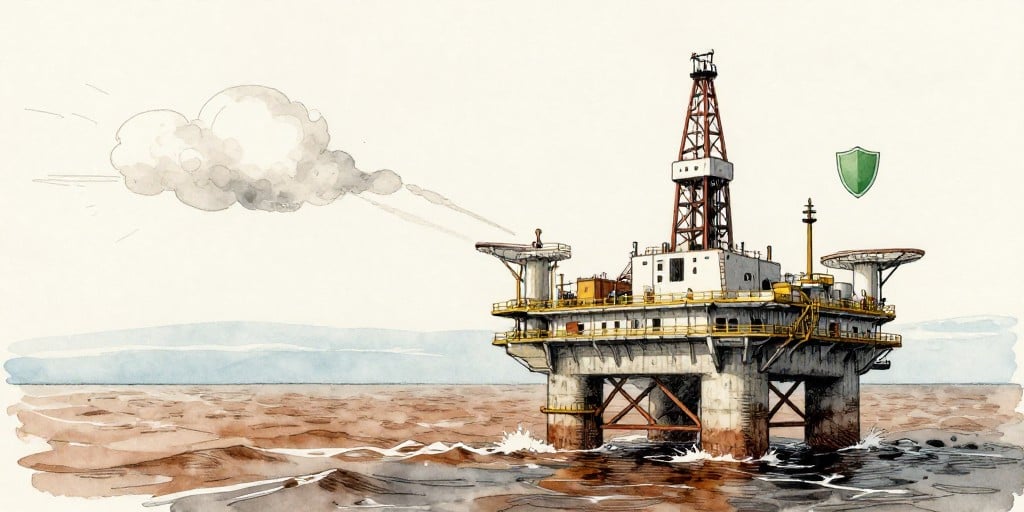
Equinor ASA Expands Drilling Ambitions at Johan Castberg While Maintaining Environmental Compliance
Equinor ASA (formerly Statoil) has lodged a formal application with Norway’s national environmental authority to increase its drilling activity at the Johan Castberg field in the Barents Sea. The proposal seeks to elevate the authorized drilling rate from the current 30 wells over the 2023‑2026 period to 13 wells per year, effectively expanding the programme’s throughput while extending its operational horizon through 2028. Importantly, the company intends to preserve the existing limits on air and sea emissions, a commitment that underscores its adherence to stringent environmental standards.
Regulatory and Environmental Considerations
Earlier in the year, Equinor completed updated environmental risk and readiness assessments for the Johan Castberg site. The Norwegian authorities reviewed these analyses and deemed them sufficient, indicating that no additional mitigative measures are required before the company can proceed. This outcome is significant in a sector where regulatory approvals are often a bottleneck, particularly in the Arctic where ecological sensitivities are heightened. By securing a clear regulatory path, Equinor demonstrates a proactive approach to compliance, reducing potential delays that could erode project economics.
Operational Context and Strategic Implications
The proposed increase aligns with Equinor’s broader offshore growth strategy, which has seen the firm invest heavily in the North Sea, Norwegian Sea, and Barents Sea regions. The company’s focus on extending its offshore portfolio reflects a broader industry trend toward maximizing recoverable resources in mature basins while simultaneously exploring lower‑carbon pathways. From a financial perspective, expanding well production in the Barents Sea offers the potential to improve the company’s reserve base and, by extension, its long‑term asset valuation.
In terms of competitive positioning, Equinor operates in a highly concentrated market dominated by a handful of integrated oil and gas majors. By enhancing its drilling cadence at Johan Castberg, the company may strengthen its market share against peers such as TotalEnergies, Shell, and BP, all of whom are also active in the Barents Sea. Maintaining emissions limits further positions Equinor favorably in a regulatory environment that increasingly penalizes high‑carbon operations, especially as the European Union tightens its carbon pricing mechanisms.
Market Reaction and Investor Sentiment
When the drilling update was released, Equinor’s share price exhibited a modest decline relative to the previous trading day. Market analysts interpreted the reaction as largely muted, suggesting that investors are absorbing the news within the broader context of Equinor’s ongoing offshore investments and global energy dynamics. Morgan Stanley’s equity analysts reaffirmed a neutral outlook, trimming their target price for the stock in light of the new drilling proposal. This adjustment indicates that while the expansion is deemed technically sound, market participants remain cautious about the potential impact on short‑term profitability amid fluctuating oil prices.
The reaction also reflects the wider geopolitical and commodity market pressures that are currently affecting the energy sector. Volatility in crude oil pricing, coupled with supply chain disruptions and evolving geopolitical tensions, has prompted investors to adopt a more conservative stance toward capital expenditures in the oil and gas domain. Equinor’s decision to maintain strict environmental limits may be viewed positively by ESG‑focused investors, potentially offsetting the neutral sentiment among traditional energy analysts.
Economic and Sectoral Linkages
Equinor’s drilling expansion can be situated within a broader macro‑economic framework that includes rising global energy demand, particularly from emerging economies, and the gradual shift toward decarbonized energy sources. While the company’s core operations remain firmly rooted in fossil fuel extraction, it is concurrently investing in renewable technologies, such as offshore wind, as part of its long‑term transition strategy. Thus, the Johan Castberg development represents a dual objective: enhancing immediate production to support current demand while sustaining a portfolio that can adapt to evolving energy paradigms.
Moreover, the Barents Sea’s unique geopolitical position—adjacent to Russia and the Nordic countries—introduces additional layers of risk and opportunity. Energy security concerns, cross‑border regulatory coordination, and potential collaboration on Arctic infrastructure projects all factor into Equinor’s strategic calculus. By securing a robust drilling cadence under stringent environmental standards, the company positions itself as a responsible stakeholder capable of navigating these complexities.
Conclusion
Equinor’s recent filing to increase drilling activity at Johan Castberg exemplifies a calculated expansion strategy that balances growth ambitions with regulatory and environmental prudence. The company’s ability to secure approval without additional mitigative steps underscores its operational excellence and market‑leading compliance culture. While the market’s tempered reaction reflects prevailing uncertainties in global energy markets, Equinor’s disciplined approach—maintaining emission caps, extending project life, and integrating ESG considerations—signals resilience and adaptability in an industry undergoing rapid transformation. Investors and analysts will continue to monitor Equinor’s execution against these parameters, assessing the interplay between short‑term financial outcomes and long‑term strategic positioning in an evolving energy landscape.