
Corporate Overview
Entergy Corp. (NYSE: ETR) disclosed a series of ownership filings dated June 2 2026, reflecting adjustments in its board composition and senior executive holdings. The filings indicate that several directors—including Ralph Lewis, Karen Pucket, Stuart Levenick, and others—acquired common shares through the company’s Service Recognition and Director Stock Programs. These transactions were executed in phantom‑stock units that are treated as the economic equivalent of shares, and in some cases the shares were obtained via a dividend‑reinvestment plan. Notably, all transactions were cost‑neutral for the directors and increased their direct ownership positions, with post‑transaction holdings ranging from several thousand to over thirty‑thousand shares per individual.
In a complementary announcement, Entergy confirmed that it will host its 2026 Investor Day on June 9. Chairman and CEO Drew Marsh will lead the event, joined by executive leaders who will discuss the company’s growth strategy, energy mix, and commitment to sustainability. A live audio webcast and a replay will be available through the investor‑relations website. While the company’s share price declined by approximately 0.75 % earlier in the day, the overall market context suggests that the utility sector was under pressure, with broader equity markets showing mixed performance following recent sector rotations. The Investor Day is intended to provide clarity on Entergy’s long‑term plans and address shareholder expectations amid a competitive energy landscape.
Power System Dynamics and Grid Stability
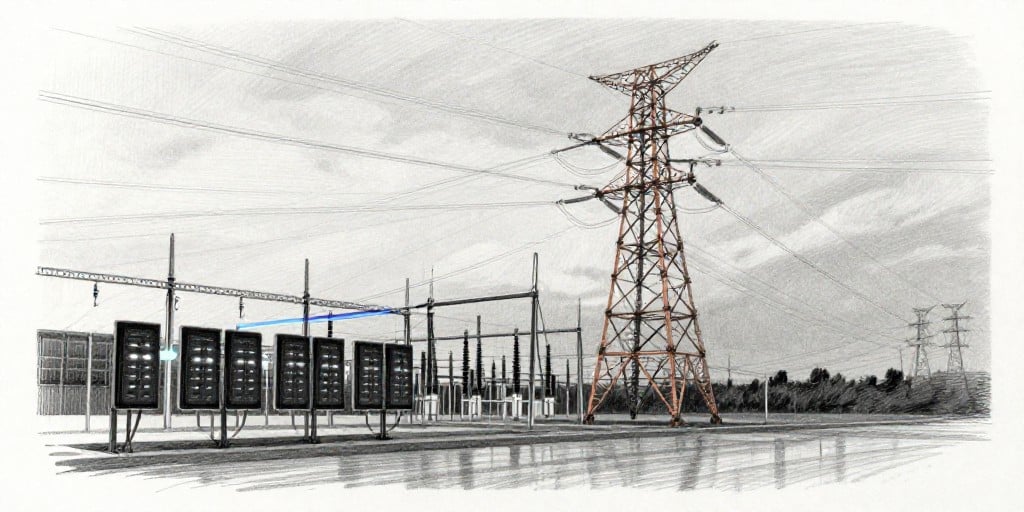
Entergy operates an integrated system comprising generation, transmission, and distribution assets that serve roughly 10 million customers across Louisiana, Mississippi, Arkansas, and Texas. The company’s network incorporates a mix of baseload coal and nuclear plants, mid‑capacity natural‑gas peakers, and an expanding portfolio of distributed resources including solar PV, wind turbines, and energy‑storage units.
Renewable Integration Challenges
The accelerated deployment of renewables introduces several grid‑stability challenges:
| Challenge | Technical Impact | Mitigation Strategy |
|---|---|---|
| Intermittency | Variability in generation leads to frequency deviations and voltage fluctuations. | Flexible resources (battery storage, demand‑response) and dynamic inverter controls. |
| Synchronous‑inertia loss | Reduced system inertia increases the rate of change of frequency (RoCoF), threatening protection settings. | Synthetic inertia via inverter‑based resources and synchronous‑dampers. |
| Congestion | Wind corridors can saturate transmission corridors, limiting power flow. | Reinforcement of key lines, dynamic line rating, and grid‑reconfiguration algorithms. |
| Protection coordination | Legacy protection schemes may misoperate with high inverter penetration. | Adaptive protection algorithms that adjust time‑overcurrent and distance settings. |
Entergy’s engineering teams have deployed advanced phasor measurement units (PMUs) across the system to provide real‑time visibility of voltage, frequency, and power flow dynamics. These PMUs feed into a system‑wide Wide‑Area Monitoring System (WAMS), enabling proactive detection of contingencies and automated remedial actions such as capacitor bank switching and generator dispatch adjustments.
Transmission and Distribution Resilience
The company’s transmission network (over 7,500 km of high‑voltage lines) and distribution network (over 36,000 km of medium‑ and low‑voltage lines) are being upgraded to support higher levels of distributed generation. Key initiatives include:
- Grid‑reinforcement projects: Installation of series‑capacitor compensation and dynamic line rating to mitigate congestion and improve voltage regulation.
- Smart‑metering rollouts: Deployment of advanced metering infrastructure (AMI) to enable bidirectional power flow and real‑time load monitoring.
- Microgrid integration: Pilot projects in rural areas to island segments during outages, improving reliability and resilience.
These investments are expected to reduce loss of load expectation (LOLE) and improve the system’s ability to accommodate renewable resources without compromising reliability metrics such as SAIDI and SAIFI.
Infrastructure Investment Requirements
To meet the anticipated increase in renewable penetration and to support the modernized grid, Entergy has outlined a multi‑year investment plan:
| Asset | Investment (2026‑2030) | Expected Benefit |
|---|---|---|
| Transmission upgrades | $1.2 billion | Reduced congestion, lower line losses |
| Distribution automation | $800 million | Improved outage response, enhanced consumer visibility |
| Energy storage | $500 million (30 MW·h) | Frequency regulation, peak shaving |
| Smart‑grid controls | $300 million | Optimized dispatch, reduced need for spinning reserves |
These capital expenditures are financed through a mix of debt and equity, with a projected debt‑to‑equity ratio that aligns with industry benchmarks. Entergy’s rate‑payer protection is governed by the Public Utility Commission (PUC) guidelines, which require that all cost‑of‑service (COS) investments be fully recovered through regulated rate adjustments. The company has engaged in proactive rate‑structure reviews to ensure that the recovery of new infrastructure costs does not disproportionately burden residential consumers while maintaining incentives for renewable integration.
Regulatory Framework and Rate Structures
Entergy operates under state‑level regulatory frameworks in each of its service territories. Key regulatory aspects include:
- Rate‑of‑Return (ROR) Regime: The company is allowed to earn a statutory rate of return on its investment capital, which is reviewed annually by the PUC.
- Cost‑of‑Service (COS) Calculations: All operating, maintenance, and capital costs are aggregated and allocated to rate‑payer classes based on usage and revenue targets.
- Renewable Energy Mandates: States such as Louisiana and Texas require utilities to meet specific renewable portfolio standards (RPS) and provide incentives for distributed generation.
Entergy has adopted a “Cost‑of‑Service plus Investment Recovery” model for its 2026‑2030 rate plan. The model incorporates:
- Base Rate: Covers operating costs and a target return on capital.
- Capacity Charge: Allocated to industrial customers to fund generation and transmission assets.
- Renewable Integration Charge: A small surcharge earmarked for renewable integration projects, ensuring transparency for consumers.
- Demand Response Incentives: Reduced rates for customers participating in demand‑response programs, aligning consumer behavior with grid stability objectives.
Regulators have reviewed the proposed rate adjustments and approved the majority of the plan, noting that the incremental cost increase is projected to be less than 2 % per year for residential customers. This incremental rise is offset by savings from distributed generation and demand‑response participation.
Economic Impacts of Utility Modernization
The modernization of the grid yields multiple economic outcomes:
- Cost Savings: Improved efficiency reduces line losses (estimated at 2 % of total energy loss), translating to lower operating costs.
- Job Creation: Infrastructure projects create approximately 4,000 direct construction jobs and 1,200 indirect jobs over the next five years.
- Consumer Savings: Demand‑response and distributed generation enable consumers to lower their bills by up to 8 % on average.
- Investment Return: The company’s projected internal rate of return (IRR) for the 2026‑2030 investment portfolio is 9.5 %, surpassing the statutory rate and ensuring investor confidence.
However, the transition also imposes short‑term costs, such as increased capital expenditures and the need for workforce reskilling. Entergy’s Human Resources department is actively developing training programs in grid analytics, renewable integration, and smart‑grid technologies to prepare its workforce for the evolving demands of the energy sector.
Conclusion
Entergy Corp. has taken decisive steps to align its corporate governance and capital strategy with the broader energy transition. By enhancing grid stability through advanced monitoring and adaptive controls, investing in transmission and distribution upgrades, and structuring rate plans that reflect both regulatory compliance and consumer affordability, the company is positioning itself to meet the challenges of renewable integration while maintaining financial resilience. The upcoming Investor Day on June 9 will provide stakeholders with deeper insights into the company’s long‑term strategy, reinforcing confidence in its commitment to sustainable growth and grid modernization.