
Entergy Corporation: Investor Appeal, Community Stewardship, and Technical Outlook
Market Performance and Investor Significance
Entergy Corporation, a publicly traded integrated electric utility on the New York Stock Exchange, has recently attracted the attention of long‑term investors after a detailed review of its decade‑long performance.
- A hypothetical investment of $100 made ten years ago would have nearly tripled in value by the end of last month, illustrating a robust upward trajectory in share price appreciation.
- The analysis deliberately excludes dividends and stock splits, thereby focusing purely on equity appreciation rather than total shareholder return.
The company’s steady performance underscores its resilience in a sector that remains highly regulated yet increasingly subject to market‑like forces such as renewable integration and demand‑side management. For investors seeking stability combined with moderate growth, Entergy’s track record over the past decade offers a compelling case.
Community Engagement and Corporate Responsibility
Parallel to its financial achievements, Entergy’s Arkansas division has intensified community outreach initiatives.
- Employees have mobilized to support local food relief efforts, resulting in a substantial donation to hunger‑relief programs throughout the state.
- This initiative reflects the company’s commitment to corporate social responsibility (CSR) and highlights its role as a stakeholder in the regions it serves.
By aligning CSR activities with its operational footprint, Entergy demonstrates a holistic approach to stakeholder engagement—one that balances financial performance with societal impact.
Technical Assessment: Grid Stability, Renewable Integration, and Infrastructure Investment
1. Power Generation Portfolio and Transition Dynamics
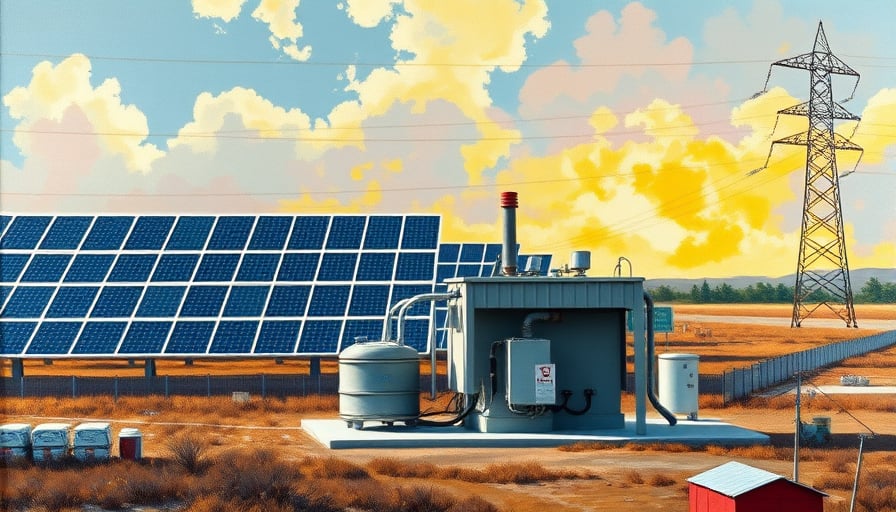
Entergy’s generation mix comprises a blend of fossil‑fueled, nuclear, and renewable assets. The utility is actively expanding its renewable portfolio to align with federal and state clean‑energy mandates.
- Wind and solar assets account for a growing percentage of total capacity, yet their intermittent nature introduces variability that must be mitigated through ancillary services and grid‑wide controls.
- Gas peaking units continue to play a critical role in balancing supply during periods of high renewable output or unexpected outages, providing both firm capacity and rapid response capabilities.
From an engineering standpoint, the integration of variable renewable resources necessitates sophisticated forecasting, real‑time dispatch algorithms, and enhanced reactive power control to maintain voltage stability across the network.
2. Transmission and Distribution Modernization
Entergy’s transmission infrastructure spans approximately 18,000 miles of high‑voltage lines, while the distribution network covers over 80,000 miles of medium‑ and low‑voltage conductors.
Key technical challenges include:
| Challenge | Engineering Solution | Economic Impact |
|---|---|---|
| Aging Substations | Deploy digital substation automation (DSA) and SCADA upgrades | Lower outage costs, improved asset life |
| Grid Congestion | Construct new high‑capacity corridors; implement dynamic line rating | Enables higher renewable penetration without new generation |
| Cybersecurity | Layered security protocols, intrusion detection systems | Protects critical infrastructure, mitigates liability |
| Distributed Energy Resources (DERs) | Adopt advanced meter infrastructure (AMI) and voltage regulation devices | Enhances customer flexibility, requires capital outlay |
The transition toward a more resilient, flexible grid requires significant capital investment. Entergy’s capital expenditure (CAPEX) plans allocate roughly $1.2 billion annually over the next five years, with a focus on:
- Upgrading voltage‑regulation equipment (e.g., STATCOMs, Flexible AC Transmission Systems).
- Implementing micro‑grid controls to isolate faulted sections and maintain supply continuity.
- Expanding energy storage deployment (battery and pumped hydro) to smooth renewable output.
3. Regulatory Frameworks and Rate Structures
Entergy operates under the jurisdiction of the Arkansas Public Service Commission, which enforces a rate‑of‑return regulatory model.
- Performance‑Based Rates (PBR) are increasingly being considered to align incentives with grid reliability metrics, encouraging investment in reliability‑enhancing assets.
- Renewable Portfolio Standards (RPS) and Carbon Pricing mechanisms influence capital allocation decisions, driving the shift toward low‑carbon generation and storage solutions.
Under the current rate structure, the utility recoups its CAPEX and operational expenditures (OPEX) through a regulated charge, with a cost‑of‑service benchmark ensuring that rates remain commensurate with the costs incurred to maintain and upgrade the system. This model supports stable investor returns while protecting consumers from excessive price volatility.
4. Economic Implications for Consumers and the Sector
The modernization of power generation, transmission, and distribution systems has a dual economic effect:
Short‑Term Cost Increase: Initial investment outlays translate into modest rate hikes to cover CAPEX financing and amortization. These increases are typically spread over multiple billing cycles and are subject to regulatory approval, mitigating immediate consumer impact.
Long‑Term Cost Reduction: Enhanced grid reliability reduces outage costs, improves supply quality, and allows for more efficient operation of generation assets. Additionally, increased renewable penetration decreases fuel price exposure and can lead to lower wholesale power costs, ultimately benefiting end‑users.
From a macroeconomic perspective, the investment in grid infrastructure stimulates job creation, supports local supply chains, and positions the utility to meet future regulatory demands, thereby reinforcing Entergy’s stability and long‑term value proposition.
Conclusion
Entergy Corporation’s strong decade‑long share price appreciation, coupled with meaningful community engagement, highlights its role as a stable yet forward‑looking player in the utilities sector. Technically, the company confronts complex challenges in integrating renewable energy, modernizing transmission and distribution assets, and navigating evolving regulatory landscapes. By strategically investing in grid resilience and embracing regulatory frameworks that reward reliability and sustainability, Entergy positions itself to deliver continued value to both investors and consumers while advancing the broader energy transition.