Corporate News: Entergy Corp Stock Decline Amid Energy‑Sector Volatility
Entergy Corp, an integrated electric utility listed on the New York Stock Exchange, experienced a pronounced decline in its shares in early March, reflecting broader turbulence across U.S. equity markets. The company’s stock fell roughly twenty percent in pre‑market trading on March 3, a movement that coincided with heightened energy‑sector volatility driven in part by escalating Middle‑Eastern tensions. These geopolitical developments pushed oil and gas prices higher, creating a sharp sell‑off that affected both U.S. and European indices; the S&P 500 and Nasdaq indices fell as investors weighed the potential for sustained disruption in energy supplies. No other company‑specific catalysts were reported, indicating that the decline in Entergy’s price was largely a reflection of the wider sentiment in the energy sector rather than a reaction to company‑specific events.
Grid Stability and Renewable Energy Integration
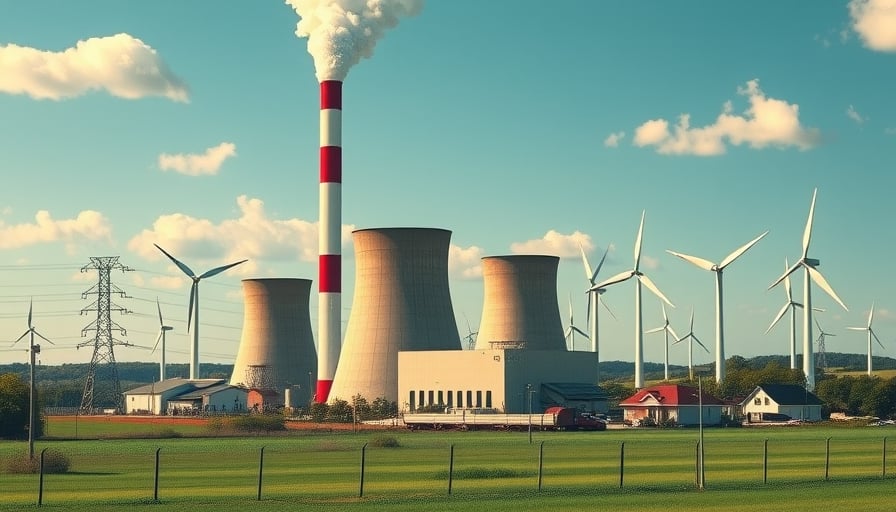
Entergy’s integrated operations—encompassing generation, transmission, and distribution—place the company at the forefront of managing the complex dynamics of grid stability in a rapidly evolving energy landscape. The utility’s power‑generation portfolio includes a mix of baseload coal and nuclear plants, mid‑capacity natural‑gas peaking units, and a growing share of renewable resources such as wind, solar photovoltaic (PV), and distributed energy resources (DERs).
Technical Challenges
- Frequency Regulation – With the retirement of baseload coal units and the intermittent nature of wind and solar, maintaining frequency stability becomes more difficult. Entergy must deploy fast‑acting resources, such as battery energy storage systems (BESS) and demand‑response programs, to absorb short‑term fluctuations.
- Voltage Support – Renewable installations often inject power at high voltage levels, necessitating voltage‑control devices (e.g., static var compensators, voltage‑regulating transformers) to keep system voltages within permissible limits.
- Power Quality – The proliferation of inverter‑based resources can introduce harmonics and voltage flicker, requiring advanced power‑quality monitoring and mitigation equipment.
Engineering Solutions
- Grid‑Forming Inverters – These inverters emulate synchronous machines, providing inertia and droop‑based control to support grid frequency.
- Advanced Wide‑Area Monitoring Systems (WAMS) – Phasor measurement units (PMUs) enable real‑time monitoring of voltage and frequency across the network, facilitating rapid corrective actions.
- Smart Grid Interoperability – Adoption of open standards (e.g., IEC 61850, OpenADR) ensures seamless communication between distributed assets and the central control system, improving coordination and reliability.
Infrastructure Investment Requirements
To sustain grid reliability while accelerating renewable penetration, Entergy must undertake substantial infrastructure investments over the next decade. Key investment priorities include:
| Asset | Estimated Cost (USD) | Deployment Timeline | Impact |
|---|---|---|---|
| Transmission Upgrades (reinforcement, new corridors, HVDC links) | $4–5 B | 2025–2030 | Enhances power transfer, reduces congestion, supports long‑haul renewable import |
| Distribution Modernization (smart meters, automation, microgrids) | $1.5–2 B | 2024–2028 | Improves outage management, facilitates DER integration |
| Energy Storage (BESS, pumped‑storage) | $3–4 B | 2026–2032 | Provides frequency regulation, peak shaving, and seasonal balancing |
| Grid Resilience Measures (grid‑reinforcement, redundancy) | $0.5–1 B | 2025–2030 | Reduces outage duration, supports critical infrastructure |
These investments translate into capital expenditures that must be financed through a mix of debt, equity, and regulatory rate adjustments. Entergy’s financial strategy will therefore hinge on its ability to secure favorable financing terms while maintaining compliance with regulatory rate‑setting mechanisms.
Regulatory Frameworks and Rate Structures
Entergy operates in a regulated environment governed by state utilities commissions and federal oversight through the Federal Energy Regulatory Commission (FERC). Key regulatory considerations include:
- Rate‑Case Filing – The utility must file periodic rate cases to obtain approval for cost‑of‑service recovery. These filings must demonstrate that projected investments are justified and that rates remain equitable for consumers.
- Renewable Portfolio Standards (RPS) – State‑mandated RPS requirements compel utilities to procure a minimum percentage of electricity from renewable sources. Failure to meet RPS targets can trigger penalties or loss of rate‑case approvals.
- Capacity Market Participation – In markets that employ capacity mechanisms (e.g., the Electric Reliability Council of Texas), utilities are incentivized to maintain sufficient reserve capacity to secure capacity payments, impacting investment decisions.
- Decarbonization Mandates – Emerging federal initiatives, such as the Inflation Reduction Act, impose emissions‑reduction targets that influence the utility’s generation mix and the timing of plant retirements.
Rate Structures Entergy’s tariff typically employs a tiered rate model, where customers pay a base rate for up to a certain kWh threshold, followed by higher marginal rates beyond that threshold. This structure:
- Encourages energy conservation among high‑usage customers.
- Allows the utility to recover fixed costs (infrastructure, transmission) through the base rate.
- Creates a revenue base that can be leveraged to finance infrastructure upgrades.
The current economic climate—marked by elevated commodity prices and potential rate‑case delays—places pressure on Entergy to optimize its rate structure to maintain affordability while funding necessary upgrades.
Economic Impacts of Utility Modernization
Investments in grid modernization have multifaceted economic implications:
- Consumer Costs – While infrastructure upgrades ultimately aim to improve reliability and lower long‑term operating costs, short‑term rate increases may be required to recoup capital expenditures. Transparent communication and strategic rate design (e.g., time‑of‑use pricing) can mitigate perceived burden.
- Job Creation – Modernization projects generate construction, engineering, and maintenance jobs, stimulating local economies.
- Market Competitiveness – A robust, reliable grid positions Entergy favorably against emerging distributed energy providers and electric vehicle (EV) charging networks.
- Energy Transition Acceleration – By enabling higher renewable penetration, the utility accelerates the shift toward low‑carbon energy, potentially unlocking incentives and reducing long‑term fuel price volatility exposure.
Conclusion
Entergy Corp’s recent share price decline, triggered by broader market turbulence rather than company‑specific news, underscores the interconnectedness of financial markets and energy infrastructure dynamics. The utility’s strategic focus on grid stability, renewable integration, and infrastructure investment—supported by rigorous regulatory compliance and prudent rate design—will determine its ability to navigate the challenges of the energy transition while maintaining economic viability for its stakeholders.