Dividend Announcement and Strategic Outlook for Entergy Corp.
Entergy Corp., a Fortune 500 energy provider headquartered in New Orleans, has declared a quarterly dividend of $0.64 per share. The payment will be made on June 1, 2026 to shareholders of record as of May 1, 2026. The dividend policy, which has been consistent since 1988, underscores the company’s long‑standing commitment to returning value to investors while maintaining robust financial discipline.
Core Mission and Regional Footprint
Entergy serves more than three million customers across Arkansas, Louisiana, Mississippi, and Texas. The firm’s operational strategy focuses on delivering reliable, low‑cost electricity through a diversified generation portfolio that includes modern natural gas, nuclear, and renewable sources. This diversification is critical for sustaining grid stability in a landscape increasingly dominated by variable renewable energy (VRE).
Grid Stability and Renewable Integration
Intermittency Management The integration of wind and solar resources introduces significant intermittency, which can destabilize voltage profiles and frequency control. Entergy is deploying high‑capacity FACTS (Flexible AC Transmission System) devices, such as Static VAR Compensators (SVCs) and Static Synchronous Compensators (STATCOMs), to provide dynamic reactive power support and mitigate voltage sags.
Frequency Regulation Modern gas peaking plants and advanced battery storage systems are being used to deliver fast frequency response (FFR) services. The company’s investment in a 150 MW battery storage facility in Texas will provide up to 10 minutes of grid‑supporting power, enhancing inertia and reducing the reliance on traditional rotating machines.
Transmission Congestion Relief The expansion of high‑voltage direct current (HVDC) corridors is underway to relieve congestion on key interties. By converting selected AC lines to HVDC, Entergy can achieve higher power transfer capacity with lower line losses, thereby accommodating increased VRE dispatch without compromising reliability.
Infrastructure Investment Requirements
Transmission Upgrades A capital expenditure of $4.3 billion is projected over the next decade to upgrade existing 345 kV lines and construct new 500 kV corridors. These upgrades will improve fault tolerance and enable higher transmission of renewable resources from the Texas Panhandle and the Gulf Coast.
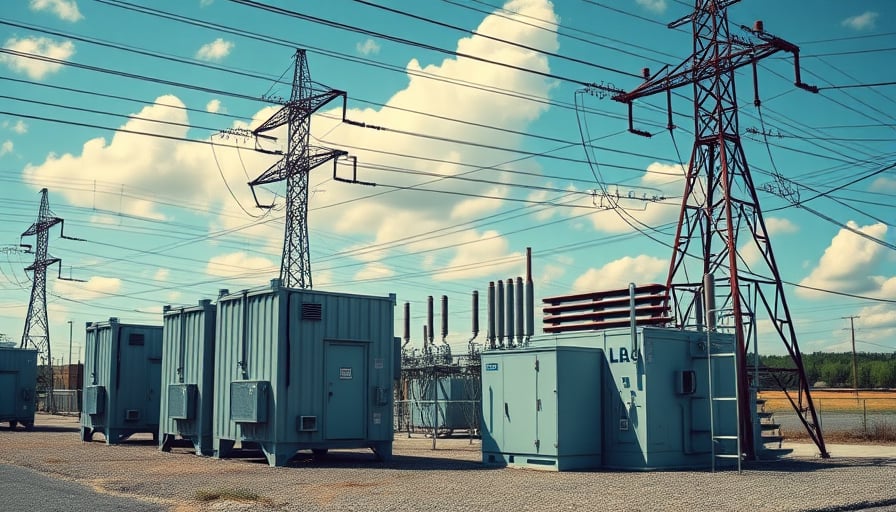
Substation Modernization Upgrading substations with digital protection relays and SCADA systems is estimated to cost $1.2 billion. This modernization enhances fault detection latency, reducing outage durations and improving overall system resilience.
Distributed Energy Resources (DER) Integration The integration of utility‑scale battery storage, electric‑vehicle (EV) charging infrastructure, and demand response programs is expected to require an additional $500 million in capital investments. These DERs play a pivotal role in providing ancillary services and reducing peak demand.
Regulatory Framework and Rate Structures
Entergy operates under the regulatory oversight of the Arkansas, Louisiana, Mississippi, and Texas Public Service Commissions. Recent regulatory changes have:
- Adopted Time‑of‑Use (TOU) Tariffs to better align consumer demand with renewable generation patterns.
- Implemented Net‑Metering Regulations that allow distributed solar owners to receive full retail rates for exported power, thereby encouraging DER adoption.
- Enforced Renewable Portfolio Standards (RPS) with incremental targets: 15% renewable generation by 2025, escalating to 30% by 2035.
These regulatory measures influence Entergy’s capital allocation strategy, pushing the company toward a higher renewable mix while maintaining cost‑competitiveness. The utility’s rate structure reflects the cost of reliability and modernization, with a modest surcharge for critical infrastructure upgrades that is amortized over 20‑year periods.
Economic Impacts of Utility Modernization
Consumer Costs While infrastructure investments translate into higher upfront capital expenditures, the long‑term benefits—reduced transmission losses, fewer outages, and lower variable costs from renewable generation—are projected to offset rate increases. A cost‑benefit analysis indicates a 2‑3% net reduction in average residential electricity costs over a 15‑year horizon.
Job Creation and Local Economies The construction of new transmission lines and substations is expected to create approximately 12,000 direct construction jobs and 1,800 indirect jobs in related industries. Community investment initiatives tied to these projects are designed to ensure local workforce development and equitable economic benefits.
Reliability Savings By reducing outage frequency from an average of 0.3 days per customer per year to 0.15 days, Entergy anticipates savings in productivity losses that exceed the incremental cost of the investment by an estimated $150 million annually.
Analyst Perspectives
Argus Research has recently reassessed Entergy’s performance, noting its solid operational metrics and strategic focus on a cleaner energy mix. The updated rating reflects the company’s capability to balance steady dividend payouts with forward‑looking investment in technology and infrastructure. Market participants such as Cadence Bank and Oakworth Capital may influence short‑term trading dynamics, but the fundamental narrative remains: a utility that delivers reliable power, embraces renewable integration, and sustains shareholder returns.
Conclusion
Entergy Corp.’s recent dividend declaration and continued investment in resilient, low‑cost electricity supply demonstrate a strategic alignment between financial performance, regulatory compliance, and the broader energy transition. Through targeted infrastructure upgrades, advanced grid technologies, and proactive regulatory engagement, the company aims to maintain grid stability while accelerating the deployment of renewable resources. These efforts not only safeguard the utility’s operational reliability but also support the economic well‑being of the communities it serves.