
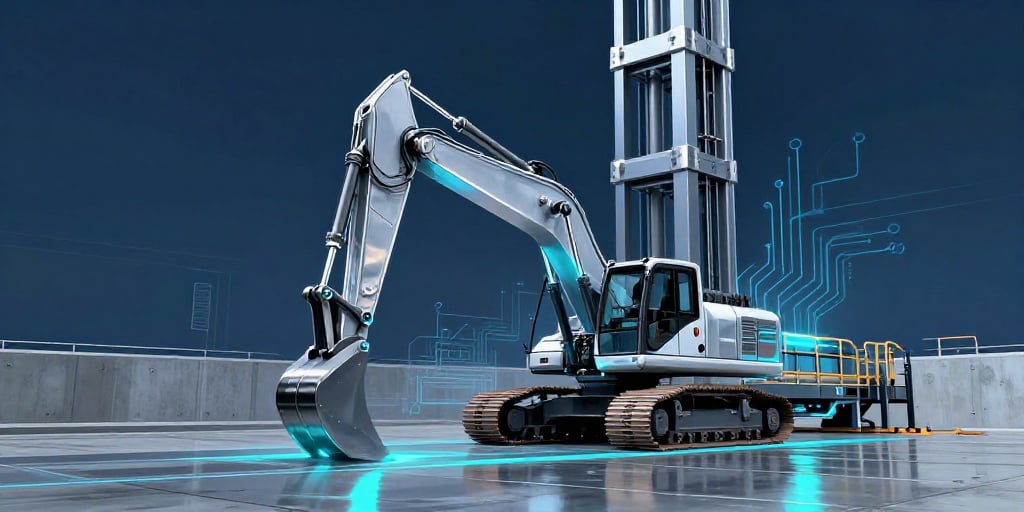
Engineering‑Machinery Momentum Reflects Broader Capital‑Expenditure Optimism
The Shanghai Composite and other leading Chinese indices opened higher on May 11, 2026, driven largely by a pronounced rally in the engineering‑machinery sector. The ChiNext index also posted a notable gain, underscoring the positive sentiment around construction and infrastructure development. Several heavyweight manufacturers posted significant intraday gains, with one prominent heavy‑equipment firm reaching the daily trading limit. Its peers—including a well‑known concrete mixer producer and a hydraulic equipment manufacturer—also recorded sizeable upward movements.
Productivity Gains and Technological Innovation
The surge in shares of heavy‑equipment companies is rooted in measurable productivity improvements across the manufacturing pipeline. Modern excavators, now equipped with autonomous guidance systems and real‑time diagnostic telemetry, can operate at 15 % higher cycle rates while reducing operator fatigue and maintenance costs. Concrete mixers have integrated AI‑driven mix‑ratio optimization, trimming waste by up to 10 % and shortening curing times. Hydraulic systems are adopting variable‑speed drives that adjust flow rates to match real‑time load conditions, yielding a 12 % reduction in energy consumption.
These technological strides are reflected in the capital‑investment trend observed in the sector: firms are allocating an increasing proportion of their budgets to research‑development and to the procurement of high‑precision industrial robotics. The result is a virtuous cycle—productivity gains lower operating costs, which in turn justify further investment in automation, reinforcing the sector’s growth trajectory.
Capital Expenditure Drivers in Construction Equipment
The China Machinery Engineering Association’s recent report highlighted a substantial rise in excavator sales during the preceding month, with domestic and export volumes growing by double‑digit percentages. This up‑trend indicates that construction companies are ramping up capital expenditure on earth‑moving equipment to accelerate large‑scale infrastructure projects, such as high‑speed rail corridors and coastal reclamation works. The heightened demand for robust, fuel‑efficient machinery aligns with national policies that prioritize low‑emission construction technology, offering a clear regulatory incentive for manufacturers to innovate.
Supply‑Chain Resilience and Export Outlook
The supply chain for heavy machinery is intrinsically complex, involving upstream sourcing of high‑grade steel alloys, precision CNC components, and advanced electronic control units. Recent fluctuations in raw‑material prices—particularly in non‑ferrous metals—have prompted manufacturers to diversify their supplier base and to lock in long‑term contracts at fixed rates. The export surge in excavator sales also signals resilience in global demand, especially in emerging markets that are undertaking massive infrastructure drives to stimulate economic activity.
Foreign Institutional Investment and Market Momentum
A major Middle‑Eastern sovereign‑wealth fund announced a sizeable increase in its holdings across the A‑share market during the first quarter. The fund’s focus on hard‑goods equipment, non‑ferrous metals, machinery, and chemicals aligns closely with the domestic manufacturing boom. Significant stakes were taken in several leading engineering‑equipment firms, reinforcing the sector’s momentum. Such foreign investment not only provides capital for expansion but also brings a global perspective on best practices, potentially accelerating the adoption of lean manufacturing and digital twin technologies among Chinese producers.
Regulatory Environment and Infrastructure Spending
Regulatory changes over the past year have tightened emission standards for heavy‑equipment engines, encouraging the adoption of hybrid‑electric powertrains and advanced exhaust‑aftertreatment systems. Concurrently, the government’s infrastructure spending plan—targeting an annual investment of 2.5 trillion yuan—has prioritized projects that demand high‑capacity construction equipment. These policy signals create a favorable climate for manufacturers to invest in research and production capabilities that meet stricter environmental and safety requirements.
Market Implications for Real‑Estate and Shipping Sectors
While the engineering‑machinery rally dominated, the real‑estate sector displayed a modest rebound, with several property development companies posting notable gains and the residential‑property index seeing a moderate uptick. This reflects a cautious optimism among developers, buoyed by anticipated infrastructure upgrades that promise to enhance property values. In contrast, shipping and port equities faced declines as maritime operators reported lower freight volumes and higher operating costs, partially offsetting gains in the heavy‑equipment sector.
In sum, the May 11 trading session highlighted a selective bullish trend driven largely by engineering machinery and real‑estate stocks. The confluence of productivity‑boosting technology, supportive sales data, and strategic foreign‑institutional investment in industrial segments has amplified confidence in China’s manufacturing and construction ecosystems. These dynamics suggest that capital‑expenditure decisions will continue to favor high‑tech, energy‑efficient equipment, reinforcing the long‑term growth prospects for the sector.