
Engie SA Maintains Market Stability Amid Renewable Expansion in the United States
Engie SA, a multinational utility listed on both the NYSE and the Paris Bourse, closed its latest trading session with a share price stabilizing in the mid‑20‑euro range. The stock’s trajectory remained largely within its 52‑week upper band, reflecting a period of relative equilibrium for the company’s financial performance.
Market Context
The CAC 40 index, in which Engie holds a constituent seat, experienced modest gains across the day. The benchmark opened slightly lower and finished with a modest uptick, keeping its market‑cap valuation near €2.46 trillion. Engie’s share movements contributed to the aggregate capitalization of the index, underscoring the interdependence between individual utility performance and broader equity sentiment.
Renewable Energy Investment: The Harmony Solar Farm
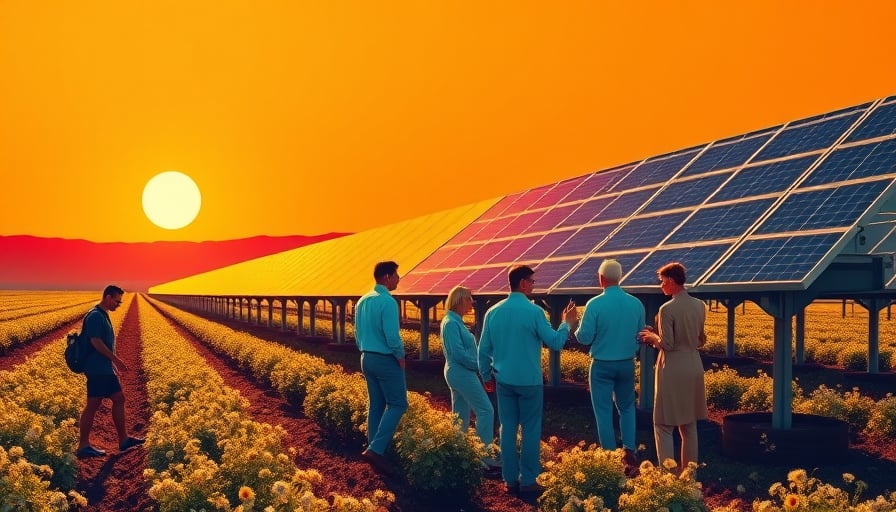
Engie announced that the 2.5 MW Harmony solar farm in Illinois has begun operations. The project, developed in partnership with Solstice and Microsoft, represents a targeted investment in community‑scale photovoltaic generation. From a systems‑engineering perspective, the farm’s integration into the local distribution network requires careful coordination of in‑feed monitoring, inverter dispatch, and grid‑support services.
Grid Stability Considerations
- Voltage Regulation: The intermittent output of the solar array necessitates active voltage control. Engie’s deployment of advanced inverters with Volt‑Var capabilities will help maintain voltage within ±5 % of nominal, mitigating sag and swell events.
- Frequency Support: Though the farm’s capacity is modest relative to the overall load, fast‑acting frequency response can be provided via dynamic reactive power adjustments, contributing to system inertia at the feeder level.
- Protection Coordination: The integration of distributed generation alters fault currents and protection settings. Engie must conduct updated fault‑current studies to ensure that relays remain properly coordinated, preventing inadvertent tripping of nearby lines.
Renewable Integration Challenges
- Curtailment Avoidance: In periods of high solar irradiance and low demand, the local feeder may face over‑generation. Engie must employ curtailment strategies, such as dynamic output curtailment or energy storage, to keep the grid within operational limits.
- Curtailment Mitigation through Storage: Pairing the farm with a battery energy‑storage system (BESS) would allow excess energy to be stored and dispatched during peak demand, reducing the need for curtailment and improving the renewable penetration ratio.
- Grid Code Compliance: The Illinois Public Service Commission’s regulations require that distributed generators provide certain ancillary services (e.g., reactive power support, black‑start capability). Engie’s solution must be compliant with these evolving codes to avoid penalties.
Infrastructure Investment Requirements
- Upgrading Distribution Substations: To accommodate the harmonic content and voltage fluctuations associated with inverter‑based resources, Engie will need to retrofit transformers with phase‑shifted reactors and upgrade tap‑changer controls.
- Smart Grid Deployment: Implementation of advanced distribution management systems (ADMS) and phasor measurement units (PMUs) will enable real‑time monitoring of the Harmony farm’s output and its impact on the surrounding network.
- Cybersecurity Enhancements: The increased digital interconnectivity inherent in smart inverters and remote monitoring systems necessitates robust cybersecurity protocols to protect against potential grid attacks.
Regulatory Frameworks and Rate Structures
Engie’s expansion strategy must align with the regulatory environment in both the United Kingdom and the United States. In the U.S., state-level renewable portfolio standards (RPS) and net‑metering policies dictate the economic viability of community solar projects. For instance, Illinois’ “Solar Share” program offers a 15‑year net‑metering window, ensuring that consumers receive a credit for excess generation that offsets their grid usage over a defined period.
In Europe, the European Union’s Clean Energy Package mandates that member states facilitate the integration of renewable sources through grid codes that require renewable generators to provide voltage and frequency support. Engie’s compliance with these regulations is essential not only for operational licensing but also for maintaining investor confidence in its modernization agenda.
Rate structures play a pivotal role in shaping consumer costs. Traditional tiered rate systems often penalize high‑penetration renewable scenarios by allocating fixed costs to all users regardless of their generation contribution. Engie is exploring dynamic pricing models that incorporate time‑of‑use (TOU) rates and demand‑response incentives. Such mechanisms can reduce peak load, lower the need for costly peaking plants, and ultimately pass on savings to consumers.
Economic Impacts of Utility Modernization
Utility modernization, driven by the deployment of distributed energy resources (DERs), smart grid technologies, and energy storage, introduces significant capital outlays. However, these investments yield long‑term economic benefits:
- Reduced System Losses: High‑voltage upgrades and better voltage regulation decrease line losses, improving system efficiency by 1–3 %.
- Deferred Infrastructure Upgrades: By smoothing load profiles, DERs can defer the need for costly grid hardening projects that would otherwise be required to meet peak demand.
- Enhanced Reliability: Improved monitoring and automated fault isolation reduce outage duration, translating into tangible cost savings for both utilities and customers.
Nonetheless, the transition to a more distributed and renewable‑heavy grid imposes new operational challenges. Utilities must invest in workforce development, training staff on digital tools, and developing new asset management strategies to maintain service reliability.
Conclusion
Engie’s recent performance, both in the stock market and in its renewable expansion initiatives, underscores a broader industry trend: the shift toward resilient, low‑carbon power systems. The Harmony solar farm exemplifies the technical and regulatory complexities associated with integrating DERs into existing grid infrastructure. While capital intensity remains a hurdle, the long‑term economic and environmental returns position Engie as a leading actor in the energy transition.