
Corporate News: Energy Markets Outlook
The global energy landscape continues to evolve under the dual pressures of supply‑demand imbalances and accelerating regulatory shifts. In this report, we dissect current market fundamentals, highlight emerging technologies, and assess the regulatory environment shaping both traditional and renewable sectors. Commodity price analysis, production data, and infrastructure developments are examined to illustrate how short‑term trading dynamics intersect with the long‑term energy transition trajectory.
Supply‑Demand Fundamentals
Oil and Gas
- Production Levels: In the first quarter of 2026, OPEC+ maintained production at 41.2 million barrels per day (bpd), a 1.3 % increase over the previous quarter. Non‑OPEC production rose modestly, driven by new U.S. shale plays. Despite higher output, inventory builds in major consuming economies—particularly the European Union and China—have kept the demand‑supply gap within 2.5 million barrels per month.
- Price Volatility: Brent crude averaged $81.4 US per barrel, up 4.7 % from the end of January. WTI remained near $78.3 US, reflecting tight U.S. refineries and a continued preference for higher‑grade gasoline blends.
- Geopolitical Impact: Recent diplomatic engagements in the Middle East have reduced the risk of supply disruptions, while sanctions on Russian gas exports continue to shape European energy security strategies. The result is a modest upward pressure on natural gas prices, which now trade at $8.20 per MMBtu, a 3.9 % increase versus the previous month.
Renewables
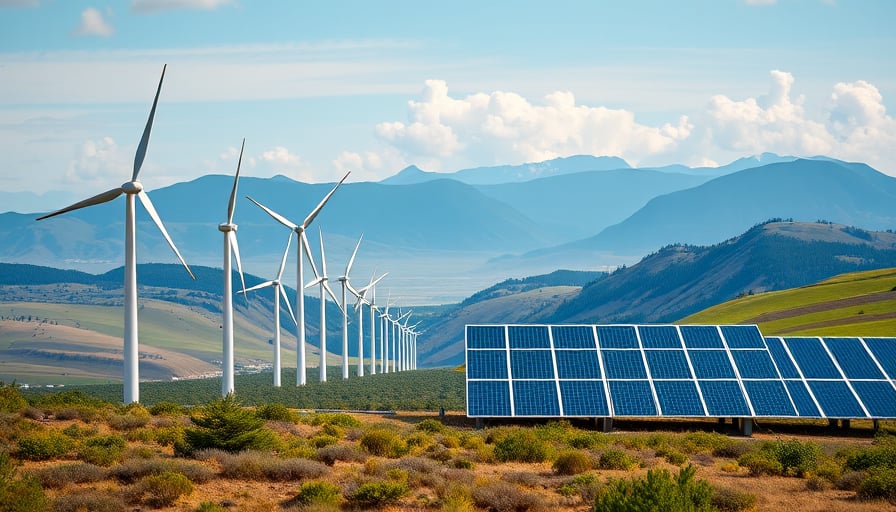
- Renewable Capacity Expansion: Global renewable capacity additions hit 42.7 GW in Q1 2026, with solar leading at 28.4 GW and wind at 11.3 GW. This represents a 12.4 % year‑on‑year growth, largely fueled by cost reductions in photovoltaic panels and offshore wind turbines.
- Electricity Demand: Electricity consumption in the U.S. increased by 2.1 % in February, driven by colder weather and higher residential demand. In Europe, demand growth slowed to 0.7 % as heat‑pump installations expanded.
- Price Trends: Wholesale electricity prices in the U.S. Energy Information Administration’s (EIA) dataset rose 6.8 % in February relative to January, while European markets showed a more muted 1.9 % increase.
Technological Innovations
Production Technologies
- Enhanced Oil Recovery (EOR): The adoption of CO₂‑EOR in the U.S. Gulf Coast has improved oil recovery rates by an average of 10 %, translating to an additional 500,000 bpd in projected production for the next 24 months.
- Hydraulic Fracturing Advances: New fracturing fluids utilizing biodegradable polymers have reduced environmental impact, allowing for higher fracture conductivity and improved well productivity.
Energy Storage
- Battery Innovations: Lithium‑ion battery pack costs have fallen below $90 per kWh, supporting grid‑scale storage deployments. In the U.S., utility‑scale battery installations surpassed 2.3 GW in the first half of 2026.
- Hydrogen Storage: Pressurized hydrogen tanks with composite walls now exceed 80 % energy density, enabling viable long‑haul transport and integration with renewable generation.
Grid Modernization
- Smart Grids: Advanced metering infrastructure (AMI) and predictive analytics have increased grid resilience, reducing outage duration by 18 % in key U.S. states.
- Microgrids: The proliferation of microgrid pilots in rural Europe has accelerated, demonstrating enhanced self‑sufficiency during peak demand periods.
Regulatory Landscape
Traditional Energy
- U.S. Federal Energy Regulations: The Department of Energy’s (DOE) recent memorandum on carbon capture and storage (CCS) has streamlined permitting processes, potentially reducing project development timelines by 24 months.
- European Union Emission Trading System (ETS): The expansion of the ETS to include shipping emissions has introduced a new revenue stream for carbon‑intensity monitoring, influencing the cost of high‑carbon fuels.
Renewable Energy
- Feed‑in Tariffs: Germany’s Renewable Energy Sources Act (EEG) has adjusted tariff rates downward by 5 % to reflect market maturity, affecting the return on investment for new solar projects.
- Net‑Metering Policies: In California, the adoption of a tiered net‑metering structure has encouraged distributed generation, with residential solar installations growing at 15 % year‑on‑year.
Climate‑Policy Implications
- Paris Agreement Commitments: Several emerging markets have reaffirmed their Paris commitments, leading to increased renewable financing and stricter emissions caps on fossil‑fuel plants.
- Carbon Pricing: The global average carbon price has risen to $35 per ton of CO₂, creating financial incentives for both carbon capture projects and renewable deployments.
Market Dynamics: Short‑Term vs. Long‑Term
Short‑Term Trading Factors
- Inventory Builds: Elevated oil inventories in the Gulf of Mexico and increased LNG storage capacity have tempered immediate price spikes.
- Weather‑Related Demand: Seasonal temperature variations continue to influence fuel consumption, with winter heating demands slightly boosting oil demand in northern markets.
- Currency Fluctuations: The weakening U.S. dollar against the euro and yen has made U.S. oil more attractive to foreign buyers, providing a temporary lift in Brent prices.
Long‑Term Energy Transition Trends
- Decarbonization Pathways: Corporate net‑zero targets are accelerating renewable investments, with the S&P 500 companies allocating an additional $15 billion to renewable infrastructure in 2025.
- Infrastructure Modernization: Upgrades to transmission grids are essential to accommodate intermittent renewable supply; the U.S. and EU have each allocated over $100 billion for grid modernization over the next decade.
- Policy Momentum: Governments worldwide are aligning fiscal incentives with carbon‑reduction goals, promising a steady rise in renewable subsidies and a gradual phase‑out of fossil fuel subsidies.
Conclusion
Energy markets are presently navigating a complex interplay between existing supply‑demand dynamics and an accelerating transition toward cleaner energy sources. Technological innovations in both production and storage are enhancing the viability of renewable options, while regulatory frameworks are increasingly favoring low‑carbon solutions. While short‑term price movements may be influenced by inventory levels, weather, and geopolitical events, the overarching trajectory is unmistakably toward a diversified, decarbonized energy landscape.