Energy Market Outlook: Navigating Short‑Term Volatility and Long‑Term Transition Dynamics
The United States equity market closed the week on a positive note, with the major indices recording gains driven in part by a decline in crude oil prices. This easing in energy costs has provided relief for earnings in energy‑related sectors, while reinforcing investor confidence in technology and communication‑services stocks that continue to lead the market rally.
Commodity Price Trajectory
Global oil benchmarks have remained on a downward trajectory, with Brent and WTI crude dipping by 4–5 % against the backdrop of softer demand forecasts and an expanding supply base. The drop in commodity prices has translated into lower input costs for many integrated oil‑and‑gas producers, yet the sector as a whole has experienced modest declines—mirroring the broader market sentiment that links price movements to earnings outlooks.
The decline is further accentuated by the ongoing geopolitical dialogue, particularly in the Middle East, where the prospect of supply disruptions has tempered optimism. Analysts note that while short‑term supply concerns persist, the long‑term equilibrium is shifting toward increased resilience through diversified sourcing and enhanced storage capacity.
Supply‑Demand Fundamentals
On the demand side, industrial activity in the United States has shown moderate growth, with manufacturing output and transportation volumes reflecting a cautious rebound. The residential and commercial sectors, however, remain subdued due to persistent inflationary pressures and a lag in consumer spending. In the energy mix, natural gas consumption continues to rise as a cleaner alternative to coal, while renewable electricity generation captures an incremental share of the grid.
Production data from the U.S. Energy Information Administration (EIA) indicate that crude oil output has plateaued at around 12 million barrels per day (bpd), while natural gas production increased by 2.5 % in the last quarter. These figures suggest that supply fundamentals are stable, but any sharp contraction—such as a potential supply shock from the Middle East—could quickly erode the current equilibrium.
Technological Innovations and Infrastructure Development
Technological advances in both extraction and storage are shaping the market’s future trajectory. Hydraulic fracturing and horizontal drilling continue to unlock previously inaccessible reserves, while advances in carbon capture and storage (CCS) aim to mitigate the environmental impact of fossil fuels. In the renewable sector, the deployment of high‑capacity battery storage solutions—particularly lithium‑ion and flow battery technologies—is accelerating, reducing the intermittency challenge and improving grid reliability.
Infrastructure projects, such as the expansion of the Gulf Coast’s crude processing capacity and the construction of new LNG export terminals in the Gulf of Mexico, are expected to bolster supply stability. Simultaneously, the rollout of the 5 G network has spurred investment in data centers and edge computing facilities, indirectly boosting demand for electricity and influencing power generation portfolios.
Regulatory Impact on Energy Sectors
Regulatory developments are increasingly influential in shaping both traditional and renewable energy landscapes. At the federal level, the Biden administration’s Clean Energy Standard targets a 50‑60 % reduction in carbon emissions by 2030, incentivizing a shift toward renewables and energy efficiency. State‑level policies, such as California’s aggressive renewable portfolio standards (RPS) and Texas’ deregulated electricity market, create heterogeneous incentives that impact regional investment patterns.
The Securities and Exchange Commission (SEC) is tightening disclosure requirements for climate‑related risks, compelling energy companies to disclose more granular data on emissions, transition plans, and potential stranded asset risks. This regulatory pressure is prompting firms to invest in low‑carbon technologies, diversify their asset base, and reassess their capital allocation strategies.
Short‑Term Trading Dynamics versus Long‑Term Transition Trends
In the near term, traders are reacting to market sentiment and macro‑economic signals. The recent decline in oil prices, coupled with easing inflation, has provided a temporary cushion for energy‑related earnings. Market participants are also closely monitoring geopolitical developments, as any escalation could prompt a rapid shift in supply expectations and price volatility.
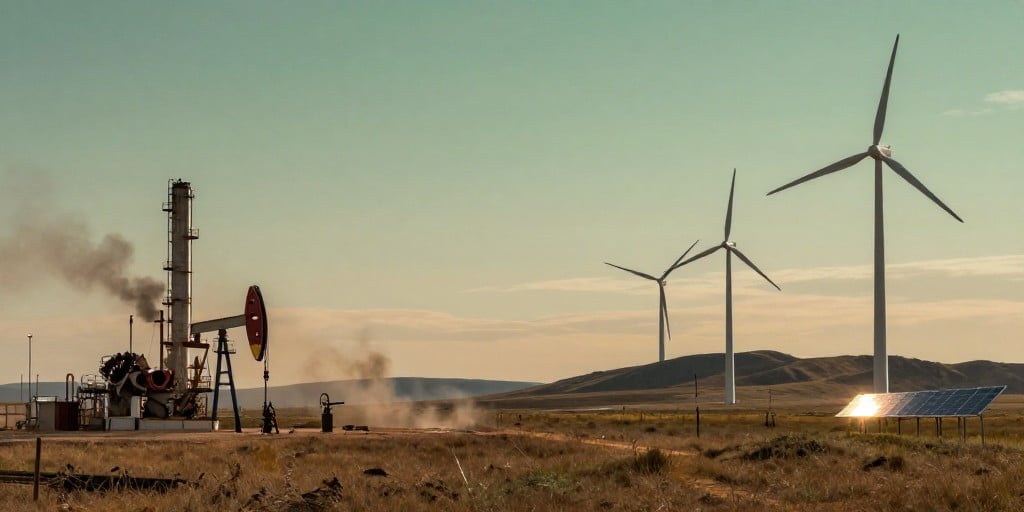
Long‑term, however, the energy sector is undergoing a structural transformation. The convergence of technological innovation, regulatory mandates, and shifting consumer preferences is driving a gradual but decisive shift away from fossil fuels. Companies that adopt a balanced strategy—leveraging existing oil and gas assets while expanding renewable and low‑carbon portfolios—are better positioned to navigate this transition.
The case of ConocoPhillips exemplifies this duality: while its share price has moved in line with the broader energy sector’s response to lower oil prices, the firm remains engaged in initiatives to improve operational efficiency and reduce its carbon footprint, aligning with long‑term regulatory and market expectations.
Conclusion
The interplay between commodity price dynamics, supply‑demand fundamentals, technological breakthroughs, infrastructure developments, and regulatory shifts underscores the complexity of the current energy market. While short‑term trading factors—such as oil price fluctuations and geopolitical tensions—continue to shape daily market movements, the overarching trend points toward a sustainable energy transition driven by policy, technology, and evolving investor preferences. Companies that successfully integrate these elements into their strategic planning are likely to thrive in the evolving energy landscape.