ENEOS Holdings’ Strategic Deployment Amid Strait of Hormuz Volatility
Context and Timing
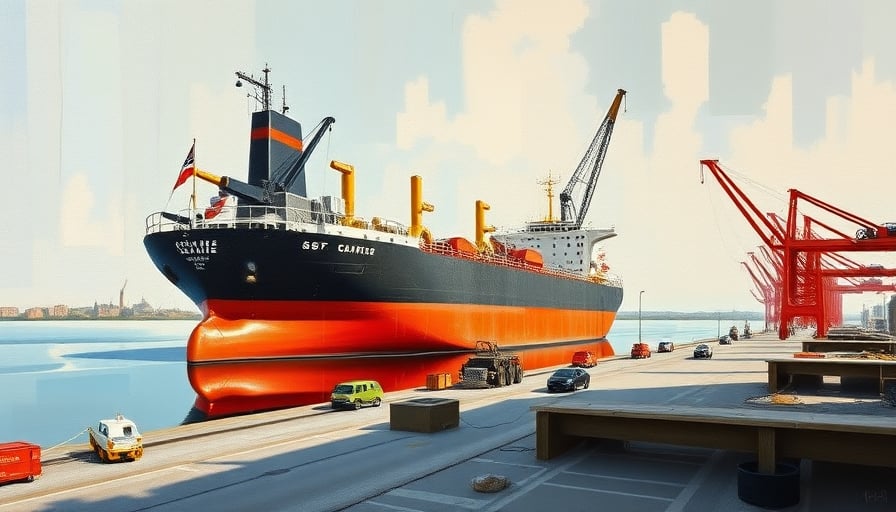
ENEOS Holdings Inc. announced that its flagship crude oil tanker, the Eneos Arrow, arrived at the Shirashima National Petroleum Stockpiling Base in Kitakyushu, Japan, in late March. This deployment coincided precisely with the Japanese government’s decision to reduce its strategic petroleum reserves. The timing is noteworthy because it aligns with an effort to alleviate domestic supply pressures triggered by disruptions in the Strait of Hormuz—a chokepoint through which approximately 20–25 % of global crude exports transit.
The Eneos Arrow’s arrival in Japan, coupled with the withdrawal of reserves, suggests a deliberate strategy to manage crude inventories at a location that remains insulated from immediate geopolitical risk. The vessel’s presence at a secure, well‑equipped stockpile site positions ENEOS to capitalize on potential price volatility while maintaining a steady supply chain for its domestic markets.
Analysis of the Strait of Hormuz Turbulence
During the same period, the Strait of Hormuz witnessed an unusual pattern of vessel movements. Several large tankers—most notably the Agios Fanourios I and Shalamar—attempted to transit the strait only to reverse course when diplomatic negotiations between the United States and Iran stalled. While a subset of ships successfully navigated an Iran‑approved route, the reluctance of other operators to commit to the narrow corridor underscores the heightened risk perception among shipping companies.
Financially, the temporary blockage contributed to a measurable uptick in spot crude prices, with West Texas Intermediate (WTI) spiking from an average of $73 per barrel to over $80 during the peak of the uncertainty. The corresponding surge in shipping freight rates—especially for the Asia‑Europe corridor—reveals a direct link between geopolitical tension and operational cost structures.
Underlying Business Fundamentals
ENEOS’s decision to station a major tanker in Japan aligns with several core business fundamentals:
Risk Mitigation Through Asset Positioning By anchoring the Eneos Arrow in a secure port, the company reduces exposure to transit delays, potential seizures, or damage that could arise from contested maritime corridors.
Supply Chain Resilience The proximity to the Shirashima facility allows for rapid redistribution of crude to regional refineries, minimizing the impact of global supply disruptions on domestic production schedules.
Financial Flexibility Maintaining a sizeable inventory in Japan preserves liquidity that can be leveraged if global oil prices rebound following a resolution of tensions, enabling the company to purchase crude at more favorable rates.
Competitive Dynamics and Market Positioning
The oil tanker market is highly capital‑intensive and characterized by thin margins. ENEOS’s proactive deployment indicates a willingness to allocate capital toward strategic positioning rather than solely focusing on cost reduction. This contrasts with several of its peers who have opted for opportunistic chartering, often accepting higher freight rates without securing guaranteed dockside positions.
From a competitive standpoint, ENEOS’s strategy could yield a first‑mover advantage: should tensions in the Strait of Hormuz persist, the company can maintain a stable supply pipeline while rivals scramble to secure alternative routes or negotiate new agreements.
Potential Risks
Reserve Drawdown Impact While reducing reserves may alleviate immediate supply concerns, it potentially diminishes Japan’s strategic cushion, increasing vulnerability if global disruptions intensify.
Market Volatility Elevated spot prices can erode profit margins if ENEOS must purchase crude at higher rates to replenish inventories, especially if the Eneos Arrow cannot deliver as anticipated due to unforeseen delays.
Regulatory Shifts Changes in international maritime regulations, particularly those governing safe passage through contested waters, could impose additional costs or operational constraints on the company.
Opportunities for Strategic Growth
Diversification of Shipping Routes ENEOS can leverage its tanker fleet to develop alternative transit corridors, reducing dependence on the Strait of Hormuz and opening new markets in the Indian Ocean and beyond.
Enhanced Collaboration with Shipping Alliances By partnering with established maritime alliances, ENEOS could secure preferential berth allocations and reduced freight rates, further improving its competitive edge.
Capitalizing on Market Disruptions In the event of sustained geopolitical tensions, the company can act as a key supplier to refineries seeking secure crude sources, potentially commanding premium pricing.
Conclusion
ENEOS Holdings’ deployment of the Eneos Arrow to Japan during a period of heightened Strait of Hormuz uncertainty illustrates a calculated response to geopolitical risk. By aligning asset positioning with broader market dynamics, the company not only safeguards its supply chain but also creates avenues for competitive differentiation. The strategy underscores the importance of proactive risk management in an industry where political events can swiftly translate into financial consequences.